[Note to readers: This post is by Xin Li, who asked me to post it for him due to internet issues. Any mistakes in posting are mine, with apologies. Dr. Kamp] In my final blog, I will discuss BRI, the role of Chinese nationalism, and Chinese migrant workers through the reflection of a conversation I […]
Month: December 2020
Language and Identity: Koryo Saram, Part III
I began this series of blog posts with a simple question: What happened to the Korean language the Koryo saram must have spoken? In documenting the maintenance of the Korean language among the Koryo saram, my previous blog posts covered broad themes in the history of the Koryo saram (blog post 1) and language usage […]
Labor migration impact on Tajikistan; the case of its women and children
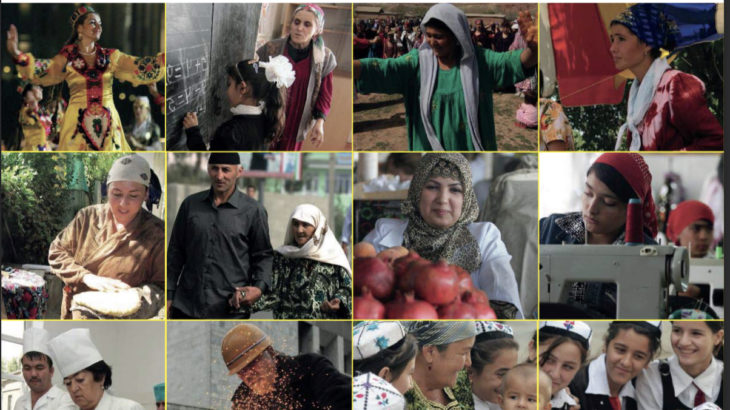
Introduction How is a Tajik woman portrayed in the story of Tajikistan and Central Asia in general? How much this notion of lack of geopolitical interest in the country and zero economic resources is creating a vacuum around the Tajik woman? How invisible are they? What does it take to bring the voice of women […]
Resilience of Turkish Neighborhoods in Germany
I am continuing my blog post 4, with Turkish Migrants: Germany is a home to many Turkish migrants. After World War II, Germany was split between the West (Allies-United States, France, United Kingdom), and the East which was controlled by the Soviet Union. The Allies, including Turkey were part of NATO, North Atlantic Treaty Organization. […]
Analyzing the Facebook Group, “Таджики в Москве”
For my final blog post, I decided to take a trial run at online data collection and analysis. My broader research interests are related to the flow of Tajik migrant labor to Russia and its resilience to issues such as economic hardship, bureaucratic hurdles, and xenophobia. As discussed in my last post, data from the […]
The Implications of Sanctions for Migrants in Iran (Post 1 of 2)
In my last pair of blog posts I discussed the impact of sanctions imposed on Iran on Iranian emigration rates. I first addressed the effects of recent sanctions on the Iranian economy to provide a bigger picture of what has been going on in the country. I then looked at larger trends in Iranian migration […]
The Implications of Sanctions for Afghan Migrants in Iran
In the first part of my final blog post I briefly discussed the migrant population of Iran and specifically addressed the importance of Iran as a labor migration destination for Afghans. For the final portion of my post, I will be examining what happens when a nation is so devastated economically that it cannot support […]
Indian Workers, Gulf Trials
As I’ve discussed in my previous two blog posts, the 1973 oil shock resulted in a massive restructuring of global migration patterns and paved the way for the economic ascendancy of oil-exporting Gulf states. Since 1973, Gulf Cooperation Council countries have become a magnet for migration, initially from other Arab states, but in the decade […]
My Homeland, My People: Memory in Kazakh Migrations Past and Present
Throughout my blog posts this semester, I have attempted to explore the relationships between historical migration events, the folk narratives remembering those events, and how these narratives are exploited by modern states to build nationalist mythologies. I have compared nation building through the use of mythic histories in Turkey and Kyrgyzstan. This theme is particularly […]
Impacts of Return, Construction of Ethnicity, and Diaspora Diasporas: Some Final Thoughts on the Circassian and Abkhaz Experiences
Like the Circassians and other groups I wrote about in a previous blog post, the Russian campaigns in the Caucasus in the 1800s resulted in over half of the Abkhaz population leaving their historical homeland on the northwest shore of the Black Sea for Turkey, in what Abkhaz historian Stanislav Lakoba called an “ethnic catastrophe” […]