[Note to readers: This post is by Xin Li, who asked me to post it for him due to internet issues. Any mistakes in posting are mine, with apologies. Dr. Kamp] In my final blog, I will discuss BRI, the role of Chinese nationalism, and Chinese migrant workers through the reflection of a conversation I […]
Migrating for work
The Implications of Sanctions for Migrants in Iran (Post 1 of 2)
In my last pair of blog posts I discussed the impact of sanctions imposed on Iran on Iranian emigration rates. I first addressed the effects of recent sanctions on the Iranian economy to provide a bigger picture of what has been going on in the country. I then looked at larger trends in Iranian migration […]
The Implications of Sanctions for Afghan Migrants in Iran
In the first part of my final blog post I briefly discussed the migrant population of Iran and specifically addressed the importance of Iran as a labor migration destination for Afghans. For the final portion of my post, I will be examining what happens when a nation is so devastated economically that it cannot support […]
Citizenship and the Indian diaspora in the UAE
As I described in my previous blog post, the 1973 oil shock stemmed from an embargo placed on the United States by Arab oil producing nations in response to the United States financially supporting Israel during the Yom Kippur War.1 The oil shock spurred major trends for public finance and development within Gulf states and […]
Gender roles and status of young migrant women and the impact of their lives on those left in Tajikistan.
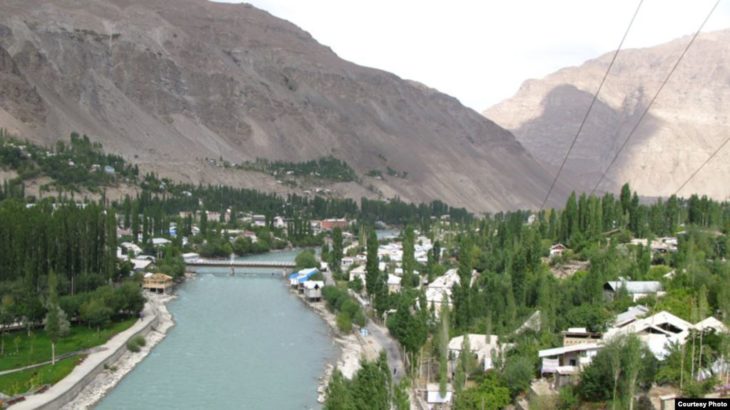
The case of Gorno-Badakhshan Autonomous Region (GBAR), the Pamir people. The Tajik Civil War of 1992-1994 took the lives of 100 thousand Tajik people and left 55 000 orphans and 20 000 widows. After the collapse of the Soviet Union and the civil war the country faced “severe economic challenges and a seriously lowered standard […]
How Migration Policy and Cultural Differences Affect Migrant Women’s Reproductive Health
Due to various political and systematic factors, many migrant women around the world are not provided access to necessary reproductive health services. While many women may work in countries that offer sexual health programs to native women, it is fairly common to find policies in place that restrict migrant women’s freedoms to obtain birth control […]
Tajikistan’s Economic Interdependence on Russia
Framing My Interests I have been fascinated by the topic of migrant labor in Central Asia for a number of years now. Part of my interest is rooted in my own personal experiences in Tajikistan. I lived in Tajikistan from 2015 to 2016 when I was 20 years old. I moved to Tajikistan as a […]
Germany’s little Turkey: Disagreements
Since the 1960s, there have been an influx of Turkish people in Germany, who came to work and send money back home. Today there are more than 7 million people of direct Turkish descent or who have Turkish roots. The Turks have felt more discriminated against even in their “German neighborhood” called Keupstrasse in Cologne, […]
Defining Expectations of Women in Armenia
Perhaps moving forward a better balance between family and work may be reached. This is the concluding sentence from my previous blog and in this entry my focus turns to gender roles and equality in three facets of Armenian society: education, migration and family. These pillars define the place of women and in are in […]
Educational Outcomes for Migrants in Russia: Part II
This post is part two of my exploration into the educational outcomes of migrants and their children. You can find Part One here. I will be looking at this topic in the context of Russia. Are there differences in education attainment and achievement between native and migrant children? If so, what contributes to this? Russia […]