Marianne, Sept 18 Thanks to my many fabulous facebook friends, I sometimes become aware of things that might interest some of you and are related to this class. The first is a blog by scholar Rastamjon Urinboyev. He writes about legal and social issues for Central Asian migrants in Russia, and this is his posting […]
Month: September 2020
Constructing New National Identities in the Soviet Union and Turkey
As part of his “Introduction” to The Age of Migration: International Population Movements in the Modern World, author Hein de Haas underscores a key point of tension regarding migration in the modern era: while the movement of peoples is nothing new, the challenges they present to nationalist ideas underlying many contemporary nation-states are. From the […]
Moscow’s Little Kyrgyzstan
For my blog post, I decided to watch a short documentary which I’ve been wanting to check out for quite a while titled, “Moscow’s Little Kyrgyzstan”. The documentary is approximately 25 minutes long and highlights the experiences of Kyrgyz migrants in Moscow. The documentary was produced by a UK-based company named Journeyman Pictures. All of […]
Gender and Migration
In The Age of Migration, De Hass notes that migration patterns differ across gender. For example, he notes that in cases such as in Moldova, most migrant men travel to Russia and other central Eurasian countries, while Moldovan women tend to travel to Italy to fill the demand for caseworkers (De Hass 129). In fact, […]
Druzhba Narodov – Friendship of peoples
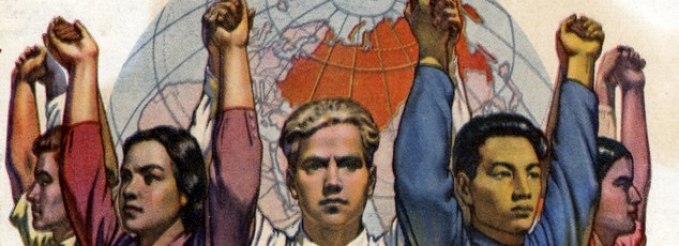
In 2019, Pamiris of Tajikistan, the Tajik people of the Pamir mountains, current labor migrants in Moscow cleaned the grave of Shirinsho Shotemur at Donskoy Cemetery on the eve of Eid ul-Fitr (religious holiday celebrated by Muslims worldwide that marks the end of Ramadan, the Islamic holy month of fasting.) Shirinsho Shotemur, a prominent Tajik […]
Ne Mutle Türküm Diyene! Population Exchange and Turkish Nationalism
“Ne mutlu Türküm diyene” – “How happy one is to say I am a Turk!” This expression, famously spoken by Mustafa Kemal Atatürk on the tenth anniversary of the Turkish Republic, demonstrates a simple and seemingly benign Turkish nationalism.1 However, Turkey’s history of compulsory international population exchange provides insight to the early republic’s determination of […]
Do Economies Have to Boom for Migration to Happen?
Once countries started recovering from the devastation of WWII, economies needed to be rebuilt. The USSR had built its command economy around the idea of high levels of extensive growth achieved by a division of labor between countries in Eastern Europe (Comecon) and industrialization. This depended on large amounts of labor as extensive growth meant […]
Migration and the Construction of National Narratives in Turkey and Kyrgyzstan
As republics formed following the collapse of expansive empires, the Kyrgyz Republic and the Republic of Turkey have each utilized certain historical and cultural narratives as a means of establishing a unified ethnic national identity. In the case of Turkey, the influx of new “Turks” from the forced population exchange with Greece necessitated a unifying […]
Soviet Internationalism and Friction in Tajikistan
Beginning in the post- World War II era, the Soviet Union underwent mass rebuilding and industrialization efforts. While the nation experienced extensive urbanization, with many migrating from rural areas to the cities, there were a considerable number of state-mandated migrations from urban to rural regions. Hein deHaas refers to these movements as ‘imperial emigration’. In […]
Use of Female Labors as the Soviet Solution to Labor Shortage before 1970
The discussion in the lecture on using female labors as the soviet solution to labor shortage reminded me of some popular Chinese propaganda from the Great Leap Era, where a giant poster reads “women can hold up half of the sky”. It is known to a saying from Mao Zedong. This public poster has left […]