You can’t undo a deportation. Jonathan Shapiro For my last three blog posts, I have decided to look at the history of Meskhetian Turks from their deportation in 1944 to the modern day. In this blog post, I am going to do my best to familiarize the reader with the Meskhetian Turks and how forced […]
Month: October 2020
Room for Growth: The Place of Armenian Women within a Patriarchal Society
The Workforce The struggle for gender equality is a familiar foe of Armenian women. Since the fall of the soviet Union in 1991 when the female unemployment rate was a mere 2.19%, women in Armenia have struggled to maintain their place in the workforce (World Bank, 1991). Let’s talk more numbers. Armenia first […]
Assimilation and Belonging: Identity in Migrant Accounts
In our very first class, we discussed why migration tends to elicit such big emotions. Why is the topic of migration, for example, such an emotive political issue in the United States? De Haas says that migration is contentious and emotive because it conjures up themes of belonging and identity, both of which are very […]
China’s “Belt and Road” Initiative and Labor Migration in Eurasia
For my final blogs, I will be discussing China’s “Belt and Road” Initiative (BRI) and its impact on labor migration. In our class, we had a brief discussion on Chinese companies doing construction works overseas and bringing Chinese workers as a common business practice. However, such practice has fueled clashes and dismay among countries that […]
Migrant Lives – Cheap and Disposable in the глаза of Russia
Since the Fall of the Soviet Union, ethnonationalism in Russia has been on the rise. While demographic data points to a labor shortage in Russia, ethnonationalist policies make it extremely difficult for labor migrants from places such as Central Asia to fill labor shortages. Millions of Central Asian migrants from CIS countries have moved to […]
“Coming Home”: Motherland and Mother Language in Kazakhstan’s ‘Oralman’ Policies
What role does an imagined homeland have in influencing one’s sense of belonging? This summer, I had a rather odd experience with this exact dynamic. My younger sister, an avid Tik Tok user, showed me a short clip on the platform of a Ghanaian official speaking out against racial injustice in the US and instructing […]
The Urkun and Kyrgyz-Russian Race Relations
On August 7th of this year, in the midst of the COVID-19 pandemic, a group of approximately 30 people gathered in Bishkek to commemorate the 104th anniversary of the Urkun with readings from the Quran.1 Despite the dangers currently associated with public gatherings, many people in Kyrgyzstan clearly feel a strong sense of importance in […]
A culture of mobility and lost transcendence of the Greater Central Asia
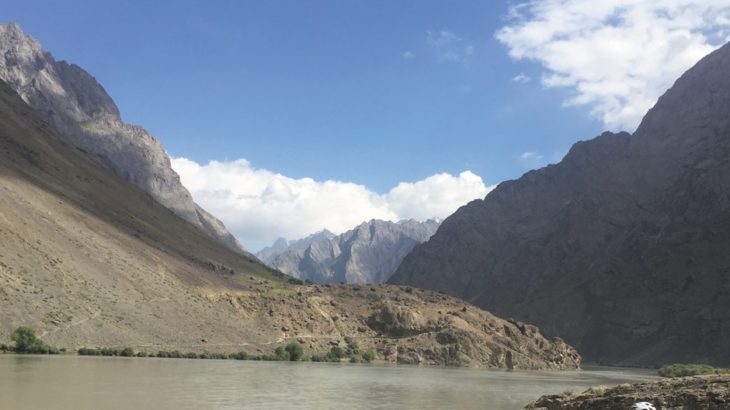
By the time I moved to the United States of America, I had lived through poverty, famine and war, yet I consider myself one of the most privileged individuals in the world. The society in which I was raised had just begun learning to stand on its own when I was presented with the opportunity […]
A Comparison of Interethnic Marriage and Migration in Korea and Russia
While I do not have a lot of outside knowledge on migration, I do know that one feature of migration results in multicultural and multiethnic marriages. Outside of Central Asia, one region I know well is that of the Korean Peninsula. One similarity between South Korea and Russia is that they are both going through […]
Development of Afghan Migration to Iran
For hundreds of years, Afghans have migrated to Iran in order to improve their livelihoods. In the 20th century, the first major wave of Afghan migration to Iran came with the monumental upswing of the Iranian oil industry. Through recruitment by the Iranian government, thousands of Afghan laborers came to Iran.3 The workers enjoyed better […]