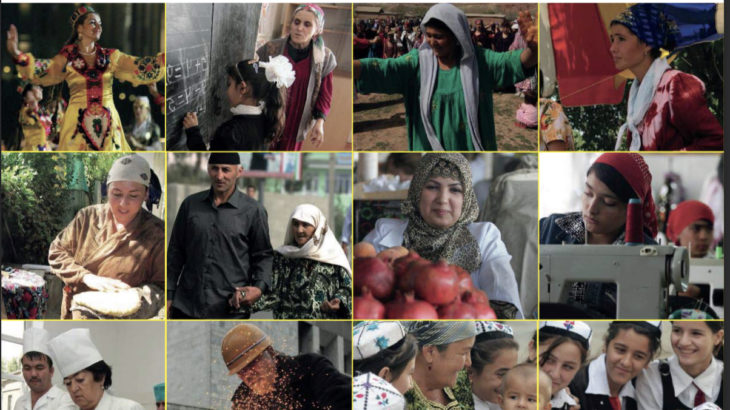
Labor migration impact on Tajikistan; the case of its women and children

Introduction How is a Tajik woman portrayed in the story of Tajikistan and Central Asia in general? How much this notion of lack of geopolitical interest in the country and zero economic resources is creating a vacuum around the Tajik woman? How invisible are they? What does it take to bring the voice of women […]

Continue reading


The Implications of Sanctions for Migrants in Iran (Post 1 of 2)

In my last pair of blog posts I discussed the impact of sanctions imposed on Iran on Iranian emigration rates. I first addressed the effects of recent sanctions on the Iranian economy to provide a bigger picture of what has been going on in the country. I then looked at larger trends in Iranian migration […]

Continue reading


The Implications of Sanctions for Afghan Migrants in Iran

In the first part of my final blog post I briefly discussed the migrant population of Iran and specifically addressed the importance of Iran as a labor migration destination for Afghans. For the final portion of my post, I will be examining what happens when a nation is so devastated economically that it cannot support […]

Continue reading


Room for Growth: The Place of Armenian Women within a Patriarchal Society

The Workforce                                                                                                The struggle for gender equality is a familiar foe of Armenian women. Since the fall of the soviet Union in 1991 when the female unemployment rate was a mere 2.19%, women in Armenia have struggled to maintain their place in the workforce (World Bank, 1991).   Let’s talk more numbers. Armenia first […]

Continue reading


Development of Afghan Migration to Iran

For hundreds of years, Afghans have migrated to Iran in order to improve their livelihoods. In the 20th century, the first major wave of Afghan migration to Iran came with the monumental upswing of the Iranian oil industry. Through recruitment by the Iranian government, thousands of Afghan laborers came to Iran.3 The workers enjoyed better […]

Continue reading


The Turkish Experience in the Russian Federation

When we talk about migration to the Russian Federation, the main receiving countries that come to mind are those in Central Asia, but rarely do we think about Russia’s southwestern neighbor, Turkey. Towards the end of the Cold War, Turkey improved their relations with the Soviet Union through trade deals, which allowed Turkish companies to […]

Continue reading


Moscow’s Little Kyrgyzstan

For my blog post, I decided to watch a short documentary which I’ve been wanting to check out for quite a while titled, “Moscow’s Little Kyrgyzstan”. The documentary is approximately 25 minutes long and highlights the experiences of Kyrgyz migrants in Moscow. The documentary was produced by a UK-based company named Journeyman Pictures. All of […]

Continue reading


Do Economies Have to Boom for Migration to Happen?

Once countries started recovering from the devastation of WWII, economies needed to be rebuilt. The USSR had built its command economy around the idea of high levels of extensive growth achieved by a division of labor between countries in Eastern Europe (Comecon) and industrialization. This depended on large amounts of labor as extensive growth meant […]

Continue reading


Use of Female Labors as the Soviet Solution to Labor Shortage before 1970

The discussion in the lecture on using female labors as the soviet solution to labor shortage reminded me of some popular Chinese propaganda from the Great Leap Era, where a giant poster reads “women can hold up half of the sky”. It is known to a saying from Mao Zedong. This public poster has left […]

Continue reading