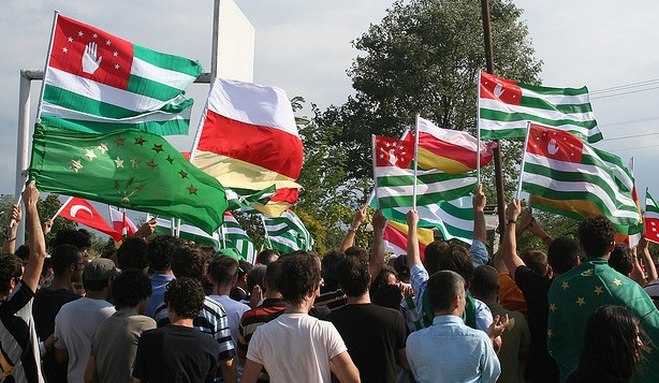
Like the Circassians and other groups I wrote about in a previous blog post, the Russian campaigns in the Caucasus in the 1800s resulted in over half of the Abkhaz population leaving their historical homeland on the northwest shore of the Black Sea for Turkey, in what Abkhaz historian Stanislav Lakoba called an “ethnic catastrophe” (Markedonov, Tekushev, and Shevchenko 11). In this blog post, I will examine some of the differences between the Circassian and Abkhaz experiences. I will look at the impact of ethnicity policies on the two groups and briefly at the impact of Abkhaz “independence” on the diaspora, and how the establishment of an Abkhaz de facto state has changed the dynamic between the Abkhaz and Circassians, and finally examine the possibility that returnees from Turkey to the Caucasus might be considered a new diaspora in themselves.
Brief Abkhaz Background
Following the Caucasian campaigns of 1817–1864, Russian authorities supported the subsequent settlement of Christian Georgians in historically Abkhaz lands, and the ethnically Abkhaz dropped from 85.7 percent of the population of Abkhazia in 1886 to only 55.3 percent in 1897 (Markedonov, Tekushev, and Shevchenko 11). Georgian expansion into the region continued through the revolution and the Soviet period, and Abkhazia was an autonomous republic within the Georgian S.S.R. at the time of independence in 1991 (Markedonov, Tekushev, and Shevchenko 12). In 1992 a civil war broke out, along ethnic lines, and the Abkhaz, with support from Russia and fighters from elsewhere in the North Caucasus, gained de facto independence from Georgia. With the Georgian loss came a mass migration of ethnic Georgians from Abkhazia, which, along with other post-Soviet population movements, tipped the ethnic balance of the region in favor of the Abkhaz once again (Markedonov, Tekushev, and Shevchenko 13).
For over a hundred years, the large part of the Abkhaz and the Circassians were exiled and repressed Northwest Caucasian groups, fighting for a return to their homelands and autonomy for those still present there. Now, the Abkhaz have achieved this: a semi-independent Abkhaz state (semi because the Russian influence and control is very strong and because not very many other countries [Russia, Venezuela, Nicaragua, Nauru, Syria, and Vanuatu] recognize it) with the right to return for Abkhaz abroad. It seems as though the close relationship between Russia and the new Abkhaz state has weakened the solidarity that formerly existed between the Circassians and the Abkhaz, as the Abkhaz rely on Russian support to maintain their semi-independent status and the Circassians push back against the Russian state in search of the right to return for the diaspora and to create their own autonomous areas.
As of 2011, the population of Abkhaz in Abkhazia was 122,000, while the estimated population of Abkhaz in Turkey was 500,000 (Zabanova 9). Abkhaz law says that all Abkhaz and Abazins in the world are automatically Abkhaz citizens, and an estimated 7,000 Turkish Abkhaz (as of 2016) have Abkhaz passports, 3,000 of whom have resettled in Abkhazia (Zabanova 10). Abkhaz in Abkhazia realize the importance of this diaspora and have worked to re-establish ties, beginning with the 1992 visit to Turkey of future president of Abkhazia Vladimir Ardzinba (Zabanova 10).
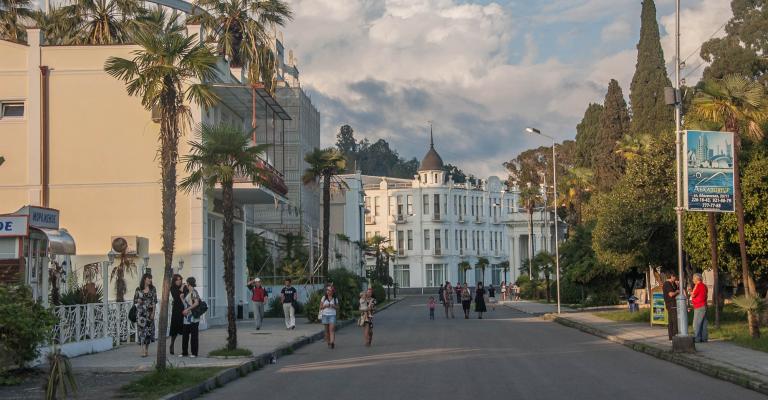
Russia’s recognition of Abkhazia as an independent state in 2008 changed their relationship with the Circassians and other groups of the North Caucasus. During the 1990s and early 2000s, Circassian groups in Turkey rallied behind the Abkhaz cause, lobbying for direct transport between Turkey and Abkhazia and organizing humanitarian aid shipments (Zabanova 11). As reported by Abkhaz World, after recognition, members of the Abkhaz diaspora began concentrating on more specifically Abkhaz issues, instead of broader Circassian ones, though it seems like Circassians continued to support Abkhaz causes, including the desire for Turkey to recognize the state. Additionally, conflict over the 2014 Winter Olympics in Sochi increased the divide between the broader Circassian community, which was increasingly critical of Russia, and the Abkhaz, who were growing closer to Russia (Zabanova 11).
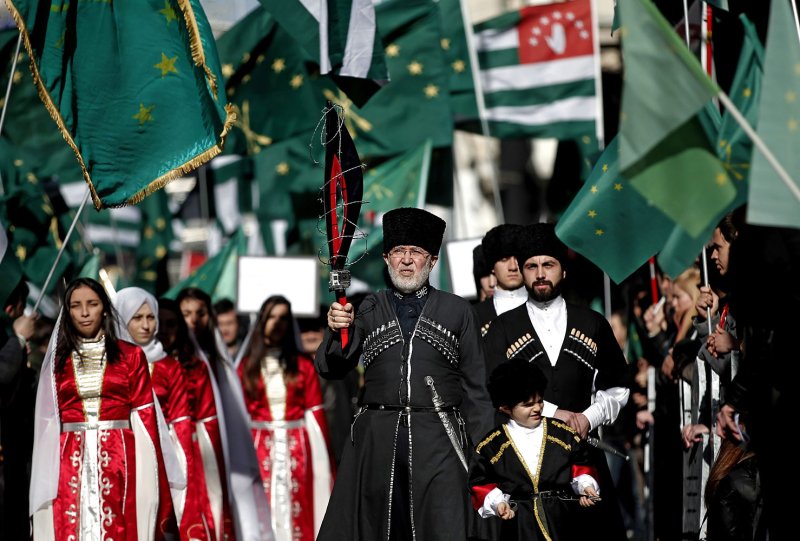
Another interesting way the Abkhaz diaspora has changed as a result of increased Abkhaz control over their homeland is that diaspora organizations, including the Turkish Federation of Abkhaz Associations (Abkhazfed), a splinter group from the larger Federation of Caucasus Associations, have taken on state-like roles. Abkhazfed is an official Abkhaz government partner—the organization screens and background checks potential repatriates, works with the Abkhaz security apparatus, and helps organize Turkish participation in Abkhaz elections (Zabanova 11).
Ethnicity and Nationalism
One way to look at these changes is through theories on ethnic minorities and ethnicity. In my last blog post I presented one theory as to the shared origins of the Abkhaz and Circassian nations, which Professor Kamp rightfully pointed out in her comments was just one of many theories posited over the years.
The historian Ronald Suny shares an interesting account of his experiences with primordialist beliefs about ethnicity, being used at the time by nationalists across the region in a few years after the end of the Soviet Union. He was invited to speak at a conference in Yerevan about prospects for regional integration in the South Caucasus and discussed the development of nationalist ideas transforming Armenians from an ethnoreligious community to a secular nation.

He writes that he asked the following (among other things, particularly relating to the history of Islam in Armenia), and was met with with fury: escorted from the building by security guards, told he was not a real Armenian, and later an entire book denouncing Western scholarship, particularly his, on Armenia:
How can Armenians (or Georgians and Azerbaijanis for that matter) reconcile the idea of relatively homogeneous nation-states with the realities of Transcaucasian politics and demography, which were formed by centuries of multinational empire and migration? Among ethnonationalists in South Caucasia, the discourse of the nation—the notion that political legitimacy flowed upward from a culturally coherent community, “the people” constituted as a “nation”—had narrowed to the view that the people must be ethnically, perhaps racially, singular
Suny 863–864
His claims about “a shared Caucasian culture” with “a polyglot, migrating population; cities inhabited by diverse peoples; and soft, blurred, shifting boundaries between ethnic and religious groups” challenged popular ideas about the primordial nature of these ethnic groups. His argument was that “the notion that political legitimacy flowed upward from a culturally coherent community, “the people” constituted as a “nation”—had narrowed to the view that the people must be ethnically, perhaps racially, singular,” with an end result of ethnic cleansing, killing, deportation, forced migrations, and enduring conflict in Abkhazia, as well as Karabakh and South Ossetia (Suny 863). This contrast between primordial ethnicity, the idea of homelands for each of these nations, and the boundaries in place at the fall of the Soviet Union certainly set the stage for conflict in Abkhazia and elsewhere.
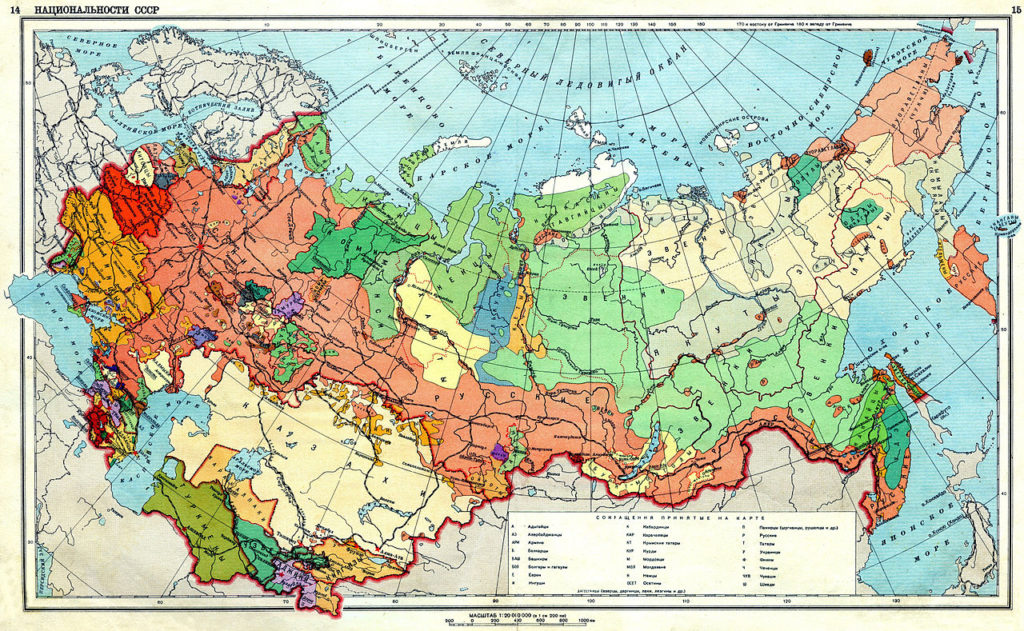
This is important context for discussion of Abkhaz identity: according to Suny, Soviet ethnic identity was “almost universally conceived (and enforced) as a primordial—indeed, biologically determined,” so the designation choices of Russian and Soviet authorities have created groups defined by “seemingly unalterable” differences (867). This type of thought also can account for the idea that Circassians and Abkhaz who have lived in another country for generations are still Circassian or Abkhaz.
However, in the case of Circassian and Abkhaz identity, the majority of each group is located in the diaspora and modern national identity developed outside of these Soviet language, passport, and ethnic construction policies. Instead, in Turkey, post-Ottoman policies have tended towards including other, particularly Muslim, ethnic groups into Turkishness—it was illegal to even discuss the existence of Kurds, called “mountain Turks” by the state, until the 1980s (Şener 116).
So in Russia, and in the Soviet Union, Circassian identity is narrowed down to its smallest units (Adygeans, Kabardians, Shapsughs, and Cherkess, with Cherkess/Circassian today typically applying only to those living in Karachay–Cherkessia (OC Media), while in Turkey they, and the Abkhaz, are instead subsumed into the greater Muslim population (Richmond 128, Yelbaşı 8). This contrast between “antiethnic” and “multiethnic” state policies explains some of the differences between the Circassian and Abkhaz experiences in Turkey and in Russia and the Soviet Union (Aktürk 119). I always think this type of enduring identity is fascinating, as a person only a half-generation removed from Thailand, I feel significantly more American than Thai (though uninformed observers might assume the opposite), perhaps a function of our country’s own antiethnic regime?
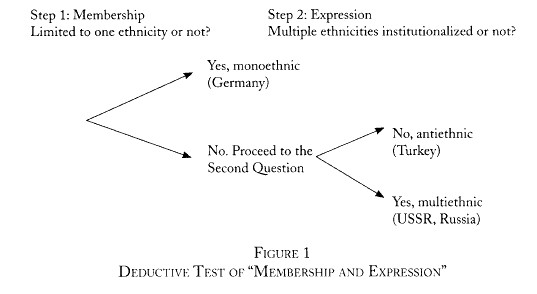
Chart from Aktürk 120, note that he is referring to pre-1999 Germany here 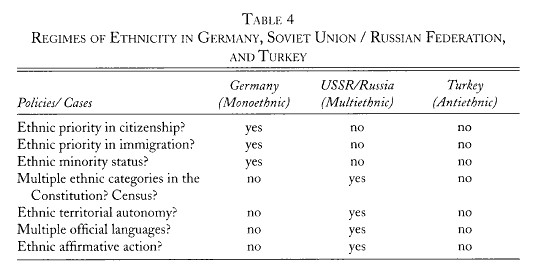
Chart from Aktürk 128
Despite attempts by the Turkish government, in persuit of an antiethnic population, to restrict the use of Circassian and Abkhaz language, names, and other typical ways of passing on culture (Kaya 234), Abkhaz and Circassian communities in Turkey were located in dispersed but largely ethnically homogenous villages up until the rapid urbanization of Turkey in the 1960s (Erciyes 341–345). This allowed them to maintain a relatively strong sense of identity, despite Turkish policies working against them. This historical memory of homelands and origin might have been lost in the cities, but the establishment of North Caucasian cultural organizations in the 1960s and increasing liberalization in Turkey led to increased awareness of the homeland beginning in the 1970s, further developed by increased contact with the Circassian and Abkhaz homelands during and after perestroika (Erciyes 345–346).
Circassians and Abkhaz had shared political and cultural organizations in Turkey, some of which I talked about in my last post. The cultural associations were very diverse, featuring Circassians and Abkhaz, as well as Ubykhs, Ossetians, and others from the North Caucasus, which Erciyes says “spoke different languages but lived under a similar code of behavior and etiquette (khabze)” (347). In the organizations, people would learn each others’ dances and share their regional foods (Erciyes 347). However, when members of these diasporas began returning to the former Soviet Union in the 1990s, they had to make a choice about where they would return to: one Ubykh man interviewed by Erciyes said that he settled in Adygea because he spoke Circassian (rather than the now-extinct Ubykh language) even though he said the historical Ubykh settlements were closer to Abkhazia. However, he said he specifically chose not to return to Abkhazia because it lacked co-ethnic populations, despite feeling a strong connection to the Abkhaz people (347). Others interviewed said that there family histories were more vague and that they only desired to return to the Caucasus, as the members of the diaspora had relatively little idea of the administrative boundaries and divisions that had been put in place since their dispersal in the 1800s (Erciyes 347).
Diaspora Diaspora?
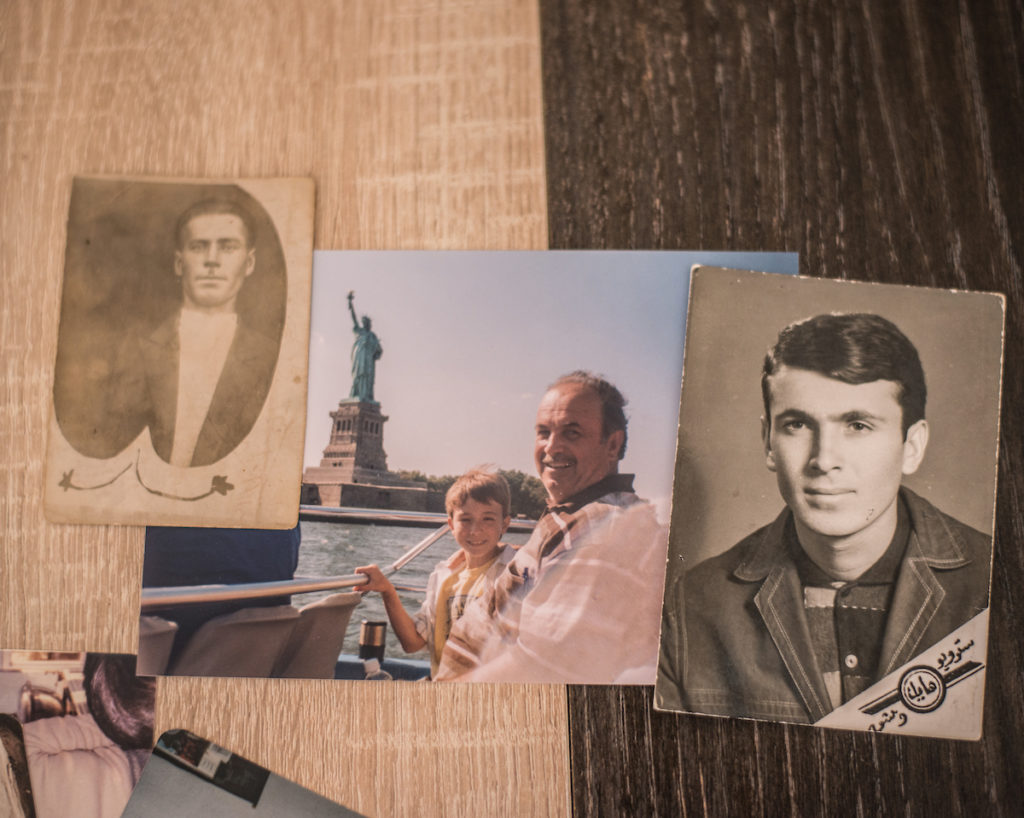
When Circassians and Abkhaz returned to the Caucasus from Turkey after nearly 150 years in diaspora, a lot had changed. The lingua franca in the Caucasus was Russian, whereas within much of the diaspora it was Turkish (Erciyes 347). Also upon return, Abkhaz and Circassians in their respective regions tended to gather with not only other returnees, but specifically returnees from the same area of Turkey they had left. One Abkhaz returnee noted to Erciyes that they felt excluded by other returnees based on sub-ethnic lineage, even while the non-diaspora Abkhaz saw them all as members of the same group and included them (348). Another Abkhaz returnee described her group as “diaspora in the homeland,” saying that they hae different practices and different expectations from the non-diaspora Abkhaz (Erciyes 349).
One Circassian returnee described returnees to Adygea as creating little regional communities and small groups of members of their former diaspora associations, leading some to describe them as creating “Little Turkeys” in the homeland (Erciyes 348). Another said that it was natural that the returnees would spend more time together because of their “social upbringing” and common experiences (Erciyes 348–349). In Adygea, returnees were also the majority of those involved in ethnic heritage revival and research efforts (Erciyes 353–354).
As an aside, my research this semester has focus on the Circassian community in Russia and Turkey, since that’s where the majority are located, but there are also Circassian communities elsewhere, particularly in areas formerly under Ottoman control. The outbreak of the Syrian Civil War in 2011 prompted both increased migration from Syria to Russia (OpenDemocracy) and a shift in focus among Circassian communities away from Sochi-focused organizing and towards assisting their co-ethnics in returning (OC Media). Notably for this class, these return migrants were classified by the Russian state as labor migrants, though unlike most of their forebears fleeing the Caucasus, today’s return migrants from Syria, apparently from a community that was seen as helping prop up the Assad government, seem to be fairly well-qualified workers (engineers, mechanics, teachers, and the like) that are hampered by linguistic and cultural differences. The situation here seems in some ways surprisingly similar to the situation of Syrian refugees in Turkey, whom we read about in Feyzi Baban, Suzan Ilcan, and Kim Rygiel’s article “Syrian refugees in Turkey: pathways to precarity, differential inclusion, and negotiated citizenship rights” — like the Syrians in Turkey, the Circassian Syrians in Russia are in a complex situation, where they should have access to citizenship rights but don’t, and also don’t have the same rights as an officially-accepted refugee would have.
Erciyes makes the interesting argument that because these Circassian (she uses the term Adyge but I will continue to use Circassian for continuity with previous posts) and Abkhaz returnees, through their continued ties with family left behind in Turkey, regular visits to these diaspora settlements, continued involvement with diaspora politics and organizations, and belief that managing to maintain their ethnic and cultural values in close-knit, isolated villages in Turkey makes them perhaps even more Circassian or Abkhaz than the non-diaspora communities creates a new sense of diasporic feeling, in which these communities, now in the homeland they once dreamed of, long instead for the experience of living in a diasporic community in their specific regions of Turkey (notably different from longing to live in Turkey) (349–350). In her interpretation, this gives rise to an entirely new diasporic experience, separate from the first one, and not the “conclusion” of a migration cycle or a transnational experience (358). This type of diaspora, should you choose to consider it so, is very different from the diaspora experience of the earlier Abkhaz diaspora in Turkey—these people chose to return to Abkhazia, they were not forced to go back by anything except perhaps some sense of obligation to their group, and they (presumably) have the legal option to return to Turkey, though social pressures may prevent this. Another factor influencing desires to return to Turkey is economic—one of Erciyes’ interviewees recalls speaking to a group of young returnees and children of returnees that want to return or go to Turkey for economic reasons, but don’t feel able to express that to their elders (352).
These factors make me question the contention that these returnees longing, very understandably, for the communities they left should be considered a diaspora. A distinctive community within Abkhazia—most definitely. A new diaspora, a scattered or displaced people? I’d say no. William Safran, quoted by Ayhan Kaya, describes an ideal diaspora as dispersed from an original center to at least two peripheral places; maintaining a memory, vision or myth about their original homeland; believing they are not fully accepted by their host country; seeing the ancestral home as a place of eventual return, when the time is right; committed to the maintenance and restoration of this homeland; and with group consciousness and solidarity defined by this continuing relationship with the homeland (Kaya 225). While we should not hold any group to an ideal, Abkhaz returnees as I’ve read about them fit few of these categories: they’re in one place (Abkhazia); according to the interviews in Erciye’s work at least, they seem to feel accepted by the local population, even more than by their fellow returnees; and they may wish to return to Turkey, but not because of “ancestral” connotations. Their group consciousness and solidarity and memories and myths of the original homeland tie this group closer to the general Abkhaz population and diaspora than to each other.
Based on what I’ve read of these Circassian and Abkhaz political movements and associations, and the discussion of diasporas and transnationalism in DeHaas, I’d categorize much of this interchange as transnationalism from below—cultural organizing and migration organized on an individual level, creating a unique addition to the nascent Abkhaz nation-state. And then we bring in the situation of Syrian returnees, forced from their latest homeland by war, opening up another set of possibilities…
*Note on Islam in Abkhazia: Historian Alexander Krylov writes in several places that surveys of Abkhaz in Abkhazia from 1997 and 2003 show 17 and 16 percent of respondents identify as Muslim, though I could not find the survey results or any journal articles with that information. The some of the population converted to Islam with increasing Ottoman activity in the Black Sea region beginning in the 16th century, leading to religious divides within the Abkhaz community (Auch 225). Krylov and Auch also note that the Abkhaz Muslim population was more likely to flee Russian advances to the Ottoman Empire. This, followed by increased Christianization during Russian rule, has led to the Christian majority found today (Auch 225), though return migration from Turkey may be changing this balance.
Sources:
Aktürk, Şener. “Regimes of Ethnicity: Comparative Analysis of Germany, the Soviet Union/Post-Soviet Russia, and Turkey.” World Politics 63, no. 1 (2011): 115–64.
Auch, Eva-Maria. “The Abkhazia Conflict in Historical Perspective,” in OSCE Yearbook 2004. Baden-Baden: Institute for Peace Research and Security Policy at the University of Hamburg (2005): 221–235.
Erciyes, Jade Cemre. “Diaspora of Diaspora: Adyge-Abkhaz Returnees in the Ancestral Homeland.” Diaspora 17, 3 (2008, published 2014): 340–361.
Kaya, Ayhan. “Political Participation Strategies of the Circassian Diaspora in Turkey.” Mediterranean Politics 9, no. 2 (June 1, 2004): 221–39.
Markedonov, Sergey, Islam Tekushev, and Kirill Shevchenko, eds. Abkhazia: Between the Past and the Future. Prague: Medium Orient, 2013.
Richmond, Walter. The Circassian Genocide. New Brunswick: Rutgers University Press, 2013.
Suny, Ronald Grigor. “Constructing Primordialism: Old Histories for New Nations.” The Journal of Modern History 73, no. 4 (2001): 862–96.
Yelbaşı, Caner. The Circassians of Turkey: War, Violence, and Nationalism from the Ottomans to Atatürk. London: I.B. Tauris, 2019.
Zabanova, Yana, Turkey’s Abkhaz Diaspora as an Intermediary Between Turkish and Abkhaz Societies. Caucasus Analytical Digest 86. Zurich, 2016.