I am continuing my blog post 4, with Turkish Migrants:
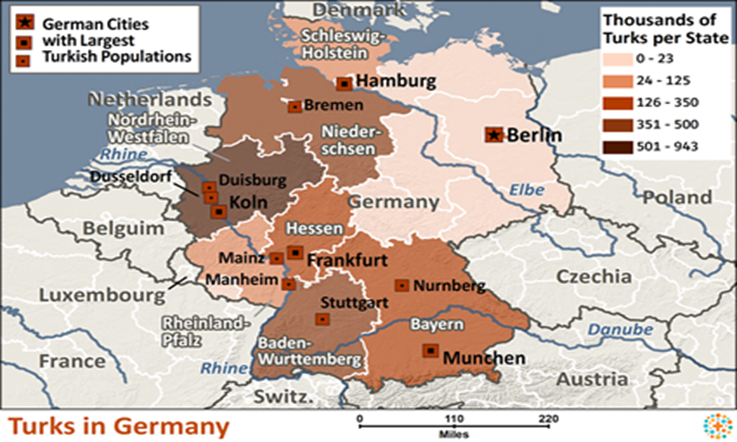
Germany is a home to many Turkish migrants. After World War II, Germany was split between the West (Allies-United States, France, United Kingdom), and the East which was controlled by the Soviet Union. The Allies, including Turkey were part of NATO, North Atlantic Treaty Organization. This was created in 1949, to prevent Soviet encroachment in other part of Europe. In the 1960s, the Turkish government made an agreement with the allies to send guest workers (temporary). “The German government expected men to learn a skill, send money back home to Turkey, and eventually return” 1Isabella Liu, “Germany’s largest minority: What it means to be Turkish in a ‘non immigrant’ country”(Berlin Beyond Borders, 7/19/19). Yet, many of them stayed. The overweighing majority of Turks reside in the West parts. The outlier in the east, which is and was the capital, Berlin. As seen below:
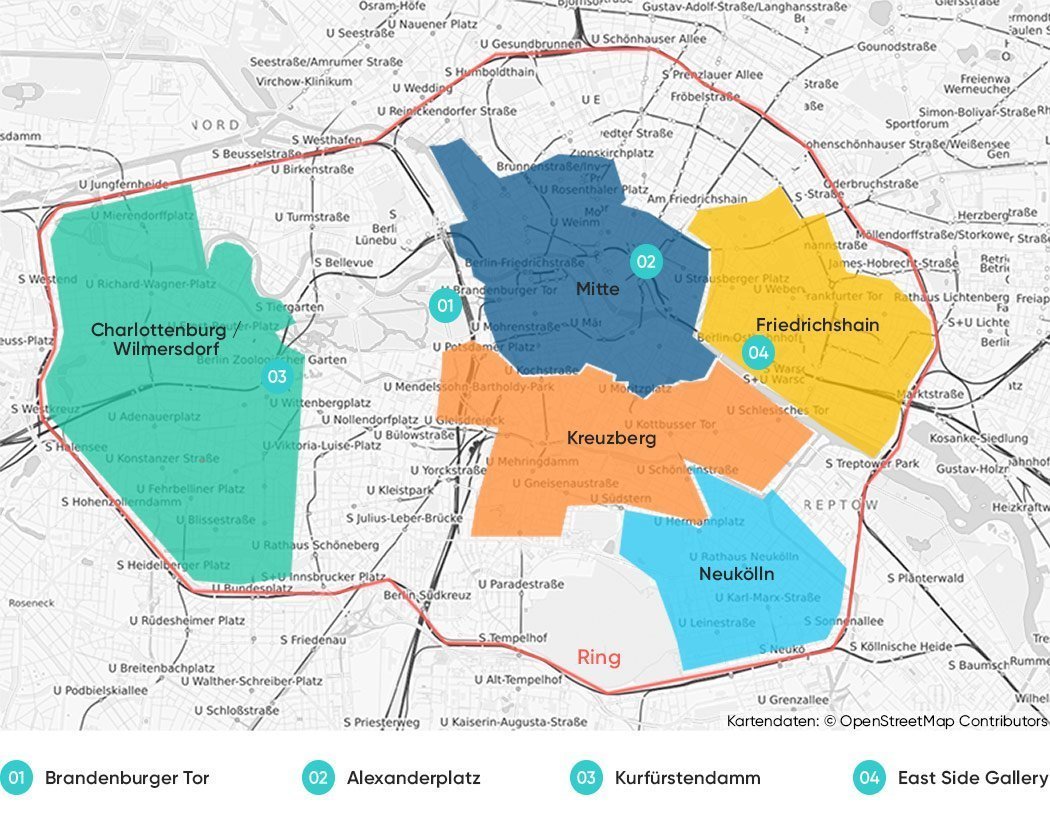
Many different migrants chose to move there as it has a strong economy and provides many jobs. The biggest German neighborhoods within Berlin are the districts of Kreuzberg and Neukolln.
The biggest Turkish neighborhood in Germany is in Keupstrasse, a region of Cologne (in the west). This is where many Turkish mosques, cultural centers, shops and restaurants are located.
I would like to understand how Turkish migrants feel in different German cities, and how the neighborhoods have stayed resilient despite anti-migrant sentiment.
In a “Berlin Beyond Borders” article, student Isabell Liu gives some view points of Turkish Sides:
Miran Max Kessel, is a half German, half Turkish Kurd, who changed his name, in the attempt to feel better and have an easier time integrating in German life. “It felt quite bad to be forced to do it…but it did make life easier for a couple of years.”
Yousef Duran, from Berlin has a market stand and has lived there for most of his life, explains he never obtained German citizenship. “It doesn’t matter whether I have a Turkish or a German passport. I’m a foreigner here, You look in my eyes, and you see that I am Turkish”.
On the other side, another market vendor, Hakan T, decided not to obtain German citizenship. He said “he already felt like an ordinary German and citizenship did not change that”.
Source: 2Isabella Liu, “Germany’s largest minority: What it means to be Turkish in a ‘non immigrant’ country”(Berlin Beyond Borders, 7/19/19).
It is important to note that Germany has only recently (in 1999) made it possible for immigrants who have been living in Germany for a long period of time to obtain citizenship. On the flip side, after the fall of the Soviet Union, lots of the German diaspora were invited to come back to Germany for automatic citizenship 3Marianne Kamp, “Labor Migration Central Asian”(Fall 2020).

In The Local de, David Wroe, writes a couple accounts of Turks. This is in response to Thilo Sarrazin’s inflammatory remarks against immigrants in Cologne. Sarrazin is a German politician who wrote a book “Abolishing Germany- How were putting our country in jeopardy”. He expresses his xenophobic views. As he believes Muslim immigrants are not compatible with Germany.
Ersun Karadunam, a 20 year old man from Cologne, is an international marketing student, who has expressed great respect for his father in providing everything, from clothes to a home. He left Turkey to succeed in Germany. He plans on obtaining German citizenship and says “My father is my hero”.
Another Turk, Merve, a young woman from Cologne wants to become a kindergarten teacher to help raise the youth in a healthy and constructive society, despite not having higher education. She says “some (children) turn to stealing, graffiti and weapons. Even I have been offered drug, while wearing a headscarf”.
Source: 4David Wroe, “The failed streets of Neukolln: Has integration failed?”(The Local de, 9/16/10).
In the book “Social Mobility and Neighborhood Choice: Turkish-German (Cities and Society)”, author Christine Barwick explains the consequences of immigrating and emigrating out of economically disadvantaged areas. In Chapter 4, she writes “that Turkish Germans have encounter on the streets, nod say hello. These unplanned but frequent encounters lead to public familiarity”. “For the respondents, such everyday encounters develop a feeling of home and identification with the neighborhood” (P.86). This is very important, as although Turks are sometimes not completely integrated into German society, they are part of a community.
An example of this can be found in America. Many Mexicans come to the United States for better work (and life). Some have children. Under United States’ law a child born on US territory is a citizen. This is very important for the parents as US law, will usually permit staying in the United States, until the child is 21 when the child can sponsor parents for a green card. The child grows up in a multicultural world, where they speak Spanish at home and English in school. Many states such as California, Texas, and Florida have official documents in both English and Spanish. The main reason is a large minority are Spanish speaking. A child born to immigrant parents may never feel at home, as they speak one language with their parents and another with their friends. Yet, minorities around the world live in a community where they feel comfortable and “at home”. Lots of public schools across the United States require to learn a “foreign” language, more often than not it is Spanish. Mexican cuisine is also highly popular (although Americanized).
In the Russian Federation, there are 21 ethnic republics, where most have their own language. These ethnic republics are allowed to have business, government, and signs in the native language, however Russian is mandatory in schools. Putin and the Kremlin have rolled back some laws allowing native language use 5Sabra Ayres, “Russian Tatars feel threatened as Putin pursues nationalist agenda”(Los Angeles Times, 2,17,2020). The reason is to keep a strong grip on republics, in making them more “non-autonomous republics”. However, knowing Russian, a very popular language in Europe and Asia has its own benefits. Many students from these ethnic republics would most likely want to study in Europe. The knowledge of Russian could help them assimilate and understand, where their own native language will never be spoken.
Author Barwick explains “that although encounters of nodding are somewhat absent they are still important. As they make respondents feel part of the community, identifying with neighborhoods. Also they lead to trust between residents. Lastly they function as a way for function and support” (p.86). Barwick writes an account from a Turkish mother, Ceyda, living in Neukollon. Ceyda describes the neighborhood as mostly elderly and has been in the same apartment for 13 years. She says “they do not want me” (p.87). She stays so her son can attend school there.
Author Barwick talks about a different view, from a Turkish man, Atalay, who helped a stranger. He values relations of residents for mutual support. He talks about a man who came to his office and he didn’t know him personally but helped anyway. He says “It’s simply okay, and that’s something I appreciate a lot” (p.89).
Barwicks then states “a specific neighbor is not important, it is that your neighborhood is open, diverse, and social” (p.89).
This is why Turks live in Turkish neighborhoods, as they are open, diverse, and social with each other (not necessarily toward Germans). Turks know their own traditions and have a sense of brotherhood of mutual understanding (not just the Turkish language). This is not only in Germany, but for immigrants throughout the world.
There is one downside. Barwick explains feeling comfortable in a neighborhood and having good relations with residents can increase social control. So when passing by to someone known, it is expected to talk to them. This is evident as Barwick meets with a Turkish man, Mehri, who has lived in Kreuzberg all his life. They meet at a café and kept getting interrupted with fellow friendly customers.
Source: 6Christine Barwick, “Social Mobility and Neighborhood Choice: Turkish-German (Cities and Society)”(1st edition, 2016)
I believe that this “problem” is beneficial, as there is a feeling someone is looking out for you.
In “The Age of Migration” by Hein de Haas he explains about push and pull factors (p.45). Germans in Turkey are being “pulled” to stay based off familiarity. He explains residential segregation as being cause by “newcomers, lacking social networks and local knowledge. It is also their social status and income.” He adds “As a group becomes established, the earlier arrivals can assist the newcomers, which strengthens the tendency toward ethnic clustering”. This also shows why Turks stay in “their” neighborhoods. However, “some landlords refuse to let immigrants to live in spaces, while others charge high prices for poor accommodations. In Germany in the 1980s, some landlords crowded migrants into poorly equipped apartments, to make conditions unbearable for long standing German tenants who would be evicted. The apartments would be demolished for luxury ones” (p.301).
De Haas also talks about migration to global cities, sometimes “clustering communities can lead to conflicts, but can also lead to enrichment of urban life and culture. Much of the energy and innovative capacity within the cities lies in multi-culturalism. Some cases, these neighborhoods attract cultural elites and middle class.” He adds “These processes can lead to gentrification- upgrading of deteriorated neighborhoods through urban renewal and the influx of more affluent residents and displacement of lower income groups” (p.307).
Source: 7Hein de Haas, “The Age of Migration” (Sixth edition, 2020)
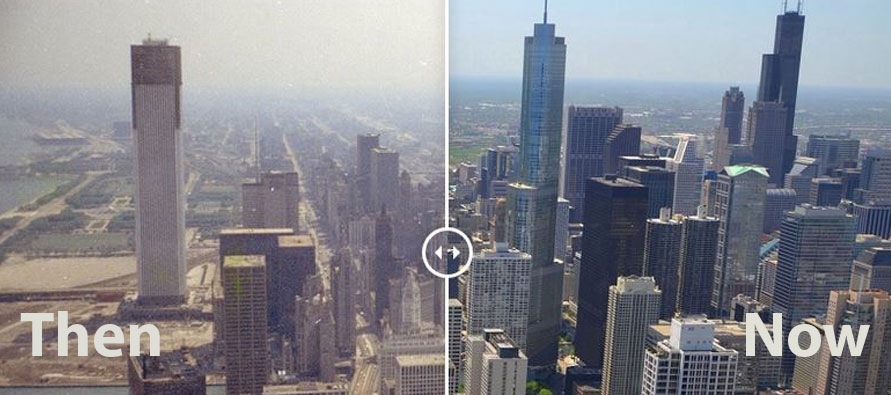
When I lived in Chicago, there were many different neighborhoods, some extremely affluent and other dangerous. When I travel back, I often see the changes. There is a multitude of culture, from restaurants, religious centers, and neighborhoods. There is a great vibe. There is also tons of new construction, in neighborhoods that were “un-desirable” to live in, now are the new “hip” place to live. Old run down buildings are being replaced with modern skyscrapers. These new buildings not only create jobs, they also increase the attraction. This also increases market prices, which in turn attracts more affluent residents.
Underlying tons of racism, I believe there is something exciting and unique of having a large minority ethnic group. There is a new culture language, religion, and way of life, that can be appealing and interesting to learn about. For example – “And yet locals and tourists frequent the Maybachufer Turkish market every Tuesday and Friday to snag bargains on fresh produce and textiles, or just to experience one of Berlin’s many hidden treasures. The döner kebab, a Turkish-German invention featuring flatbread stuffed with onions and sliced lamb or beef, has become a $4.5 billion industry. “The popularity of the döner is beyond question,” reports The Local, an English-language news service based in Europe 8Isabella Liu, “Germany’s largest minority: What it means to be Turkish in a ‘non immigrant’ country”(Berlin Beyond Borders, 7/19/19).
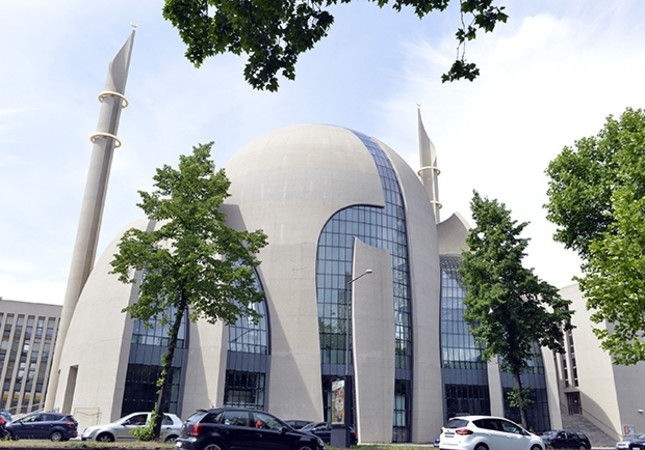

The Islamic architecture of Germany has also changed, it has a traditional mosque look but takes a modern approach.
Ultimately, Germany is a Turk’s home as well. For Turkish Germans, Germany is their native foreign land, and Turkey is their foreign homeland. Majority of the population of Turks living in Germany have grown up there and nowhere else. They feel most comfortable and relaxed. They can combat anti-migrant and anti-Islamic sentiment by being close to other Turks. Which is why the Turks seem to migrate and stay close together in their neighborhoods. There is a special Turko-German culture in many of these neighborhoods(a lot of the reason tourists like going to certain cities). The saying goes “you can take the boy out of the country, but you can not take the country out of the boy”. I think it speaks more clearly today than ever. There is rising nationalism and racism throughout the world. The ultimate goal would have everyone feel at home anywhere and not need to go to a “safe spot”. But, human nature is staying places that are familiar (kind of) and being around people that are similar. Many critics such as German political Thilo Sarrazin, say Turks can not integrate 9David Wroe, “The failed streets of Neukolln: Has integration failed?” (The Local de, 9/16/10). I believe these comments further distance Turks from Germans, as they feel they can not and should not learn German. Around the world, many migrants do not integrate because the societies they live in make it very tough. Instead, the German government should promote the learning of German language in Turkish regions with scholarship benefits. Many Turks choose to only speak Turkish. Germany can be an example and can lead the way to promote unity in a world of separation.
Works Cited
Ayres, Sabra. “Russian Tatars feel threatened as Putin purses nationalist agenda”. Los Angeles Times, 2,17,2020.
Barwick ,Christine. “Social Mobility and Neighborhood Choice: Turkish-German (Cities and Society)”.1st edition, 2016.
de Haas ,Hein. “The Age of Migration” .Sixth edition, 2020.
Kamp ,Marianne. “Labor Migration Central Asian”. Fall 2020.
Liu ,Isabella. “Germany’s largest minority: What it means to be Turkish in a ‘non immigrant’ country”. Berlin Beyond Borders, 7/19/19.
Wroe ,David. “The failed streets of Neukolln: Has integration failed?” .The Local de, 9/16/10.
Picture Credits:
Joshuaproject.net
Hi Dias, this was a very interesting conclusion to your research work. Thank you for including so many great visuals. I especially liked that image of the mosque in Cologne. It looks so modern with its shiny, reflective windows. I also liked your mention of the sort of social order that’s found in Turkish neighborhoods in Berlin. I’m sure that this is often perceived as a negative thing – probably among the young descendants of Turkish migrants – but it seems like there is a nice, friendly feel to the Turkish neighborhoods. Thank you as well for including your own anecdotes on Chicago.