What is a community? What does it mean to be a part of a community, especially when that community is not in its homeland? These are the main questions that I have been investigating during my research of the Meskhetian Turks and their experiences in Central Asia. In my first post I provided a short […]
Soviet period
The Exile and Forced Migrations of the Meskhetian Turks
Before I begin, I would just like to say thank you to all the people who read my last post and left great comments. I hope that I have done an adequate job in exciting you to learn more about the history of the Meskhetian Turks and welcome you to this blog post, in which […]
Migration, Exile, and Homeland: Koryo Saram, Part I
The Soviet Era often brings talk of the multi-ethnic nature of the Union. Certainly, its vast territorial expanse would encompass the homelands of many indigenous Eurasians. One group that often sits at the periphery of discussions of both the Soviet Union and Eurasia is the Koreans. In 1937, 170,000 of them – nearly the entire […]
Making Sense of Meskhetian Turk Migrations
You can’t undo a deportation. Jonathan Shapiro For my last three blog posts, I have decided to look at the history of Meskhetian Turks from their deportation in 1944 to the modern day. In this blog post, I am going to do my best to familiarize the reader with the Meskhetian Turks and how forced […]
Constructing New National Identities in the Soviet Union and Turkey
As part of his “Introduction” to The Age of Migration: International Population Movements in the Modern World, author Hein de Haas underscores a key point of tension regarding migration in the modern era: while the movement of peoples is nothing new, the challenges they present to nationalist ideas underlying many contemporary nation-states are. From the […]
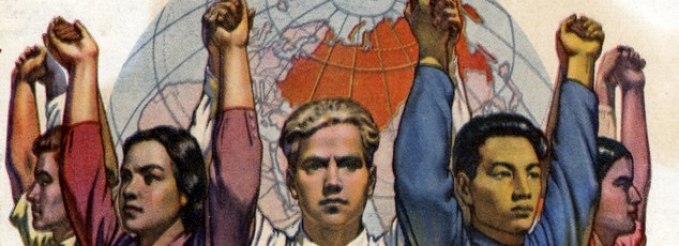
Druzhba Narodov – Friendship of peoples
In 2019, Pamiris of Tajikistan, the Tajik people of the Pamir mountains, current labor migrants in Moscow cleaned the grave of Shirinsho Shotemur at Donskoy Cemetery on the eve of Eid ul-Fitr (religious holiday celebrated by Muslims worldwide that marks the end of Ramadan, the Islamic holy month of fasting.) Shirinsho Shotemur, a prominent Tajik […]
Soviet Internationalism and Friction in Tajikistan
Beginning in the post- World War II era, the Soviet Union underwent mass rebuilding and industrialization efforts. While the nation experienced extensive urbanization, with many migrating from rural areas to the cities, there were a considerable number of state-mandated migrations from urban to rural regions. Hein deHaas refers to these movements as ‘imperial emigration’. In […]
Use of Female Labors as the Soviet Solution to Labor Shortage before 1970
The discussion in the lecture on using female labors as the soviet solution to labor shortage reminded me of some popular Chinese propaganda from the Great Leap Era, where a giant poster reads “women can hold up half of the sky”. It is known to a saying from Mao Zedong. This public poster has left […]