[Note to readers: This post is by Xin Li, who asked me to post it for him due to internet issues. Any mistakes in posting are mine, with apologies. Dr. Kamp] In my final blog, I will discuss BRI, the role of Chinese nationalism, and Chinese migrant workers through the reflection of a conversation I […]
2020
Language and Identity: Koryo Saram, Part III
I began this series of blog posts with a simple question: What happened to the Korean language the Koryo saram must have spoken? In documenting the maintenance of the Korean language among the Koryo saram, my previous blog posts covered broad themes in the history of the Koryo saram (blog post 1) and language usage […]
Labor migration impact on Tajikistan; the case of its women and children
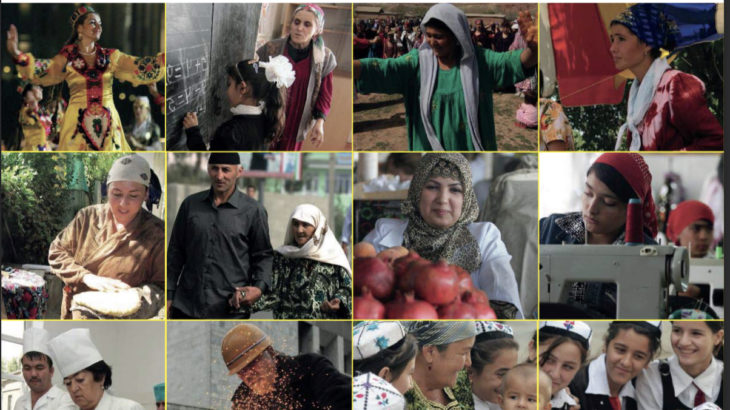
Introduction How is a Tajik woman portrayed in the story of Tajikistan and Central Asia in general? How much this notion of lack of geopolitical interest in the country and zero economic resources is creating a vacuum around the Tajik woman? How invisible are they? What does it take to bring the voice of women […]
The Implications of Sanctions for Migrants in Iran (Post 1 of 2)
In my last pair of blog posts I discussed the impact of sanctions imposed on Iran on Iranian emigration rates. I first addressed the effects of recent sanctions on the Iranian economy to provide a bigger picture of what has been going on in the country. I then looked at larger trends in Iranian migration […]
The Implications of Sanctions for Afghan Migrants in Iran
In the first part of my final blog post I briefly discussed the migrant population of Iran and specifically addressed the importance of Iran as a labor migration destination for Afghans. For the final portion of my post, I will be examining what happens when a nation is so devastated economically that it cannot support […]
My Homeland, My People: Memory in Kazakh Migrations Past and Present
Throughout my blog posts this semester, I have attempted to explore the relationships between historical migration events, the folk narratives remembering those events, and how these narratives are exploited by modern states to build nationalist mythologies. I have compared nation building through the use of mythic histories in Turkey and Kyrgyzstan. This theme is particularly […]
The People and Culture of Meskhetia
What is a community? What does it mean to be a part of a community, especially when that community is not in its homeland? These are the main questions that I have been investigating during my research of the Meskhetian Turks and their experiences in Central Asia. In my first post I provided a short […]
Educational Outcomes for Migrants in Germany: Part III
This Part 3 of my exploration into educational outcomes for migrants. You can find Part I and Part II here. In this post, I will be looking specifically at outcomes for migrants in Germany – how do migrants fare educationally in comparison with German natives? Education is seen as a way in which migrant families […]
Citizenship and the Indian diaspora in the UAE
As I described in my previous blog post, the 1973 oil shock stemmed from an embargo placed on the United States by Arab oil producing nations in response to the United States financially supporting Israel during the Yom Kippur War.1 The oil shock spurred major trends for public finance and development within Gulf states and […]
Crossing the Cairn-Marked Border: Imperial Policy and Diaspora in Buryat Folk Songs
In my previous post, I introduced a Buryat folk song which described events which took place in 1727-1728. These events demonstrate the impact of imperial diplomatic policies and decisions on individuals and communities. In this post, I will provide an historical background for the geopolitical circumstances in which this folk song arose. I will also […]