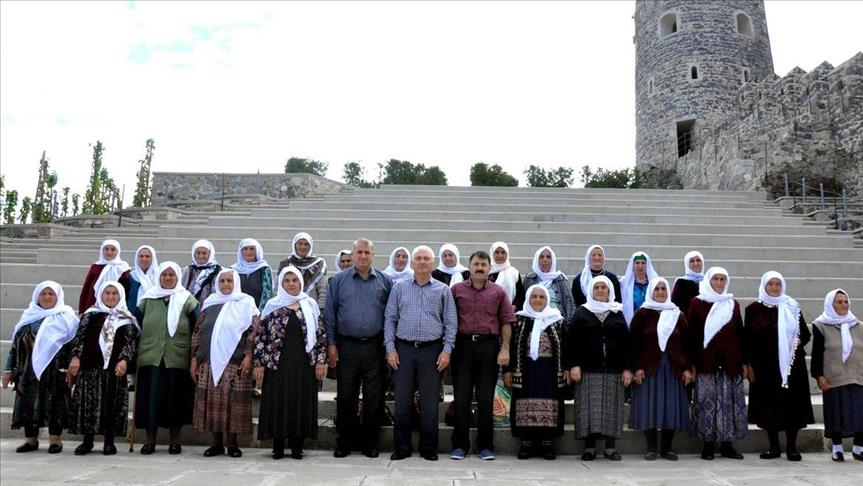
What is a community? What does it mean to be a part of a community, especially when that community is not in its homeland? These are the main questions that I have been investigating during my research of the Meskhetian Turks and their experiences in Central Asia. In my first post I provided a short history of their deportation, and in my second post explored their experiences in Russia and across various Central Asian countries. For my last post I am going to focus on Meskhetian Turk culture and how it survived among different peoples. Another aspect I’ll be looking at is individual accounts.
One of the hardest things for a marginalized community to do is preserve and protect their culture, even more so in the context of a deportation. For the entirety of their existence, Meskhetian Turks have been mischaracterized and the victims of suppression. Authorities in Georgia have claimed that Meskhetian Turks are “ethnic Georgians who converted to Islam and learned to speak Turkish,” while under Soviet rule many were “forced to take Georgian surnames [and] were registered as ‘Azeri’ in the 1939 census.”1 2 As a result of this, the true number of Meskhetian Turks is unknown and some have experienced identity crises as a result.
In 1956, Nikita Khrushchev gave his ‘Secret Speech’ which criticized the policies of Joseph Stalin and offered rehabilitation to the majority of the nationalities deported by Stalin in 1944. However, alongside the Crimean Tatars and Volga Germans the Meskhetian Turks were not offered rehabilitation or given permission to return to their homelands. In response, the Meskhetian Turks organized a delegation “to make a demand for repatriation [but instead] were acknowledged as Azerbaijanis [by the Party]” and were allowed to resettle in Azerbaijan.3 Many who ended up in Azerbaijan felt comfortable because it was geographically close to Georgia and they were among fellow Turks. Around this time the identity of Meskhetian Turks took on three forms: those who wanted to return to Georgia and saw themselves as ethnically Georgian, those who identified as Turks and wanted to go to Turkey and the biggest group were those who saw themselves as a mix of both.4
As the Meskhetians tried harder to receive recognition and be granted permission to return home, it became increasingly clear that Georgia had no interest in repatriating them and both the Soviets and Georgians were working against them. As a result, they held their first congress in 1964 and established “the Turkish Society for the Defense of National Rights of the Turkish People in Exile with a Provisional Organizing Committee for the Return of the People to the Homeland” which was headed by a supporter of the idea that Meskhetian Turks originated from Turkish tribes.5 Although the group’s repeated protests and petitions failed to succeed, it most likely played a big role in their recognition in 1968.
After forty-four years the Meskhetian Turks achieved a breakthrough when the Soviet government finally acknowledged that they were deported from Georgia in 1944. On May 30, 1968 the Soviet Presidium concluded that the Meskhetians “ha[d] “taken root [or forcefully assimilated]” in their place of exile” and that it was necessary to “take their national interests and peculiarities into account.”7 While the Soviet authorities never took responsibility for their attempts to destroy the Meskhetians, this decree shows that the numerous steps by the State, including the incorrect identification as Azerbaijani, had failed and that the Meskhetian Turks were a unified and strong people. Another victory was gained in 1968 when a Soviet official promised “to allow Meskhetians to settle in parts of Georgia” which was accepted by 505 families who were “welcomed…as brothers [by the local population]” but quickly expelled by the authorities.8 Despite these difficulties, the Meskhetian Turks had finally been recognized and now were energized to continue fighting for their rights and repatriation.

They continued to protest and petition Soviet authorities but were turned down or ignored every time, so they crafted a manifesto in 1970 that demanded the creation of an autonomous Meskhetian republic inside the Georgian SSR and demanded permission to migrate to Turkey if their previous demands were rejected. As expected, their demands were denied and the main leaders were jailed, but actions like this show us the how commonplace the search for identity was among the Meskhetian Turk community. These congresses would continue up until the end of the Soviet Union, but by this point they had “lost hope that their basic demands would be met [and] turned to the struggle for emigration.”9
This search for identity was again pushed to forefront in 1976 when another congress, which would come to be known as the ‘Congress of Unification,’ was held to discuss repatriation. One group was going to “strategically accept… the Georgian origin because [the Georgian SSR was allowing repatriation] on the single condition that [Meskhetian Turks] recognize Georgian ethnic roots and change their surnames.”10 The other group refused to accept any agreements that would force them to abandon their Turkish identity. The former line of thinking was eventually settled on as the official position of the Meskhetians in 1988.
As they continued to work towards their goal, Gorbachev’s policies of glasnost’ and perestroika strengthened various nationalist movements all across the Soviet Union and the Meskhetian Turks found themselves victims at the hand of Uzbeks. In 1989 a pogrom erupted in the Ferghana Valley that saw dozens injured and tens of thousands forcibly evacuated from Uzbekistan for their own safety. Here is a link to my first article that explains the Ferghana Valley pogrom in more detail. Many of the Meskhetians relocated to “Azerbaijan while others settled in Ukraine as well as the republics [of] Kyrgyzstan and Kazakhstan.”11 A few found their way to back to Georgia also.
The attention that the pogroms garnered from the rest of the world forced Soviet authorities to listen to the demands of the Meskhetian people. In 1991, the government recognized the new group Vatan (“Homeland” in Turkish) whose main goals are “the formal recognition of the unjust deportation of 1944 and official permission to return to the ‘homeland.’”12 Vatan leaders believe that Meskhetians are ethnic Turks, culturally and socially, and “claim descent from Turkish settlers sent into Meskhetia during Ottoman rule.”13
By early 1991 the Soviet Union issued a decree that stated, “all deported communities had the right to return to their homeland [regardless of whatever country it might fall under at that time], ensured the compensation of material loss during deportation [and] guaranteed [full] rehabilitation.”14 This was what the Meskhetian Turks had been waiting for and fighting for since 1956: a return home. Unfortunately, the Soviet Union collapsed on December 25, 1991 and the legislation never went into effect. The Meskhetian Turks no longer find themselves in one empire, but as a scattered community spread out across the former Soviet Union with varying degrees of integration and comfortability.
In this post I am going to be focusing more specifically on Meskhetians in Georgia and Turkey, so here is the link to my last blog post where I explained their experiences in a few different countries. Right before and right after the fall of the Soviet Union, Meskhetian Turks found their way to Turkey and the newly independent Georgia. In opposition to Vatan, the Georgian government helped found the organization Khsna (“Salvation” in Georgian), which advocated repatriation to all of Georgia, not only to their traditional homeland, “and held the view that Meskhetian Turks are ethnic Georgians who converted Islam.”15 This group disbanded in 1999 and was replaced by another pro-Georgia group. Looking past these differences, they both agreed that the Georgian government needed to set up some kind of framework that could support repatriation.
Although the collapse of the Soviet Union blurred their status and limited their goals of repatriation, the Meskhetian Turks finally received international attention and support. Organizations like the Council of Europe and UNHCR began helping them and a regional migration conference was held in 1996 that “formally recognized the right of Meskhetian Turks…to return to their homeland in Georgia.”16 Georgian leadership was initially in favor of repatriation following the end of communism, but once Zviad Gamsakhurdia came to power his policies “caused the forced expulsion of many Meskhetian Turk returnees.”17
Under Eduard Shevardnadze things got better but overall, Georgia has not done what they promised to in regard to repatriation. In 1999 Georgia was made a conditional member of the Council of Europe, with the condition that by 2001 a repatriation framework was to be in place “including granting citizenship of Georgia” with a completed repatriation and integration by 2011.18 Due to economic and political unrest, which would last well into the late 2000s, both of these conditions were not met with only 644 persons of Meskhetian origin being present in the country by the end of 2001, and reports showed “no new Meskhetian Turks ha[d] settled in Georgia since the end of 2000.”19 The article I pulled this quote from was written in 2004 before the Georgian government passed a new law in 2008, so a couple dozen more have resettled since them. There is an estimate 1,000 Meskhetian Turks currently living in Georgia. Despite all the supposed framework and support for repatriation, Meskhetians have found life difficult in Georgia.
Alihan Kuradze, an 81-year-old living in Abastumani, recounted how he and his family were deported when he was only 7 and relocated to Uzbekistan. Growing up he was unsure about who he was, and came to identify himself as Georgian, which was why he returned in the late 1980s. Alihan tried settling in his ethnic homeland in 1989 “but was ousted by the locals” and it wouldn’t be until 2011 that he could finally repatriate to Southern Georgia.20 The repatriation law passed in 2008 was supposed to speed up the process and get more Meskhetians repatriate status, but due to the difficulty and lack of support some have started to resettle without permission. However, most who have come to settle in Georgia have some “successful integration into Georgian society” but in the words of Meskhetian youth leader Iso Molidze, “For us, the main problem is to learn Georgian language. For [the Georgians], the main problem is our faith.”21 22
The last place I’ll be discussing is where many Meskhetian Turks claim their origin, Turkey. Following the 1989 pogroms in Uzbekistan and discrimination in the Russian Federation, many decided to settle in Turkey. The Turkish government “financed the resettlement of 500 families” and voted to grant asylum to a limited number of Meskhetians.”23 24 Despite their initial support of Meskhetian migration, Turkey “ceased to support [resettlement] because of fears” of uncontrollable immigration not only by Meskhetians but by other Turkic people.25 For nearly ten years “Meskhetian Turks were considered ‘national refugees’” meaning they could receive Turkish citizenship, find work and utilize health services with little problem.26

Since 2002, the laws have changed slightly but “citizenship has been given to 50% of the population and those who are in Turkey illegally are not expelled.”27 It is easy to see how different the experience is for Meskhetian Turks in Turkey than in Georgia. Although there are some who do not like the culture of Turkey or the lack of opportunities and decide to return to Central Asia, the vast majority “will not go to Georgia” and have instead embraced their Turkish homeland which has “solved [their major problems].”28
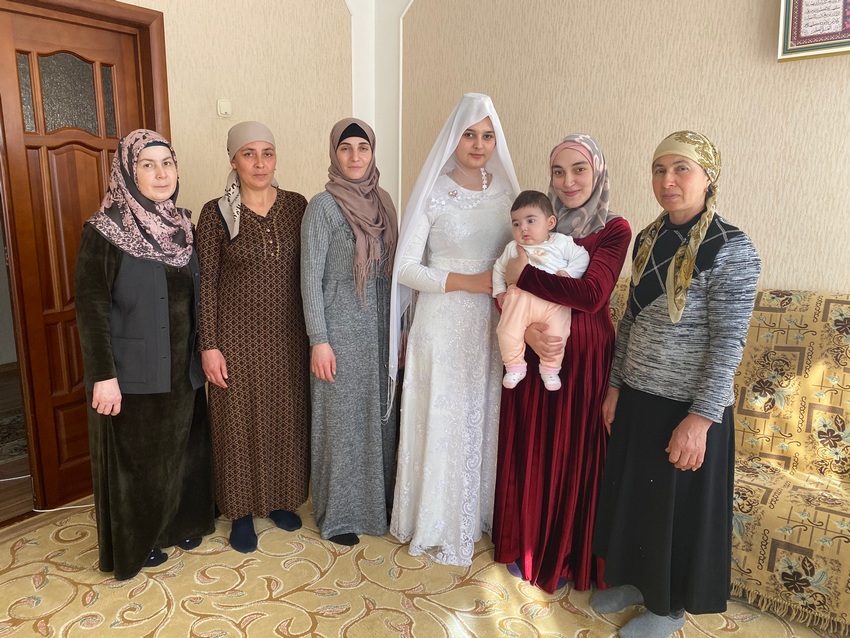
How did they do it? Over the course of this post, I have done to my best to create a clear picture in your mind of the resilience of this forgotten people. Every group that has ruled over the Meskhetian Turks has tried to suppress them and implant false identities into their psyches, but it didn’t work. Before their deportation, they were a loose collection of Turkic tribes who became a unified and orientated group with a common goal who kept their customs, language and rituals alive all across Central Asia. Meskhetian Turks had to “refer more strongly to their ethnic roots… [and] reduce their relations with other ethnic groups,” electing to live in small communities away from their neighbors.29 When it comes to marriages, they “generally avoided marriages in which the bride and groom’s families are related… and have not welcomed mixed marriages” because they’re future is the most important thing to them.30 Without such strict and precautionary rules, the enemies of Meskhetia would’ve succeeded in destroying them.
I cannot imagine living through all of the struggles that the Meskhetian Turks have bravely faced over the last 80 years but doing this research has shown me how unified and strong they are. Whether their future remains in Turkey or Georgia softens its tone and invites them home, I know that this nation will go on and not be stopped. In my last post I ended it by hoping that the Meskhetians would “receive a full and open repatriation to their traditional homeland” in the future and I still hope for that, but since completing this research I think my opinion has changed. Since 1956, Georgia has done nothing but drag its feet, belittle the Meskhetian Turks and limit the repatriation process as much as possible, while Turkey opened its doors and invited the Meskhetians to live freely and safely amongst their Turkish brethren. Of course, it is not a perfect situation, but I know that they will be recognized and taken care of, as well as be able to preserve their culture and grow their nation in Turkey. After 80 years they have found their way back home.
1 Aydıngün, A., Harding, Ç B., Hoover, M., Kuznetsov, I., & Swedlow, S. (2006). Meskhetian Turks An Introduction to their History, Culture and Resettlement Experiences. Culture Profile, (20), Ii-37. Retrieved October 30, 2020, 3.
2 Keskin, S. (2019). THE REPATRIATION PROCESS OF MESKHETIAN/AHISKA TURKS TO THEIR HOMELAND IN GEORGIA: CHALLENGES AND PROSPECTS (Unpublished master’s thesis). Middle East Technical University, 18.
3 Keskin, S. (2019). THE REPATRIATION PROCESS OF MESKHETIAN/AHISKA TURKS TO THEIR HOMELAND IN GEORGIA: CHALLENGES AND PROSPECTS (Unpublished master’s thesis). Middle East Technical University, 25.
4 Aydıngün, A., Harding, Ç B., Hoover, M., Kuznetsov, I., & Swedlow, S. (2006). Meskhetian Turks An Introduction to their History, Culture and Resettlement Experiences. Culture Profile, (20), Ii-37. Retrieved October 30, 2020, 7.
5 Keskin, S. (2019). THE REPATRIATION PROCESS OF MESKHETIAN/AHISKA TURKS TO THEIR HOMELAND IN GEORGIA: CHALLENGES AND PROSPECTS (Unpublished master’s thesis). Middle East Technical University, 26.
6 WIMBUSH, S., & WIXMAN, R. (1975). The Meskhetian Turks: A New Voice in Soviet Central Asia. Canadian Slavonic Papers / Revue Canadienne Des Slavistes, 17(2/3), 320-340. Retrieved November 20, 2020, from http://www.jstor.org/stable/40866873, 331.
7 WIMBUSH, S., & WIXMAN, R. (1975). The Meskhetian Turks: A New Voice in Soviet Central Asia. Canadian Slavonic Papers / Revue Canadienne Des Slavistes, 17(2/3), 320-340. Retrieved November 20, 2020, from http://www.jstor.org/stable/40866873, 334.
8 Kreindler, I. (1986). The Soviet Deported Nationalities: A Summary and an Update. Soviet Studies, 38(3), 387-405. Retrieved November 20, 2020, from http://www.jstor.org/stable/151700, 400.
9 Keskin, S. (2019). THE REPATRIATION PROCESS OF MESKHETIAN/AHISKA TURKS TO THEIR HOMELAND IN GEORGIA: CHALLENGES AND PROSPECTS (Unpublished master’s thesis). Middle East Technical University, 28.
10 Aydıngün, A., Harding, Ç B., Hoover, M., Kuznetsov, I., & Swedlow, S. (2006). Meskhetian Turks An Introduction to their History, Culture and Resettlement Experiences. Culture Profile, (20), Ii-37. Retrieved October 30, 2020, 8.
11 Pentikäinen, O., & Trier, T. (2004). Between Integration and Resettlement: The Meskhetian Turks. ECMI Working Papers, 1-54. Retrieved October 30, 2020, from https://css.ethz.ch/content/specialinterest/gess/cis/center-for-securities-studies/en/services/digital-library/publications/publication.html/19696, 27.
12 Peuch, J. (2008, April 09). Georgia: Meskhetians Search For Cultural Identity (Part I). Retrieved from https://www.rferl.org/a/1096532.html
13 Keskin, S. (2019). THE REPATRIATION PROCESS OF MESKHETIAN/AHISKA TURKS TO THEIR HOMELAND IN GEORGIA: CHALLENGES AND PROSPECTS (Unpublished master’s thesis). Middle East Technical University, 29.
14 Pentikäinen, O., & Trier, T. (2004). Between Integration and Resettlement: The Meskhetian Turks. ECMI Working Papers, 1-54. Retrieved October 30, 2020, from https://css.ethz.ch/content/specialinterest/gess/cis/center-for-securities-studies/en/services/digital-library/publications/publication.html/19696, 28.
15 Aydıngün, A., Harding, Ç B., Hoover, M., Kuznetsov, I., & Swedlow, S. (2006). Meskhetian Turks An Introduction to their History, Culture and Resettlement Experiences. Culture Profile, (20), Ii-37. Retrieved October 30, 2020, 12.
16 Pentikäinen, O., & Trier, T. (2004). Between Integration and Resettlement: The Meskhetian Turks. ECMI Working Papers, 1-54. Retrieved October 30, 2020, from https://css.ethz.ch/content/specialinterest/gess/cis/center-for-securities-studies/en/services/digital-library/publications/publication.html/19696, 16.
17 Keskin, S. (2019). THE REPATRIATION PROCESS OF MESKHETIAN/AHISKA TURKS TO THEIR HOMELAND IN GEORGIA: CHALLENGES AND PROSPECTS (Unpublished master’s thesis). Middle East Technical University, 35.
18 Aydıngün, A., Harding, Ç B., Hoover, M., Kuznetsov, I., & Swedlow, S. (2006). Meskhetian Turks An Introduction to their History, Culture and Resettlement Experiences. Culture Profile, (20), Ii-37. Retrieved October 30, 2020, 16.
19 Narimanishvili, N., & (Photo), O. A. (2020, April 24). Return from exile: Muslim Meskhetians from Georgia. Retrieved from https://jam-news.net/the-return-from-exile/
20 Blacklock, D. (2005). Finding Durable Solutions For the Meskhetians. European Centre for Minority Issues, (56), 1-20. Retrieved from https://css.ethz.ch/content/specialinterest/gess/cis/center-for-securities-studies/en/services/digital-library/publications/publication.html/25902, 13.
21 Peuch, J. (2008, April 09). Georgia: Meskhetians Search For Cultural Identity (Part I). Retrieved from https://www.rferl.org/a/1096532.html
22 Blacklock, D. (2005). Finding Durable Solutions For the Meskhetians. European Centre for Minority Issues, (56), 1-20. Retrieved from https://css.ethz.ch/content/specialinterest/gess/cis/center-for-securities-studies/en/services/digital-library/publications/publication.html/25902, 12.
23 Peuch, J. (2008, April 09). Georgia: Meskhetians Search For Cultural Identity (Part I). Retrieved from https://www.rferl.org/a/1096532.html
24 Pentikäinen, O., & Trier, T. (2004). Between Integration and Resettlement: The Meskhetian Turks. ECMI Working Papers, 1-54. Retrieved October 30, 2020, from https://css.ethz.ch/content/specialinterest/gess/cis/center-for-securities-studies/en/services/digital-library/publications/publication.html/19696, 26.
25 Keskin, S. (2019). THE REPATRIATION PROCESS OF MESKHETIAN/AHISKA TURKS TO THEIR HOMELAND IN GEORGIA: CHALLENGES AND PROSPECTS (Unpublished master’s thesis). Middle East Technical University, 39.
26 Blacklock, D. (2005). Finding Durable Solutions For the Meskhetians. European Centre for Minority Issues, (56), 1-20. Retrieved from https://css.ethz.ch/content/specialinterest/gess/cis/center-for-securities-studies/en/services/digital-library/publications/publication.html/25902, 12.
27 Keskin, S. (2019). THE REPATRIATION PROCESS OF MESKHETIAN/AHISKA TURKS TO THEIR HOMELAND IN GEORGIA: CHALLENGES AND PROSPECTS (Unpublished master’s thesis). Middle East Technical University, 40.
28 Aydıngün, A. (2002). Creating, recreating and redefining ethnic identity: Ahsika/Meskhetian Turks in Soviet and post-Soviet contexts. Central Asian Survey, 185-197. Retrieved December 12, 2020, 192.
29 Aydıngün, A., Harding, Ç B., Hoover, M., Kuznetsov, I., & Swedlow, S. (2006). Meskhetian Turks An Introduction to their History, Culture and Resettlement Experiences. Culture Profile, (20), Ii-37. Retrieved October 30, 2020, 17-18.