By the time I moved to the United States of America, I had lived through poverty, famine and war, yet I consider myself one of the most privileged individuals in the world. The society in which I was raised had just begun learning to stand on its own when I was presented with the opportunity to serve as an English Instructor in China and then later to come to the states to pursue any degree of my choice.
Indiana University in Bloomington is home to the great Hoosiers and corn fields, – became my home of peace, comfort and more opportunities. I fell in love with my new life. Within weeks, as part of my language training and being an avid reader, I came across this quote by Mr. James Baldwin “To be born in a free society and not to be born free is to be born into a lie. To be told by co-citizens and co-Christians that you have no value, no history, have never done anything that is worthy of human respect destroys you because in the beginning you believe it.”
It left me drained for days. I began to examine my new home in a new light, observing interactions between people just so I can uncover the meaning behind the quote. I knew this quote had a context, history and it wouldn’t apply to today in an obvious way. Partially blaming my own story of going through persecution and displacement I took these words to heart but mostly realizing that history can help define its society through the unspoken words.
Over the next decade, in each of my professional and academic experiences I looked for clues to help me decode the relevance of what Mr. James Baldwin was trying to say. I learned that today’s society is not perfect and that the imperfectly narrated history, even though it was a long time ago, it left a lasting mark on the people. For that reason, I have chosen to continue learning so that I can make sense and stop believing that my history doesn’t matter.
In the book edited by Manja Stephan-Emmrich and Philipp Schroder titled Mobilities, Boundaries and Traveling Ideas, Kamoludin Abdulloev authors the first chapter in the book with the title: “Emigration within, Across and Beyond Central Asia in the Early Soviet Period from a Perspective of Translocality” a term that this collection of works seems to be trying to coin in order to explain the notion of movement as part of the cultures of a borderless Central Asia before Soviet Union.
Abdulloev Kamoludin, a historian from Tajikistan, in this essay looks at Central Asia from an angle that stood out to me because he is situating the people of Central Asia with a common history of being Muslims in the region. The reason I find that helpful is because up until now I have read material on Central Asia from a perspective of researchers and historians trying to understand Soviet Rule, the regime and its impact on the region and its people less with very little agency granted to the people themselves as they formed identities much wider than just being Soviet subjects.
Abdulloev quotes Zevelev when he talks about the early Soviet times; “The study of outmigration from Soviet Central Asia was less a subject of scholarly investigation than a form of political history in which those who migrated from the USSR were identified as opponents of Soviet regime – counter-revolutionaries whose influence needed to be eradicated” I can agree to the fact that the scarcity of material on why Central Asians chose to leave or come back to the Soviet parts is added to the lack of deeper understanding of and the significance of religion in the region.
Abdulloev says: “For exiled Central Asians, religion served as an important source of support to come with ostracism they experienced in their host country, as well as means to depart from the strictly local, in territorial and cultural terms, and embrace more extraterritorial and translocal world views and imaginations” However, as the author outlines a process of mapping of Central Asia by three powers, Russia, Britain and China that explains why there is little documented material on the people of the region as this contest was a highly political one often referred to as the “Great Game.”
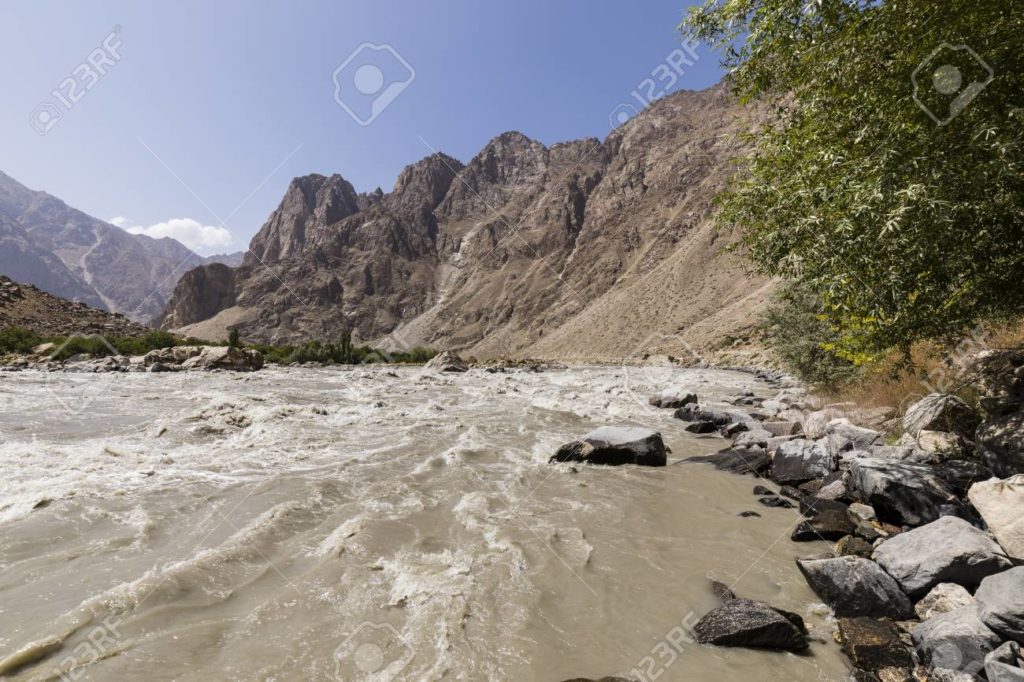
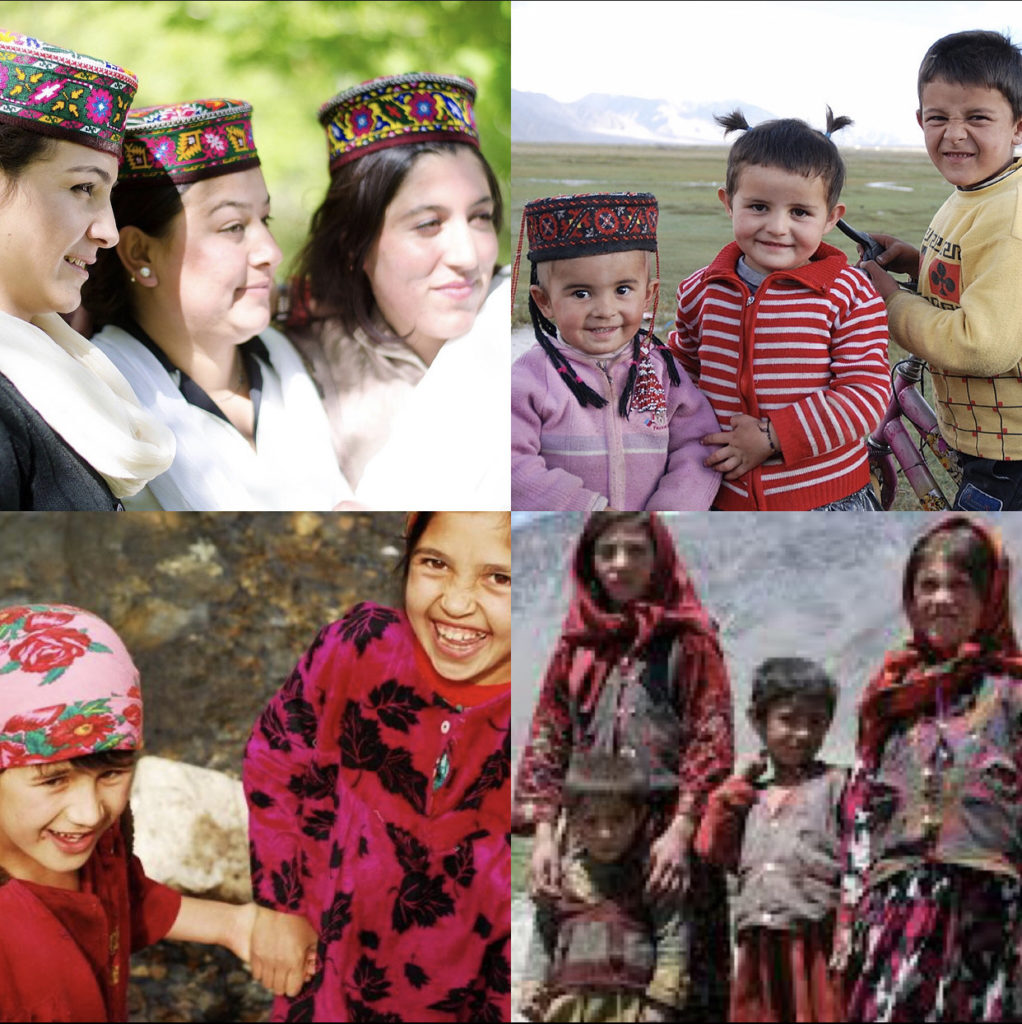
I agree that this process led for Central Asian people to be alienated from their own cultures, historical, and economic transitions to serve the interests of distant powers playing a political game. In the same essay it has been pointed out that “while the compromise among the empires proved to be satisfactory in terms of preserving international security, the outcome for the local peoples who inhabited the territories was more problematic.” From my personal accounts a family was now broken into three countries – Tajikistan, Afghanistan and Pakistan transformed and forced into the definition of ethnic minority to each country due to distinctions in language, faith and etc…
As I continue my studies, I would like to expand my understanding of a new term “Greater Central Asia” introduced to identify the region according to proposed by American scholars but for me not just from a perspective of geographical boundaries and its neighbors. For example, I would like to explore a little further the current migration from Tajikistan and other Muslim countries in the region to Dubai, which is very prevalent and despite the lack of language there seems to be a pull factor for Central Asians that is most probably religion. From Abdulloev’s essay the mass migrations within Greater Central Asia to and from Afghanistan, Turkistan and Bukhara (Uzbekistan) were because of religion but how does that play out today? What does it do to people in the host country versus countries of origin? Why should Education policy invest thought and resources in order to create opportunities for history to be narrated for the benefit of the least advantaged?
References:
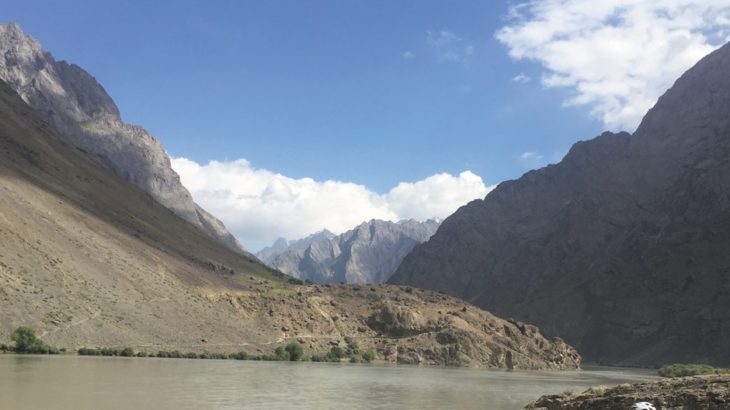
- Featured image at the top: https://geographical.co.uk/people/explorers/item/2350-cycling-the-panj-valley
- Kamoludin Abdulloev bio: https://nrvsschool.fsv.cuni.cz/?page_id=980
- Image 2 source: https://www.flickr.com/photos/chimck/2895175032/, https://en.wikipedia.org/wiki/Burusho_people, https://pamirhighwayadventure.com/tour/pamir-afghanwakhan-adventure-tour/, https://br.pinterest.com/pin/112378953171749696/
- Image 1 source: https://www.123rf.com/photo_119147359_border-river-panj-river-in-wakhan-valley-with-tajikistan-right-and-afghanistan-left.html
- Stephan-Emmrich, M., et al., 2018., Mobilities, Boundaries, and Traveling and Ideas., Open Book Publishers., https://www.openbookpublishers.com/product/603
Saying that religion became a strong support for Central Asians who lived in exile is not the same thing as saying that they left the Soviet Union due to religion. One could leave for political reasons (follower of the exiled Emir) or economic reasons (one’s land and possessions were confiscated), but that has little to do with how exiles found community and support in religion.
Lovely photos! I’d like to know more about them.