Armenian history has a strong influence on its development today especially for the evolving role of women in their society. When the Ottoman Empire collapsed, Armenia found itself, along with several other neighboring nations in the droves of Russian occupation until the fall of the Soviet Union in 1991. Whether under the thumb of Turkey or Russia, the twentieth century was difficult for Armenians; they began to rebuild after declaring independence on September 21, 1991 (Soloman, 2010). With independence came professional hardship for women, as their percentages filling Armenia’s labor force decreased (World Bank, 2017). While freedom from Soviet rule may have been celebrated, with it returned domestic expectations and old-world values.
This three-part essay on women in Armenian society has evolved and includes the need for greater female representation in highly influential and leadership positions in growing industries to women making a difference in their society. Perhaps it is not one’s bank account or professional title that defines their legacy, but instead, what they did for others. This will help advance and inspire a shift in gender roles and expectations in the future. Therefore, how have women helped paved the way for a future of gender equality in Armenia?
Blog post three, Room for Growth: The Place of Armenian Women within a Patriarchal Society http://mariannekamp.net/?p=1622
Blog post four, Defining Expectations of Women in Armenia http://mariannekamp.net/?p=1816
A positive impact often starts with education. In 2010, 94.1% of the Armenian female population had at least a high school education; this is second only to Kazakhstan, at 99.3% in Central Asia (NationMaster, 2010). An unrelated, but noteworthy point in secondary education concerns textbooks: women are represented less than men and are done so in traditional roles such a motherhood (World Bank, 2014). From a young age, girls are taught of their expected place in society and it is up to a new generation of modern thinkers with powerful female role models to give them another option. According to NationMaster.com, women make up more than 70% of educational employees; however, their low numbers of representation in leadership roles at institutions of higher education means limited influence over new and modified educational policies that directly affect their jobs. Further, in 2012, the women netted an average of just 59% of the average male income and their average salaries made up just over 64% of those of men (2014).
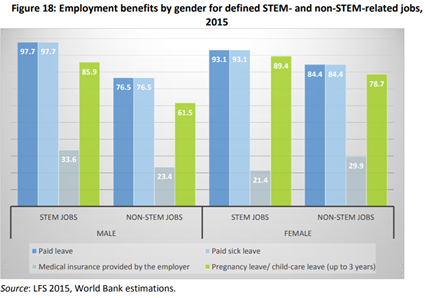
For example, in 2015 just 7.2% of legislators, senior officials and managers are women and 2.3% of professional, scientific and technical positions are occupied by women (World Bank, 2018). With these types of jobs seemingly in high demand, it is necessary for Armenian women to train for and fill these positions for the nation to remain competitive in the global economy; however, under constant consideration is the weighing conflict between upholding traditional values, as if to not lose sight of one’s history versus moving closer to gender equality in all facets of society. Additionally, as the chart above shows, the majority of benefits are more favorable in the STEM job market.
Further, since the majority of migrants are male, women are left to support themselves in low-paying, stereotypical job sectors at home. Despite the 1995 constitutional declaration of equal rights for women, this equality is often overlooked. Therefore, it remains of vital importance for women’s organizations and rights groups to shoulder the responsibility of lending a helping hand whenever possible and providing resources that may lead women to stand confidently on their own. Alternatively, migration may slow with development at home, reducing poverty and boosting economic growth, thus taking away the reason for leave in the first place (DeHaas, 2020). In this case, I wonder if the gender gap would widen since more men would stay home and fill positions otherwise taken by women by default; or a middle ground in my opinion, where men stimulate economic growth after returning home with new knowledge and skills to join women already working in positions in demand.
One of these organizations, the Hrayr Marukhyan Foundation, a self-described democratic think tank is led by Mary Titizian who said “despite their education, knowledge and experience, they are often striped of a chance to enter such spheres as, for instance, high politics” (2012). As my first blog post focusing on Armenian women pointed out, their numbers in education and the workforce are not lacking; it is instead, as Ms. Titzian noted, the opportunities available to them upon entering the professional ranks and the highly influential and future shaping sectors that are deficient of female representation.
As with many other nations, Armenian women proved their value in the workplace during World War II when they filled jobs vacated by men who left to fight; however, in the decades since, this has not translated into erasing gender-based stereotypes and traditional domestic roles. Despite this uphill battle, many Armenian women are strong and capable leaders, who have set the bar high for the future of their gender.
During the dark years of the early twentieth century, the drive and determination of one Armenian diaspora trumped any gender-based obstacles in her homeland, far away from her physical self, still in the development phase of gender equality. Second generation Indian-Armenian Diana Apcar spoke her cause for people to have “security of life and property on the soil of their own country.” Bloodshed continued nonetheless, surrounding her homeland, forcing fellow Armenians further east into temporary Asylum in Japan, previously an unlikely pairing. Little did she know at the time that her actions would serve as a link between her homeland and the ears of the international community. Her assistance in helping Armenian asylees assimilate in Japan and later gain passage to the United States made her somewhat of an unofficial ambassador to a vulnerable population (Apigian, 2020).
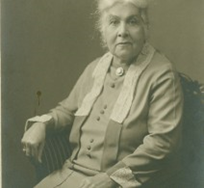
According to the Armenian Weekly, Apcar engaged “in correspondence with hundreds of world leaders and intellectuals, raising awareness and calling for action to stop the massacres committed against her people in the Ottoman Empire.” Councilmember Melkom Melkomian continued “she dedicated her entire life’s work to her motherland and her people, single-handedly saving hundreds of refugees fleeing from the Armenian Genocide, but had until now been somehow overlooked by her very own people” (2019).
Most remarkably, Diana never saw Armenia for herself. She spoke Armenian (Apigianm 2020). And her draw to help those in a land that, she had biological ties to, but was never in herself, represents humanitarianism and diplomacy unlike anything I have read about before.
In 2018, Filmmaker Mimi Malayan, Diana Apcar’s great-granddaughter honored her legacy in the documentary film The Stateless Diplomat. After coming across some documents depicting her great-grandmother’s service, Malayan was inspired to share her life as an author, humanitarian and activist with the world (Malayan, 2019). The Stateless Diplomat does just that. To further honor her legacy, Armenia, Diana Apcar’s foreign homeland, added her name to a park in central Yerevan last year.
Next, my journey into the role and importance of women in Armenian society shifts to an Armenian humanitarian who became a forced migrant when her homeland faced genocide early in the twentieth century. A fedayee, derived from Arabic meaning “those who sacrifice,” Hripsime Metsadurian Sassouni, better known simply as her alias Lola, dedicated her life to serving impoverished populations. After moving to Turkey with her family in her mid-twenties, Lola joined the Armenian Revolutionary Federation, an organization whose objective is “to bring social justice, democracy and national self-determination to the Armenian people” (2016). She organized efforts to help marginalized groups including assuming responsibility overseeing orphanages. Amongst her heartfelt missions, she fought alongside men against the Ottoman Empire and led those she was destined to help, to safety (ARF, Eastern Region, 2016).
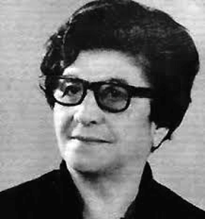
Despite her promising relief efforts, Lola spent time in prison due to her ideological beliefs. Following her release, she continued her life’s work in Iran before returning home and serving her people through work with the Armenian Red Cross. Lola then continued her humanitarianism with this agency outside the borders of her homeland; she traveled to Egypt, France, Syria and Lebanon. World War II saw her efforts co-create a program that established medical facilities for those in need. She “pledged her whole life to bringing nutrition, education and health to the impoverished” (ANCA, Eastern Region, 2020).
Third, Lara Aharonian is the co-founder of the Women’s Resource Center. In modern society, youth and women are working to find their voice in a historically patriarchal society. She currently utilizes her passion for human rights and advancing women’s rights to help move Armenia forward in these lanes. She is also a board member of the Human Rights House in Yerevan (Human Rights House Foundation, 2018).

Her path to guiding women through the bureaucratic red tape in search of justice began on a trip to Armenia where she helped a friend who experienced an act of violence. This pushed Aharonian to do more by becoming an advocate for women who would otherwise likely remain silent. Lebanese by birth, Lara return to her Armenian familial homeland after living in Canada where she migrated to escape violence. Having lived through such a difficult experience and journey herself, Aharonian relates to many of the women she now helps achieve justice and find their voice.
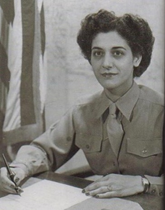
As the only student in the class unable to answer the question asked to her Monday, I decided to expand my research to include an Armenian American woman. Born in the United State to Armenian parents, Sue Sarafian Jehl, the oldest of five girls, quickly became a role model for her younger sisters. A member of the Armenian Youth Foundation, she connected to her familial roots as a teenager and later, as a member of the Women’s Army Corps, did not let gender discrimination prevent her from standing beside former United States president, Dwight Eisenhower, as his personal secretary. The Women’s Army Corp paved the way for the future of women in the military. Following the war, Jehl became a Second Lieutenant (Dekhane, 2020).
In 1991, at age 73 and still seemingly sharp as whip, Sue gave an interview recalling many of her professional life details and accomplishments with ease. She spoke about her time working alongside Eisenhower with a polite strictness, saying “Holidays, Sundays, didn’t mean a thing, we worked seven days a week.” She fondly added “he wrote all his own speeches, everything. Very articulate, he was really one of the most intelligent people I’ve ever met in my life.” Finally, Sue shared a story about returning home, as an enlisted female, sometimes the only female, when her male colleagues were often met by family, anxiously awaiting their arrival and she had no one waiting for her. In one such case, without appropriate footwear to accompany her uniform, a fellow male enlistee was assigned to take her shopping. Lucky him (Teasley, 1991). An inspiration to those around her and to those who never knew her, she now rests alongside many other military veterans in Arlington National Cemetery (Dekhane, 2020).
Armenian diaspora and those with other ethnic ties to Armenia may be inspired by these women to reevaluate their perception of women and the opportunities available to them. Additionally, young girls may look up to these women and see a role model and believe they are capable of more. Further, I learned about the importance of one’s contribution to a difference in their community, paycheck aside; my focus shifted from the importance of women filling particular positions within the workplace, is not necessary for them to make a difference to their community.
Rebuilding and learning to operate without supervision is challenging at best. Over the last few decades, Armenians have grown into new leadership roles, pushing their country forward. As I mentioned in my previous blog post, Armenia often sacrifices labor needs in growing industries to uphold the tradition of historical gender roles. While promoting equality in education and in the workforce for women would certainly strengthen Armenia’s infrastructure and increase their global economic position, gender expectations in Armenian society result in men seeking opportunities outside of Armenia with skills for high paying jobs in growing sectors, while women are usually left in domestic roles or lower paying positions at home.
Hopefully, the women featured here may inspire others to defying expectations and dream big by turning a deaf ear to those who stand in their way of progress and prosperity. Before the future female leaders of Armenia may step to the plate and be heard, social justice and gender equality must move to the forefront. Armenia is a nation with deeply rooted patriarchal traditions. For example, shocking to a western raised female, clergy member Hyar Komitas boldly declared “women should be relegated to be feminine, beautiful objects and mothers, but not equals to men” (2015); on the contrary, in the article Armenian Women Today: Realities and Challenges, Mary Matosian and Ani Jilozian bluntly offer “a society where women are not active participants can never advance” (2015). I agree.
With ideas flowing and role models in place, let’s look to the future of development and gender equality in Armenia. Armenia’s prime minister along with several government officials designed a 30-year plan for the development of their nation. The ambitious plan calls for elite education and massive economic growth with subgoals of increasing wages and reducing poverty. Without any specific references to women, we can only hope that these opportunities will show no bias. With the current global pandemic still hovering, a delay in the progress of the Armenian Transformation Strategy 2050 should be expected (Elliot, 2020). While this plan is not specific to women, it may encourage them to pursue education and later professional opportunities in job sectors traditionally occupied by men. They would then also receive high wages and the ability to care for themselves and their families despite the potential reality of their husband working abroad.
In summary, “the advancement of an Armenian society which provides its citizens with security, equality, freedom, dignity and progress” is the goal, though only guidelines are in place now (Elliot, 2020). For centuries women have run households quietly and efficiently across the globe. Now it their turn, in Armenia, to set an example for developing countries to expand this role, with grace and professionalism outside of their home.
Bibliography
2014, Armenian Association of Women with University Education, www.un.am/up/file/CEDAW%20Alternative%20Report%202009-2012.pdf.
2017, Leveling the STEM Playing Field for Women, documents1.worldbank.org/curated/en/355331495185406481/pdf/ACS21924-WP-P157930-PUBLIC-ArmeniaGenderandSTEMReportFINAL.pdf.
Apigian, Charlene. “Diana Apcar.” Remarkable Armenians, Remarkable Armenians, 10 Nov. 2020, www.remarkablearmenians.com/blog/diana-apcar-writer-merchant-advocate-for-armenian-rights.
“Armenia Education Stats.” NationMaster.com, NationMaster, www.nationmaster.com/country-info/profiles/Armenia/Education/All-stats.
“Beyond Motherhood: Female Fedayees.” The Armenian Weekly, 9 July 2020, armenianweekly.com/2020/07/09/beyond-motherhood-female-fedayees/.
De Haas, Hein de, et al. The Age of Migration: International Population Movements in the Modern World. The Guilford Press, 2020.
Dekhane, John. “Paving the Way.” The Armenian Weekly, 2020, armenianweekly.com/2020/11/11/paving-the-way/.
Elliot, Raffi. “Armenia Transformation Strategy 2050 Briefly Explained.” The Armenian Weekly, 23 Sept. 2020, armenianweekly.com/2020/09/23/armenia-transformation-strategy-2050-briefly-explained/.
Foundation, Author: Human Rights House. “Fighting for Women’s Rights and Equality in Armenia.” Human Rights House Foundation, 4 Sept. 2018, humanrightshouse.org/interviews/fighting-womens-rights-equality-armenia/.
Haroyan, Arpine. “From the Forgotten Pages of History: The Prolific Leola Sassouni.” EVN Report, 1 Mar. 2020, www.evnreport.com/raw-unfiltered/from-the-forgotten-pages-of-history-the-prolific-leola-sassouni.
Malayan, Mimi. “The Making of ‘The Stateless Diplomat.’” The Armenian Weekly, 13 Aug. 2019, armenianweekly.com/2019/08/13/the-making-of-the-stateless-diplomat/.
Matosian, Mary, and Ani Jilozian. The Armenian Weekly, 2015, anca.org/armenian-women-today-realities-and-challenges/.
Rodriguez-Chamussy, Lourdes, et al. World Bank, 2018, pp. 6–8, The Economics of the Gender Wage Gap in Armenia.
Soloman, Susan. Culture Smart Armenia. Kuperard, 2010.
Staff, Torontohye. “Armenia Appointed Its First Woman Mayor.” 28 June 2018.
Staff, Weekly. “Pashinyan Calls Loss in Kapan A ‘Win for Democracy.’” The Armenian Weekly, 24 Oct. 2018, armenianweekly.com/2018/10/24/pashinyan-calls-loss-in-kapan-a-win-for-democracy/.
Staff, Weekly. “Yerevan Park Named After Diana Apcar.” The Armenian Weekly, 9 Oct. 2019, armenianweekly.com/2019/10/09/yerevan-park-named-after-diana-apcar/.
Teasley, Mack. “Interview with Sue Sarafian Jehl.” 1991, www.eisenhowerlibrary.gov/sites/default/files/research/oral-histories/oral-history-transcripts/jehl-sue-sarafian.pdf. Accessed 2020.
“Transformation of Gender Roles in Armenian Society: Heinrich Böll Stiftung: Tbilisi – South Caucasus Region.” Heinrich-Böll-Stiftung, 6 Nov. 2012, ge.boell.org/en/2012/11/06/transformation-gender-roles-armenian-society.
“Welcome to the Website of the Armenian Revolutionary Federation, Eastern Region USA.” ARF Eastern Region USA, 2016, arfeastusa.org/.