Marianne Kamp
Armenia has not been blessed with either prosperity or population growth since it became an independent country with the collapse of the USSR in 1991. This graph shows that at the beginning of independence, Armenia’s population was about 3.5 million, and as of 2020, it is 2.6 million. Many of these migrants have gone to Russia, as can be found from data on CIS migration and from the Russian State Statistical Committee, which offers all kinds of documentation on migration to those who read Russian.
Nonetheless, Armenia holds a promise to ethnic Armenians worldwide, and sometimes circumstances encourage diaspora Armenians to move to Armenia. The August 2020 Beirut blast turns out to be one of those, prompting a thousand Armenians from Lebanon to pick up and go to Armenia.
When the Civil War was raging in Syria, Armenia opened up to Armenian refugees, with the possibility of staying and becoming Armenian citizens. Coverage by the international Armenian online paper (in English) suggests that not all of those Syrian-Armenians are entirely happy in their new home, citing problems with corruption. Interestingly, the question of whether to register as refugee or to claim citizenship raises interesting questions. As Michael Goodyear notes in that article, “the legal definition of refugee under the Refugee Convention requires that a refugee have no effective nationality that can protect them.” This seems like a rather strained interpretation of the UN Convention from 1951, that says “. . . is outside the country of his nationality, and is unable to, or owning to such fear, is unwilling to avail himself of the protection of that country.” If some Syrian-Armenians claim citizenship rather than registering as refugees, then will all refugee Armenians start to be seen as belonging to, and destined to go to, Armenia?
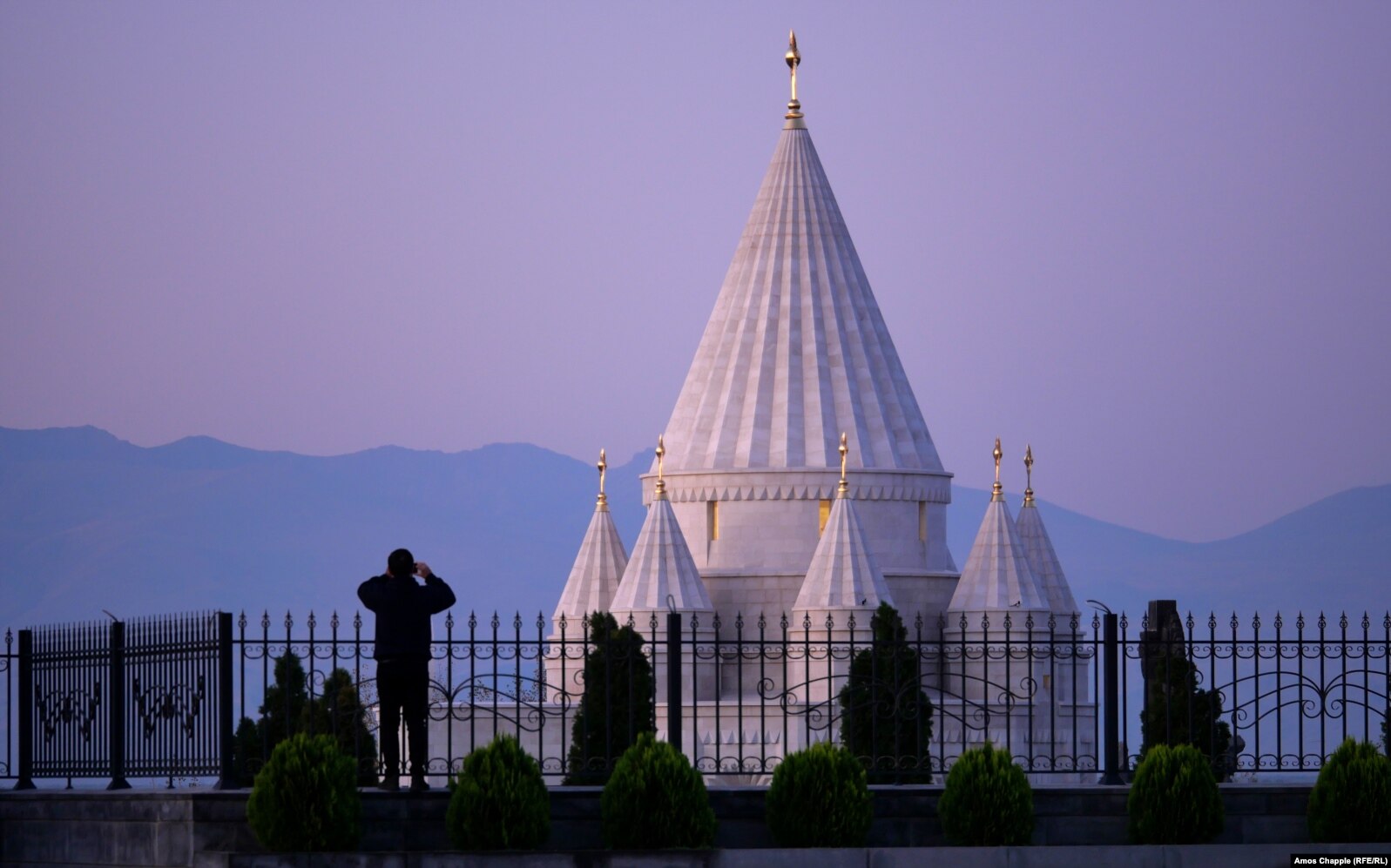
Armenia is home to a Kurdish Yazidi minority. Yazidis were a particular target for ISIS’s genocidal actions in northern Iraq. Starting in 2014, Armenia became host to some Yazidi refugees from Iraq. The longer run on that story, though, is that Iraqi Yazidis did not feel especially at home in Armenia: traditions differed to much, as Amos Chapple and Andy Heil noted when reporting on the grand opening of Armenia’s new Yazidi temple in 2019.