One area of migration that I kept coming back to in our discussions of migration theory was the bidirectional labor migration I encountered while living near the Georgian-Turkish border. So many of the theories of migration (like the push-pull model, neoclassical migration theory, human capital theory, etc.) seemed to easily explain migration between high-developed, wealthy […]
2020
The question: to migrate or to not migrate? Both exude agency, both are controlled by structures.
Gender is an important dimension of migration. Female migration workers in the past have been dismissed and defined through the patriarchal structures of society as wife, mother, and dependent on the male breadwinner. Through different aspects of international migration, however, these structures and prescribed gender roles have been slowly challenged through traditional family models, and […]
NELM Can’t Explain Labor Migration from Uzbekistan
The new economics of labor migration (NELM) uses family unit as the unit of analysis. On the surface, it looks like it is a perfect theory that can be used to explain the labor migration situation in Uzbekistan. From Sophie Massot’s article, we learned that the Uzbek society is heavily family-driven, and the decision to […]
The Turkish Experience in the Russian Federation
When we talk about migration to the Russian Federation, the main receiving countries that come to mind are those in Central Asia, but rarely do we think about Russia’s southwestern neighbor, Turkey. Towards the end of the Cold War, Turkey improved their relations with the Soviet Union through trade deals, which allowed Turkish companies to […]
Exodus of Cultural Capital: the Migration of Jewish Uzbekistanis from Bukhara to Broadway
If you walk down 108th Street in Queens, NY, you’ll see some familiar sites of an Uzbek diaspora community: tandoor restaurants, traditional clothing stores, and newspaper stands carrying a publication called the Bukharan Times. More curious things you may find are signs with Hebrew alongside Uzbek Cyrillic, synagogues, and Jewish community centers. One does not […]
New finds online–Central Asians in Russian prisons, and Tajik women laborers
Marianne, Sept 18 Thanks to my many fabulous facebook friends, I sometimes become aware of things that might interest some of you and are related to this class. The first is a blog by scholar Rastamjon Urinboyev. He writes about legal and social issues for Central Asian migrants in Russia, and this is his posting […]
Constructing New National Identities in the Soviet Union and Turkey
As part of his “Introduction” to The Age of Migration: International Population Movements in the Modern World, author Hein de Haas underscores a key point of tension regarding migration in the modern era: while the movement of peoples is nothing new, the challenges they present to nationalist ideas underlying many contemporary nation-states are. From the […]
Moscow’s Little Kyrgyzstan
For my blog post, I decided to watch a short documentary which I’ve been wanting to check out for quite a while titled, “Moscow’s Little Kyrgyzstan”. The documentary is approximately 25 minutes long and highlights the experiences of Kyrgyz migrants in Moscow. The documentary was produced by a UK-based company named Journeyman Pictures. All of […]
Gender and Migration
In The Age of Migration, De Hass notes that migration patterns differ across gender. For example, he notes that in cases such as in Moldova, most migrant men travel to Russia and other central Eurasian countries, while Moldovan women tend to travel to Italy to fill the demand for caseworkers (De Hass 129). In fact, […]
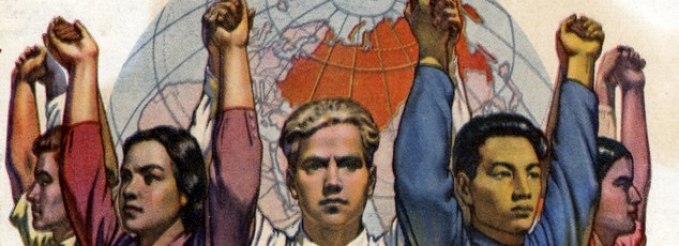
Druzhba Narodov – Friendship of peoples
In 2019, Pamiris of Tajikistan, the Tajik people of the Pamir mountains, current labor migrants in Moscow cleaned the grave of Shirinsho Shotemur at Donskoy Cemetery on the eve of Eid ul-Fitr (religious holiday celebrated by Muslims worldwide that marks the end of Ramadan, the Islamic holy month of fasting.) Shirinsho Shotemur, a prominent Tajik […]