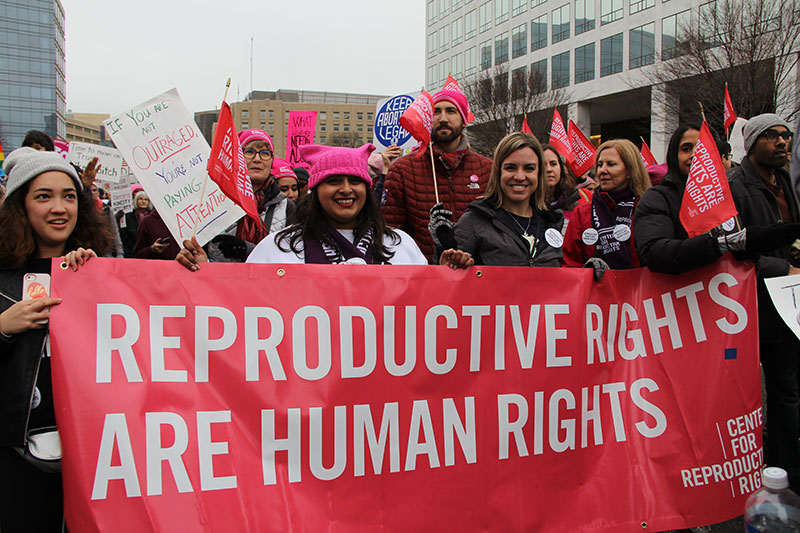
Due to various political and systematic factors, many migrant women around the world are not provided access to necessary reproductive health services. While many women may work in countries that offer sexual health programs to native women, it is fairly common to find policies in place that restrict migrant women’s freedoms to obtain birth control and other essentials abroad. Even for legal migrants, reproductive health services are often not covered as a part of their migrant health service plan because this sect of healthcare is gender-specific to women, and therefore overlooked. It is also necessary to emphasize that planned parenthood and other similar organizations do not solely function to provide contraceptives and abortions, but also STI and cancer screenings. Due to the strong association of these organizations to focus on fertility and contraception, a lot of other health services are restricted for migrant women. Because of this migrant women are less likely to receive other preventive services, such as Pap tests (detects and prevents cervical cancer) cancer screenings for reproductive organs, vaccinations for hepatitis B, and mammograms. This can increase migrant women’s chances of not receiving treatment for STIs or developing a later stage of cervical cancer, which could have been treated if they had coverage for reproductive health services.
Women’s access to sexual and reproductive health coverage and care is an essential service for all women, regardless of immigration status. In order the better conceptualize the barriers migrant women encounter to obtain reproduction health services, a comparison between migrants in the United States and migrants from Central Asia will be articulated.
One question I constantly thought of was how governments are constantly scrutinizing migrant women for having children abroad, but then fail to provide access for necessary sexual and reproductive health coverage and care. This state-sanctioned hypocrisy that polices migrant women’s bodies and restricts their access to reproductive health services while simultaneously discouraging them to give birth abroad is infuriating. I remember for our class we read about the experience of Turkish women moving to Germany for work. The article noted that as a part of the customs process when the Turkish women arrived in Germany during the 1960s and 70’s, German government officials provided a pregnancy check in which they violated Turkish women’s bodies to ensure they were not pregnant. This is an example among many in which xenophobia influences governments to obsessively maintain order by restricting migrant women’s bodily autonomy in order to decrease the likelihood of them giving birth abroad, leading to permanent settlement in a destination coutnry.
Migrant Women in the United States:
Similar to Germany, the United States is also culpable in restricting migrant women’s reproductive health through their problematic healthcare policies. In the United States, while half of the migrant women are of childbearing age (15-44), the majority of them are unable to apply for Medicare for the first five years of residence, although exceptions are sometimes given to pregnant women and children under 18. If migrant women are lawfully in the US, they still need to buy private insurance separately for the first 5 years of residence (Hasstedt). This is inherently problematic, as many migrant women work in the domestic field, and therefore are often not provided with health insurance. While the Deferred Action for Childhood Arrivals (DACA) program has helped many migrants remain legally in the country, after recent repeated attempts to dismantle this program, many women fear that the healthcare coverage they were finally able t attain might be taken away. However, if the US stopped approving policies to encourage temporary migration over permanent migration, then policies that force women for the first five years to not receive Medicaid and therefore essential reproductive healths services could be fixed.

As Hasstedt also notes, “immigrant women overall are less likely to report unplanned or preterm births compared to U.S.-born women. However, other studies indicate immigrant women may be at heightened risk for some pregnancy and birth-related complications” (Hasstedt). This further proves that these services are even more needed in migrant communities due to their heightened risks of complications.
In addition, one Guttmacher study found that only half of the immigrant women had received contraceptive services or information in the previous year, compared to two-thirds of U.S.-born women. Another study found that immigrant women are less likely to have used a contraceptive method deemed “highly effective” at preventing pregnancy (e.g., IUDs and implants), with variations by race and ethnicity (Coller). These trends may be driven in part by individual women’s contraceptive needs and preferences, high up-front costs, and differences in cultural background and expectations. According to a survey by Karen Coller on unintended births among adult immigrant and U.S.-born Mexican women in the Los Angeles, American women and immigrant women in the Los Angelos area both had high occurrences of unintended pregnancies, but US-born women had a higher rate of unintended pregnancy (Coller). Also, as foreign women were less likely to pay for private insurance than American women due to lower-incomes and immigrant status, complications in pregnancy were more common.
Eritrean Women in Israel
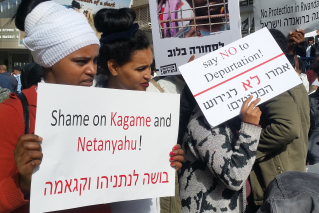
This problem of restrictive reproductive healths services spans throughout the United States but also around the world. In Israel, more and more Eritrean refugees have settled in the nation. As of 2017, research on Eritrean women’s access to contraceptives has illuminated that the theme of states restricting female bodily autonomy of migrants has been common. While not always direct, Israel has failed to effectively provide contraceptive services to Eritrean refugee women. In Gebreyesus’ article on Barriers to contraceptive care-seeking: the experience of Eritrean asylum-seeking women in Israel, She identifies that there are seven main factors that cause migrant women to be disadvantaged in qualifying and receiving these services. These barriers included a high cost of contraceptive services, the long-distance from home/work to health facilities; limited healthcare resources; and a failing healthcare system, a low standard of care in private clinics; discrimination, and language barriers (Gebreyesus).
However, given the graphic above, I think it is safe to infer that the majority of migrant women face the barrier of immigration status when it comes to accessing reproductive health services. Originally, I thought that a lack of sex education would play a huge role in how much migrant women received these services. While sex education awareness plays an important role, sex education about reproductive services such as birth control has been on the rise. For example, on our optional reading on women in Afghanistan, women of migrants learned more about contraceptives through their husbands’ exposure to these reproductive services abroad. The article found that having a migrant family member leads to increased exposure and knowledge about birth control than women who live without a migrant. However, this can have a positive or negative impact depending on where the husband migrated to. For example, husbands that migrated to Pakistan developed more conservative views on birth control, which led to them discouraging their wives from taking it. Conversely, men who migrated to Iran, which has a more progressive view on contraceptives, were more likely to encourage their wives to take birth control (Roosen). This article further emphasizes the ways in which cultural norms can impact how migrant communities interact with concepts such as contraceptives and how preconceptions can change or deepen after exposed to this knowledge.
Interestingly, Russia is starkly different than its Central Asian neighbor in that it is less conservative when it comes to abortion and reproductive health In a previous blog post, I mention an article that proves that Central Asian migrants actually utilized long-term contraceptives more and received abortions less than Russian women. This was largely attributed to Russias “abortion culture.” These gender-cultural differences continue to influence the policy and experiences of Central Asian women in Russia. In Elizabeth King’s article on The Health Needs of Female Labor Migrants from Central Asia in Russia, she argues that cultural factors play a huge role as a barrier in why Central Asian women do not receive adequate reproduction services as Russian women do. According to King, informants reported that women from Central Asia may not feel comfortable talking with health care providers in Russia about their sexual and reproductive health needs. This can be due to linguistic and cultural barriers. In essence, adaptation to a new culture and climate affected whether or not Central Asian women received adequate reproductive health services. Another researcher focusing on Kyrgyz women living in Moscow noted that doctors often emphasize that there is a need to educate women about their sexual health needs because these types of discussions are considered culturally taboo to talk about in Kyrgyzstan (Kashnitsky).
The increasing population of Central Asian migrant women to Russia has increased rapidly over the past decade due to an increase in job opportunities, particularly in the domestic field. Similarly to the United States, the majority of migrant women are of reproductive age, and
the most common form of contraception is IUD (long-term contraceptive) among Central Asian women in Russia. IUD is the preferred method over oral contraceptives and condoms (King).

The data above is from Agadjanian’s article. It compares contraceptive use among Russian and migrant women.
In Victor Agadjanian’s article called Immigration, contraception, and abortion in urban Russia: The role of legal status and ethnicity, he details the methods in which migrant women access contraceptive services and compares their experience to native Russian women. As we can see from the data presented above, migrant women are more likely to partake in long-term contraceptive use, while Russian women utilize short-term contraceptives. This is similar to past research that has had similar findings, although the differences between long-term use between Russian and migrant women were more significant.
Overall there are very severe implications for not having reproductive health services. Not only is birth control a necessity, but lack of reproductive services for migrant women can affect their physical and mental wellbeing, economic and immigration status, and stability of family life. Publicly funded family planning centers need to be accessible for all the public, not only those who are citizens.
Bibliography:
Agadjanian, Victor, et al. “Immigration, Contraception, and Abortion in Urban Russia: The Role of Legal Status and Ethnicity.” Princeton Journal: Population Association of America, 2015.
Coller, Karen M., et al. “Unintended Births Among Adult Immigrant and U.S.-Born Mexican Women in the Los Angeles Mommy and Baby (LAMB) Survey.” Women’s Health Issues, Elsevier, 14 May 2014, www.sciencedirect.com/science/article/pii/S1049386714000371.
Gebreyesus, Tsega, et al. “Barriers to Contraceptive Care seeking: the Experience of Eritrean Asylum-Seeking Women in Israel.” Ethnicity & Health, vol. 25, no. 2, 2017, pp. 255–272., doi:10.1080/13557858.2017.1418299.
Kashnitsky D, Demintseva E. Kyrgyz clinics in Moscow: medical centers for Central Asian migrants. Med Anthropol. 2017;37(5):401–11.
King, Elizabeth J., and Victoria I. Dudina. “The Health Needs of Female Labor Migrants from Central Asia in Russia.” Journal of Immigrant and Minority Health, vol. 21, no. 6, 2019, pp. 1406–1415., doi:10.1007/s10903-019-00889-3.
Hasstedt, Kinsey. “Immigrant Women’s Access to Sexual and Reproductive Health Coverage and Care in the United States: Commonwealth Fund.” Immigrant Women’s Access to Sexual & Reproductive Coverage & Care | Commonwealth Fund, 20 Nov. 2018, www.commonwealthfund.org/publications/issue-briefs/2018/nov/immigrant-womens-access-sexual-reproductive-health-coverage. Roosen, I., and M. Siegel. “Migration and Its Influence on the Knowledge and Usage of Birth Control Methods among Afghan Women Who Stay Behind.” Public Health, vol. 158, 2018, pp. 183–197., doi:10.1016/j.puhe.2018.03.014.
Veronica, this is such an important topic and love how you organized your thoughts and used the material in class to cover issues that migrant women have to deal with. Just to share my own experience, women’s health and sex in general is not a widely discussed topic even in Tajikistan so I believe that cultural inadequacy translates to the behaviors of Tajik migrants in Russia, yes i do think that Russian language might be an issue but the cultural aspect of just not having the comfort to address health in general plays a larger role. When i moved to the states and was asked to translate for a few women here in Bloomington at the hospital who are originally from Afghanistan or Iran I was so surprised by their level of curiosity, openness and willingness to ask so many questions of the physicians and nurses. That is not the case with many women in Tajikistan unfortunately.
Hi Veronica-
I also appreciate your choice to write about such an important, and still somewhat taboo topic in some places, to our attention. It is interesting that men have such a strong influence over women concerning their healthcare decisions (when you compared Pakistan to Iran) and that this was brought to their attention, even if indirect, abroad). I am left wondering about the cost of private healthcare compared to wages of domestic workers. Since traditional roles are generally still expected, it is unfortunate that it appears women are unable to work in sectors that provide health insurance.
Also, in a graphic provided, it showed 49% of migrant women who did not seek coverage due to their status. Does status refer to migrant or to domestic worker? I am not sure if they assumed it would not be available because of their migrant status or because of their specific job. For those that did not know how to go about getting health insurance, was any information or resources provided?
Your post draws widely on studies on this subject, and the inherent comparisons are really useful for understanding the issues in contraception and reproductive care access.
First off, I would like to say that I am glad you chose this subject because it is fascinating and I enjoyed reading about it. I appreciate the comparisons of regions, behaviors, and statistics throughout your post. In your opinion, are there other reasons for host/destination countries limiting access to sexual health care for migrant women other than xenophobia? What do you suppose their strategy is? I am also curious to know what the difference in numbers of unplanned pregnancies, contraceptive use, IUD/long term contraceptive device use, etc. is for migrant women v.s. women who stay in the origin country. Is there a difference? How do these numbers compare to those of the women in the destination country and might these numbers help give cultural insight?