You can’t undo a deportation.
Jonathan Shapiro
For my last three blog posts, I have decided to look at the history of Meskhetian Turks from their deportation in 1944 to the modern day. In this blog post, I am going to do my best to familiarize the reader with the Meskhetian Turks and how forced migration has shaped their identity. In future posts I will focus on how they interacted with the native population and culture of their destination countries across Central Asia. Let’s get started on our journey amongst the Meskhetians.
BACKGROUND TO THE MESKHETIAN TURKS

The current world population of Meskhetian Turks is about 450,000, with 75,000 living in the Russian Federation, 137,000 living in Kazakhstan and 10,000 living in the United States.1 While they are present all over the world today, their ethnic homeland is located in the Samtskhe-Javakheti region of southwest Georgia.2 By now you are probably asking yourself, are the Meskhetian Turks Georgian or Turkish? The answer is not crystal clear and, in some cases, highly political, but put simply they are a mixture of both. Some argue that they are “ethnic Georgians who converted to Islam and learned to speak Turkish,”3 while others believe that Meskhetian Turks are a created ethnicity of various Turkish tribes that were “consolidated [under Ottoman rule.]”4

Meskhetian Turks lived peacefully under Georgian and then Soviet rule, going as far as fighting for the Red Army during the Great Patriotic War. Eleven Meskhetians even earned the honor of “Hero of the Soviet Union.”5 However, things were about to get much more complicated for this group, as they were about to be the victims of one of Stalin’s deportations.
FIRST FORCED MIGRATION
In Hein De Haas’ The Age of Migration, we learned of a fairly new and special category of refugees or migrants known as internally displaced persons (IDPs). IDPs are defined as those “in need of protection [from a variety of dangers] and who have not crossed an internationally recognized state border.”6 Their migration can be voluntary, but in most cases, it is the result of their inability to remain in their homes. Later on in the book we read about the aspirations-capabilities model which attempts to conceptualize migration as a relationship between the freedom to improve one’s condition and the desire to move in search of that freedom. According to this model, refugees or involuntary mobility is the combination of low aspirations and high capabilities, because there is no other option than to leave due to dangerous conditions and it requires agency on the part of the migrant to follow through.7 However, when compared to the deportation of the Meskhetian Turks, the two situations have very little in common.
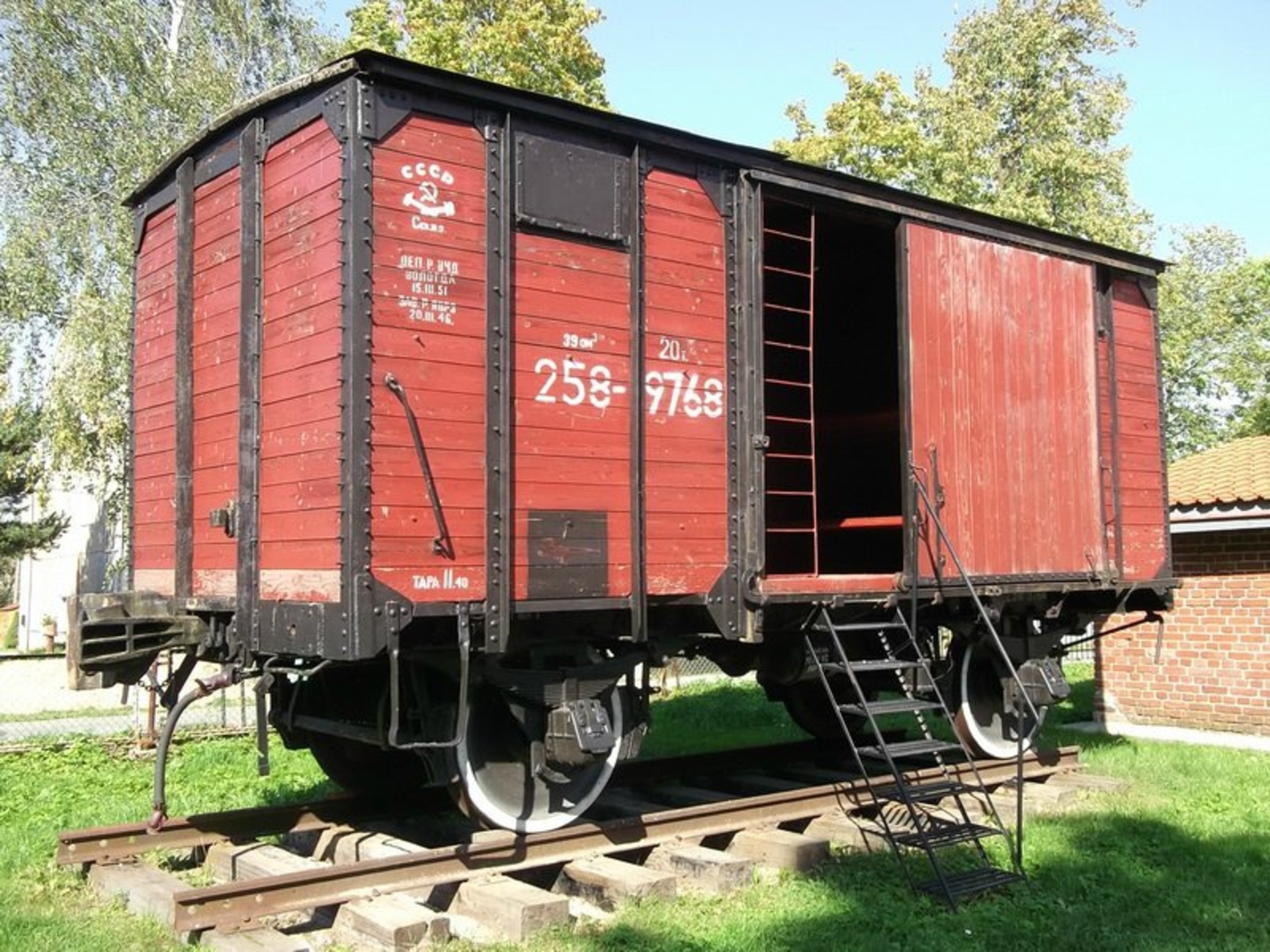
On November 4, 1944 Joseph Stalin ordered the deportation of Meskhetian Turks from their homeland in southern Georgia and exiled them to various parts of Central Asia. According to estimates and various sources between 86,000 and 120,000 Meskhetian Turks were forcibly removed and relocated from Georgia, and around 17,000 died on the way to their new homes.8 A probable reason for this deportation was the Soviet government’s fear of collaboration, espionage and border instability with Turkey, due to the sympathy and self-identification of the Meskhetians as Turks.9
Moreover, this event stemmed from the unclear Soviet system of ethnic identity. Following the absorption of Meskhetia into the Soviet Union, Meskhetian Turks were identified as “Turks or Tyurki [in an attempt to] consolidate various Turkish ethnic groups… into [one nation.]”10 Later on they were reclassified as Azeris, and in some places this classification remains today, and the government began teaching Azerbaijani to the youth. Alongside the Meskhetians, other Turkic groups and the Volga Germans were also deported out of fear of potential collaboration with the Nazis. As documents began to be declassified after the fall of the Soviet Union, documents show the deportation “was carried out with the goal of clearing the Black Sea region of Turks.”11 Luckily for the Meskhetians, they “earned the right to return to the Caucasus” but it was too late as they were mostly integrated into their new homes and the government didn’t want them back in the region.12
TROUBLE IN THE FERGANA VALLEY

While in exile, the Meskhetian Turks lived in relative peace and were well integrated with their new neighbors in Kazakhstan, Azerbaijan and Uzbekistan. As the policies of Gorbachev took hold and the Soviet Union began to crumble, nationalists in Uzbekistan, primarily in the Fergana Valley, carried out a pogrom in 1989 against Meskhetian Turks killing 100. The government was forced to react and “17,000 Meskhetian Turks were immediately evacuated… from Uzbekistan” and were followed by “another 70,000 [living across Uzbekistan who] fled… to Russia.”13 14 For the second time they were victims of a forced internal migration and had to start over in a new place. They settled mostly in southern Russia, mainly Krasnodar and Stavropol, both of which I will explore in deeper detail in my next blog post. So far, I hope that I have succeed in captivating your attention and drawn you in to learn more about this relatively unknown migrant group. My main intention was to raise the question in your mind of how we can reconcile the idea of personal agency amongst refugees with those who were deported from their homes. Additionally, can Meskhetian Turks be classified as traditional refugees or are they something completely different and new?
1Ryazantsev, S. V. (2009). Turkish Communities in the Russian Federation. International Journal On Multicultural Societies, 11(2), 155-173. Retrieved October 04, 2020, from https://unesdoc.unesco.org/ark:/48223/pf0000188648, 167.
2Pentikäinen, O., & Trier, T. (2004). Between Integration and Resettlement: The Meskhetian Turks. ECMI Working Papers, 1-54. Retrieved October 30, 2020, from https://css.ethz.ch/content/specialinterest/gess/cis/center-for-securities-studies/en/services/digital-library/publications/publication.html/19696, 10.
3Aydıngün, A., Harding, Ç B., Hoover, M., Kuznetsov, I., & Swedlow, S. (2006). Meskhetian Turks An Introduction to their History, Culture and Resettlement Experiences. Culture Profile, (20), Ii-37. Retrieved October 30, 2020, 2.
4Pentikäinen, O., & Trier, T. (2004). Between Integration and Resettlement: The Meskhetian Turks. ECMI Working Papers, 1-54. Retrieved October 30, 2020, from https://css.ethz.ch/content/specialinterest/gess/cis/center-for-securities-studies/en/services/digital-library/publications/publication.html/19696, 10.
5 Форов, Е. (n.d.). Турки-месхетинцы-сложная судьба народа. Retrieved October 30, 2020, from https://travelask.ru/articles/turki-meshetintsy-slozhnaya-sudba-naroda
6Haas, H. D., Castles, S., & Miller, M. J. (2020). The Age of Migration: International Population Movements in the Modern World. London: Guilford Publishing, 32.
7Haas, H. D., Castles, S., & Miller, M. J. (2020). The Age of Migration: International Population Movements in the Modern World. London: Guilford Publishing, 63-64.
8 Алиев, Н. (2019, November 23). Anadolu (Турция): в этот день 75 лет назад турки-месхетинцы были изгнаны со своей родины. Retrieved October 30, 2020, from https://inosmi.ru/social/20191123/246250308.html
9 Форов, Е. (n.d.). Турки-месхетинцы-сложная судьба народа. Retrieved October 30, 2020, from https://travelask.ru/articles/turki-meshetintsy-slozhnaya-sudba-naroda
10Aydıngün, A., Harding, Ç B., Hoover, M., Kuznetsov, I., & Swedlow, S. (2006). Meskhetian Turks An Introduction to their History, Culture and Resettlement Experiences. Culture Profile, (20), Ii-37. Retrieved October 30, 2020, 11.
11 Алиев, Н. (2019, November 23). Anadolu (Турция): в этот день 75 лет назад турки-месхетинцы были изгнаны со своей родины. Retrieved October 30, 2020, from https://inosmi.ru/social/20191123/246250308.html
12 Кумзов, Б. (2018, December 13). Месхетинцы рассказали о сложностях при переселении в Грузию. Retrieved October 30, 2020, from https://www.kavkaz-uzel.eu/articles/329101/
13 Pentikäinen, O., & Trier, T. (2004). Between Integration and Resettlement: The Meskhetian Turks. ECMI Working Papers, 1-54. Retrieved October 30, 2020, from https://css.ethz.ch/content/specialinterest/gess/cis/center-for-securities-studies/en/services/digital-library/publications/publication.html/19696, 12.
14Aydıngün, A., Harding, Ç B., Hoover, M., Kuznetsov, I., & Swedlow, S. (2006). Meskhetian Turks An Introduction to their History, Culture and Resettlement Experiences. Culture Profile, (20), Ii-37. Retrieved October 30, 2020, 14.
Hi Nick–
Very interesting blog post. I was left with a few questions. First, you mention near the top that Meskhetian Turks were classified by various others as Georgians, Turks, and even Azeris. Did you find any sources that mentioned how they categorized themselves? Second, if the Meskhetian Turks were well-integrated in their communities in Central Asia, why were they the targets of pogroms? What changed to allow that to happen? I’d also be interested in reading about the reasons the Georgian government did not want the Meskhetian Turks to return, if that fits into your plans for future posts.
Regarding your question about whether Meskhetian Turks can be considered “traditional refugees,” it probably depends on which point in their existence you’re discussing. If we take “traditional” to mean “fitting the UN definition that governs much of refugee policy” (persons who are outside their country of origin for reasons of feared persecution, conflict, generalized violence, or other circumstances that have seriously disturbed public order and, as a result, require international protection), I suppose I would consider those that fled Uzbekistan in the face of attacks to be refugees, though of course they might not have considered Uzbekistan their country of origin…
Hey Katherine, thanks for reading my post and leaving me interesting questions. In regard to their self-identification, I didn’t find any explicit sources but I’m assuming they saw themselves as Turkish. The Soviet government removed them from Georgia out of fear because they believed the Meskhetians would help Turkey if a future war broke out. In Uzbekistan, the Meskhetian Turks lived more comfortable than the native Uzbeks, who were living in poverty and over-populated conditions, and the pogrom was done out of jealously. In my next post I plan on discussing why Georgia didn’t want them back, but the main reason is that the Samtskhe-Javakheti region was repopulated with Georgians and Armenians and the Georgian government didn’t want ethnic violence to break out.
I agree with you that the ones who fled Uzbekistan would be considered refugees, but at this point in time Uzbekistan was still part of the USSR and the Soviet government forcibly removed a couple thousand of the Meskhetian Turks for their protection. The main thing that confuses me about the whole situation is whether or not a group can be called refugees if the government is forcing them to migrate. I hope that I’ve answered your questions and thanks again for the comments!
Hi Nick,
This is a very interesting subject, and I am definitely looking forward to your future research. I am also very interested in the problem of recognizing personal agency within situations of forced migration and exile. With this in mind, I am curious about the specifics of the evacuation from Central Asia to southern Russia. Who decided where they would be evacuated to, the Soviet government or the Meskhetian Turks themselves? For those that weren’t evacuated, did they follow the evacuees, or did they make their own choices on where to settle? I’m not sure if any of your sources answer these questions or if you are planning on discussing them in future posts, but I would be very interested to hear your thoughts on this.
Forced migration would be the term I’d use: the Soviet government picked up the Meskhetians and moved them to places of exile in Central Asia. You might want to check on the statement from your source in note 12, saying that Meskhets had the right to return. This source tells that differently: “После XX съезда КПСС, 28 апреля 1956 г. был издан указ президиума Верховного совета СССР за №135/142, снявший с ахалцихских турок ограничения по спецпоселению и освободивший их от комендантского режима. В то же время в указе говорилось, что снятие ограничений не влечет за собой возмещения материального ущерба и не дает права возвращаться в места, откуда они были высланы.” http://www.ahiska-gazeta.com/en/histories/47/ The ukaz, as cited here, “removed from the akhaltsi Turks the limitations of their special resettlement and freed them from the surveillance regime. But at the same time the ukaz said that removal of those limitations did not include repayment for material losses and does not give the right to return to the place from which they were exiled.” http://www.ahiska-gazeta.com/en/histories/47/
Good start! In 1944, Meskhets were forced migrants, not refugees. We might think of them as IDPS from 1956 until 1989, or just as migrants. In 1989, when violence forced them from their homes, they were IDPs, but with the breakup of the USSR in 1991, they suddenly became refugees (a reclassification because now they were not internally displaced within one country, but were dislocated across international borders).