I have enjoyed reading about the various theories of labor migration that we’ve looked at over the last few weeks. The application of economic theory to real world labor markets is quite interesting, particularly as we look at labor migration through the lens of neoclassical economic theory to more contemporary sociological frames such as through the new economics of labor migration theory.
I will later relate these theories of migration to Sophie Massot’s “Economic Migrations from Uzbekistan to Moscow, Seoul, and New York: Sacrifice or Rite of Passage?,” but first I would like to consider the baseline assumptions of both aforementioned theories as presented by de Haas.
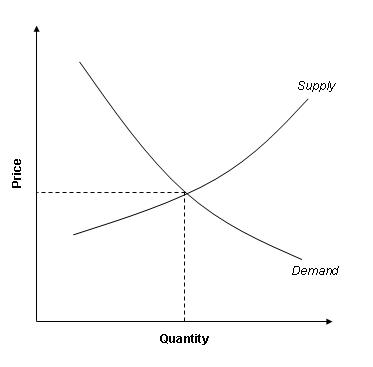
As de Haas writes, “Neoclassical theory sees migration primarily as a function of geographical differences in the supply and demand for labour. The resulting wage differentials encourage workers to move from low-wage, labour-surplus areas to high-wage, labour scarce areas.”1 This is not a sentimental approach to life’s challenges.
https://worthwhile.typepad.com/worthwhile_canadian_initi/2015/03/a-very-brief-history-of-demand-and-supply.html
In describing the new economics of labor migration (NELM) approach, de Haas describes it as a theory that seeks to address the shortcomings of neoclassical migration theory, particularly that, “migration decisions are often not made by isolated individuals, but usually by families or households,”2 and that the choice for a household to fund a member’s migration serves as a method of risk aversion and investment.
I am personally not convinced by de Haas’s presentation of the NELM approach, and I largely consider the neoclassical theory to provide a fairly accurate, although not perfect model of migration. I find some of de Haas’s claims to be rather dubious, and some assertions misleading. Particularly, de Haas describes the family-based approach that NELM takes, as he writes, “particularly in circumstances of uncertainty and economic hardship… people organize their livelihoods not individually (as neoclassical theories assume) but within wider social contexts.”3
If I understand correctly, and if neoclassical migration theory generally aligns with neoclassical economic theory, then it is absolutely in line with neoclassical theory that people organize their livelihoods as part of their family, not purely individualistically. In fact, one the most basic assumptions of neoclassical economic theory is that the family is the simplest unit of society, not the individual person. In his 1962 book, Capitalism and Freedom, Milton Friedman writes, “In its simplest form, [a society organized through voluntary exchange] consists of a number of independent households.”4 Given the endorsement of the family, not the individual, as the most basic unit of society and economic activity by one of the founding fathers of neoclassical economics, it seems misleading to claim that NELM addresses the supposed shortcoming that neoclassical migration theory sweeps the family under the rug.
The research presented by Sophie Massot on migrants from Uzbekistan to Moscow, Seoul, and New York displays labor migrants as rational, self-interested (to consider support for the family essentially support for one’s self) actors who observe economic trends and seize on opportunities to increase their productivity and earnings.
Following the collapse of the Soviet Union, many Uzbeks felt their movement become more constricted and faced harsh economic realities: plummeting purchasing power combined with an unemployment rate of 35% and rapid inflation.5 Massot presents Uzbek culture and law as one that puts a premium on family and community relations, not at all unlike the displays of community support for migrants we saw in the Migrant Express documentary on Tajik labor migrants to Russia. Accordingly, “[Emigration] is a strategy that is most often familial in nature, enabling a brighter future for the family member that moves abroad and also, through the money earned, hopefully improving the lot of the family left behind.”6

https://kun.uz/en/news/2018/11/14/uzbekistan-tops-the-list-of-labor-migrants-registered-in-russia
Given my understanding of neoclassical migration theory and economics, it seems to me that if we understand that the family is the basic unit of society, then labor migrants act as rational, self-interested actors who seek to improve their productivity and their overall household income, which fits squarely within neoclassical migration theory.
I am summarily unconvinced of the usefulness of the new economics of labor migration theory, and I am sure I will get some thought provoking comments on the subject! Thanks for reading.
- De Haas, Hein, The Age of Migration International Population Movements in the Modern World (New York: The Guilford Press, 2020), 46.
- De Haas, 54.
- De Haas, 55.
- Friedman, Milton, Capitalism and Freedom (Chicago: The University of Chicago Press, 2002), 13.
- Massot, Sophie “Economic Migrations from Uzbekistan to Moscow, Seoul, and New York: Sacrifice or Rite of Passage?” in Migration and Social Upheaval as the Face of Globalization in Central Asia ed. Marlene Laruelle (Leiden, Netherlands: Koninklijke Brill NV: 2013) 285-286.
- Massot, 286.
Friedman may say that, but economists who analyzed migration until NELM did not take family into account, instead treating those who migrated as (normatively) male and as individual rational actors. That’s the point of NELM–to highlight that migration decisions are probably made with the economy of a family in mind, weighing the multiple factors that can produce a livelihood. So the question isn’t whether classical economics is capable of thinking in any terms other than individual rational actor, but that economic analyses of migration were founded on a model that did not start from the position that the family is the basic economic unit of society. But the contrary position should also be raised: we cannot simply assume that labor migrants make self-interest and family interest identical, nor that they prioritize remittances over other goals. Maybe some act like self-interested individuals and others as part of a family unit.