Marianne Kamp, Aug 16, 2020
OLYMPUS DIGITAL CAMERA
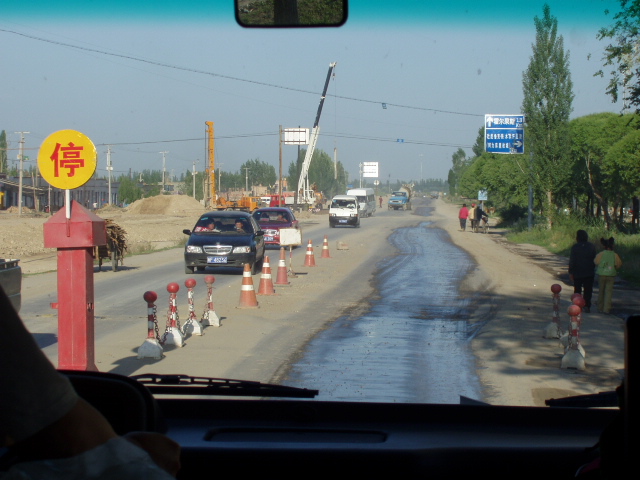
That looks a little different than the Khorgos “Inland Port” today. Since 2000, many factors have contributed to putting millions of people in motion across international borders: wars, economic growth, reduction in visa barriers, investments that make travel cheaper.
This class uses examples from Turkey, the Caucasus, and Central Asia to illustrate migration processes that have significant impacts in Europe, Russia, China, and all of the places in-between. Millions of people from Tajikistan, Uzbekistan, Kyrgyzstan, and Armenia go to Russia as labor migrants. Until the early 2000s, Turkey’s migration story showed millions going to Europe, but economic growth in Turkey and wars in neighboring countries turned Turkey into a target for migration.
This blog will be a place where we all write academic, well-informed posts that we use as a space for working through concepts and theories and linking them to real-world data, information, news, narratives, cultural images, and whatever else we see as helping to inform and communicate.

That image, depicting labor migration flows to Russia in 2015, comes from a news story on Russia Beyond.1 Among the things we will all try to do consistently while blogging is cite fully. I haven’t figured out how to do that well in this blog format, but I’ll fix this, and explain, when I do.
Major rule of blogging: text without images? Boring. Lengthy paragraphs? Tiresome. Blog-style writing is going to be a bit different from the usual–less formal, more effort to think about audience.
1Vladimir Kozlov, “Labor migrants: life under the radar,” Russia Beyond, Oct 21, 2015. https://www.rbth.com/society/2015/10/21/labor_migrants_life_under_the_radar_50251.html