Perhaps moving forward a better balance between family and work may be reached. This is the concluding sentence from my previous blog and in this entry my focus turns to gender roles and equality in three facets of Armenian society: education, migration and family. These pillars define the place of women and in are in need of attention to avoid a future in which women remain in subordinate roles.
It is also important to point out that the role of women in the workforce includes work in and outside of the home, thus escalating the definition of work beyond just paid labor. Parenthood and domestic chores are unappreciated jobs and women take care of the vast majority of this type of work which includes farming in rural areas as well. According to the World Bank, few entrepreneurs are women, they also work fewer hours and thus earn less. The World Bank also concludes that unemployment lasts longer among women in Armenia and I cannot help but think these realities correlate to the idea of masculinity pushing its way into the role of provider and of women having traditional roles to revert back to when work outside the home is unavailable to them.
Education https://i.pinimg.com/736x/fb/25/d6/fb25d601bab5baac9b9f6ce46ae1744b.jpg

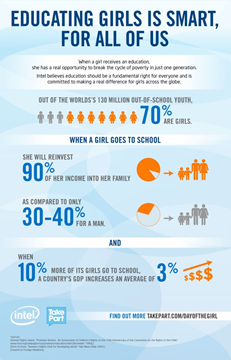
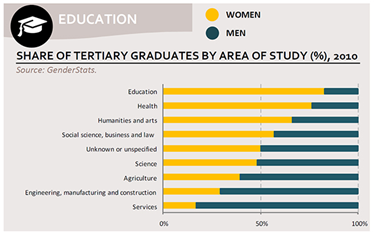
Opportunities for anyone, women included, start with access to education. Armenia has, relatively recently, made gender equality a priority in several facets of society, education included. In 2012, the World Bank concluded a report, Armenia Country Gender Assessment, which found a 57% increase among female enrollment in post-secondary education; however, the workforce numbers to not match the results (World Bank, 2013). So, why the discrepancy? While the report hypothesizes that the choice of subjects of study lead men to higher paying jobs, it does not account for the lack of women in the workforce regardless of job type and salary. Perhaps education for women is simply a formality, yet upon completion, they are expected (and therefore do so) to return home and help with domestic responsibilities or go abroad to work; both options would exclude their numbers from the Armenian workforce. In the article The Holy Grail of Development: Women in the Workforce, I support Zach Theiler’s belief that “cultural stereotypes, family pressure, and traditional gendered expectations in society” (Theiler, 2015). https://blogs.worldbank.org/voices/women-pillars-armenia-s-economy-and-society
Another World Bank study supports the idea of gender inequality and misrepresentation in school curriculum and Armenian language textbooks (World Bank, unknown). This tells me that writers, male of course, consciously decided to represent women as inferior, if at all. Unfortunately, this depiction of women is formed at an early age and likely hinders their opinions of themselves, thus keeping them in traditional societal roles rather than pursuing a career outside of the home. I would love to read the journal of an Armenian girl that she is afraid to show anyone because she fears her aspirations are too big. Similar to many class discussions about laws in place that allow gender equality, actually seeing this equality in society is another story.
It appears than Armenia is willing to sacrifice a stronger workforce in growing industries to uphold historical traditions. While promoting equality in education for women and then afterward in the workforce would strengthen Armenia’s infrastructure and increase their global economic position, something always stands in the way of gender related progress. Current gender expectations in Armenian society post education push men into skilled labor positions and women seemingly away from them. Since men are trained for better paying jobs and tradition dictates that they should provide for their family through working outside of the home, they are also more likely to seek opportunities outside of Armenia.
Migration The greatest number of job opportunities, albeit temporary, are for men to work at construction sites in Russia. 80% of Armenian migrants are men aged 21-50. Bilateral labor arrangements helped fill labor needs, particularly in Russia and helped to alleviate unemployment concerns at home. Women, however, filled more positions at home since their job sectors including education and healthcare more ranked among the lowest in demand abroad leaving the idea of migration unnecessary. Women may have left their village and sought work in Yerevan, though still inside Armenian borders. In fact, a four-year span showed a rather rapid decline of female migration from 14% to 6.5% in 2006 because of greater opportunity at home (Devillard, 2012 and Nayyar, 2012).
Family Marriage also coincides with gender roles and migration. Upon marriage, a man’s family will accept the bride into their home and expect her to share in the domestic responsibilities. Since the women moves in with her husband’s family, she has new household obligations where as his responsibilities lie outside of the home. In rural areas, traditional gender roles are especially prominent since other work is not readily available and a family’s land requires constant attention. Further, because men provide financial remittances, they may be shamed and seen as unable to properly provide for their families if women also work. In 2019, this aid accounted for 11.17% of the country’s GDP. Unpredictable and inconsistent time tables for return often cause fluctuations in the role of women at home (Agadjanian and Menjívar, 2007 and The Global Economy, 2019).
A non-governmental organization, Society Without Violence found, though an unknown number of data sets, that 63.8% of Armenia women surveyed would prefer to have been born male (Silova, 2016). These results sadden me and mildly shames me. As someone who has been given all the opportunity needed to succeed, I am still treading water and know that many others, less fortunate than myself, would have long since taken better advantage of my position.
Armenian women seek social equality in practice. Despite its inclusion in their constitution, day to day practice does not always follow suit. I think national leaders should set an example for their constituents therefore increasing the female presence in political leadership and entrepreneur roles is a crucial place to begin moving in a positive direction. Despite this present gender gap, some women broke barriers and stood apart from stereotypes and societal expectations. The conclusion of this three-part series will feature three of these women.
Bibliography
“Armenia Country Gender Assessment.” World Bank, 2016, openknowledge.worldbank.org/bitstream/handle/10986/26431/113990-WP-P157626-PUBLIC-Armenia-Gender-Assessment-2016.pdf?sequence=1&isAllowed=y.
Borgen, Clint. “Girls’ Education in Armenia.” The Borgen Project, Clint Borgen Https://Borgenproject.org/Wp-Content/Uploads/The_Borgen_Project_Logo_small.Jpg, 7 Oct. 2019, borgenproject.org/girls-education-in-armenia/.
Devillard, Alexandre. Ministry of Labor and Social Issues of Armenia, 2012, pp. 8–63, Labor Migration in Armenia: Existing Trends and Policy Options, publications.iom.int/system/files/pdf/labour_migration_in_armenia_en.pdf.
The Global Economy. “Remittances, Percent of GDP by Country, around the World.” TheGlobalEconomy.com, 2019, www.theglobaleconomy.com/rankings/remittances_percent_GDP/.
Menjívar, Cecilia, and Victor Agadjanian. “Men’s Migration and Women’s Lives: Views from Rural Armenia and Guatemala.” Social Science Quarterly, vol. 88, no. 5, 2007, pp. 1243–1262., doi:10.1111/j.1540-6237.2007.00501.x.
Nayyar, Namita. “Reproductive Health of Women in Armenia.” Women Fitness, 29 June 2015, www.womenfitness.net/news-flash/reproductive_armenia/.
Silova, Iveta. “GENDER ANALYSIS OF ARMENIAN SCHOOL CURRICULUM AND TEXTBOOKS.” Openknowledge.worldbank.org, 2016, openknowledge.worldbank.org/bitstream/handle/10986/24948/Gender0analysi0ooks000policy0brief.pdf?sequence=1&isAllowed=y.
Theiler, Zach. “THE HOLY GRAIL OF DEVELOPMENT: WOMEN IN THE WORKFORCE.” Https://Milieumag.wordpress.com/, 2015, milieumag.wordpress.com/2015/09/01/the-holy-grail-of-development-women-in-the-workforce/.
Kristie, great post. Armenian perception of women and their role in the society is well positioned in your article. I would be curious to see what % of women are currently in positions of power? Since you are posing these question at the end, I am assuming that is your next post? I am also curious to see how have they incorporated gender equality into their school curriculum. Sounds like Armenia is not that different from the other post-Soviet countries, with a big number of men working in Russia. I enjoyed learning! – Purnur
Hi Purnur-
Of the three women I will profile in my final blog, one is a former ambassador and one is the only current female mayor of an Armenian city. I am unsure of the third at this time.
Armenia has the highest rate of unemployment among women of the post-Soviet republics. Women now make up 46.13% of working Armenians, nearly five percentage points higher than the average among 182 nations (The World Bank, 2020).
The gender gap is Armenia is still a topic in need of attention and I expect this to remain for the foreseeable future. Gender equality is not a popular subject on television or in textbooks. Former World Bank Global Lead for Stability Peace and Security Laura Bailey argues the importance of science, technology, engineering and math (STEM) careers for woman; these fields are in high demand, decrease the gender wage gap and provide a flexible schedule, appealing to those with domestic responsibilities as well (Bailey, 2107). The female to male ratio in post-secondary schools in 2018 was 1.33:1 (The World Bank, 2017).
A very short article with numbers on Armenian women in government: https://www.panarmenian.net/eng/news/247781/
I think one of the things you brought up in your blog that stood out to me was the hierarchy of labor sectors in Armenia. Of course, this concept is global, but in Armenia, they seem to have very strict gender roles, which translate to haveing gendered labor sects. For Armenians, you mention that the education and healthcare sector is dominantly female, making these sects less desireable. I wonder how much would change when more Armenian women become involved in physical labor such as construction and technology, has there been a decrease in prestige after Armenian women have begun to branch out in these fields? As we know, education and the healthcare sector sued to be viewed as more prestigious before women became the majority in these sectors, so I wonder how Armenia will view a transition in gender roles in male-dominated fields?
Do we have evidence that Armenian women seek social equality in practice? Do they have any movements? Some of this would be hard to find without Armenian language, of course–especially if Armenian women organize online in Armenian language.
While I am unaware of any specific movements, I have found women who chose a different path that pushes for increased rights and a louder voice for women by serving their communities. In my final blog post, I will feature a few of them. Moving forward, if enough women follow in the footsteps of the few, a greater shift in gender roles, for those who want it, will happen.