My research looking at the manner in which the South Soudanese displaced people deals with the temporary or semi-permanent displacement through the lens of education. With my next post, I discuss thoughts on returning home now that the state has entered into a tentative peace deal.
South Sudan has been engaged in a civil war since 2013. Since the conflict began the UN estimates that 2.8 million children are out of school, 63% of teachers who are currently teaching have no formal training, and 1/3 of the country’s schools have been damaged or destroyed. So this brings forth the question of what has education looked like for kids since this conflict started?
This piece is going to look at education opportunities in three different circumstances; children who are refugees currently residing in neighboring countries (Uganda and South Sudan), children who are internally displaced and living in protection of civilian camps (POCs), and the remainder of the children that stayed in South Sudan.
An important distinction to make is the distinction between a POC camp and an internally displaced persons (IDP) camp. A POC camp differs from an IDP camp because it has a different relationship with the host government. The key distinction comes from a signed Status of Forces Agreement (SOFA) with the host government which dictates the rights and powers of the UN inside the country. The SOFA includes the right of lands to be allocated to be used for UN premises. Even though the land remains the territory of the host state its status is changed to be “under the exclusive control and authority of the UN” for the amount of time that it’s used as a UN premise. SOFA also declares that no one (including the host government) has the right to enter a UN premise without the explicit permission of the UN authorities.
“This is arguably the single defining feature of the
‘POC sites’ as distinct from IDP camps,” said an
UNMISS memo in 2014, “the inviolable status of
UN premises, combined with the protection of
civilians mandate means that those who seek
refuge from the threat of physical violence in UNMISS
premises are both (a) provided physical protection
and (b) cannot be removed by the Government, or
any other party, without the consent of the United
Nations.”
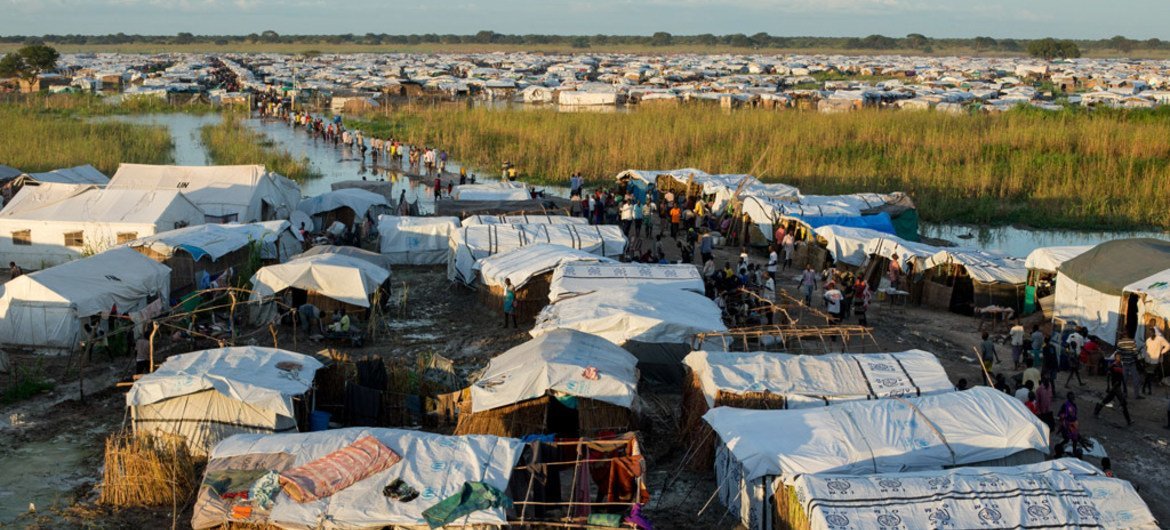
The Protection of Civilians (POC) site near Bentiu, in Unity State, South Sudan.
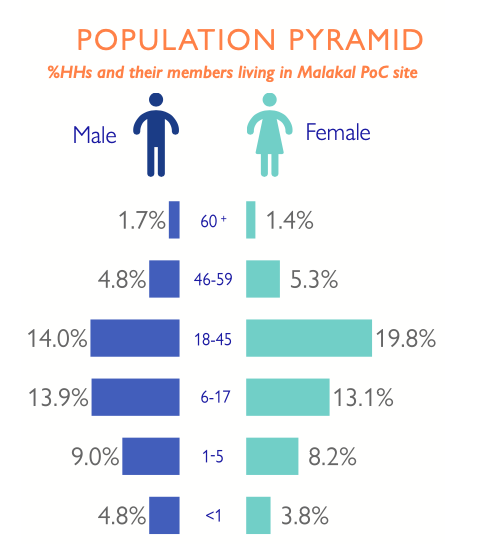
Educational opportunities inside POC camps are typically created by a different partner organization rather than the UN directly. For example, in Malakal organizations like World Vision, InterSOS, and War Child were running schools. World Vision had two functional primary schools, InterSOS had four, and War Child had two. Together these 8 schools had 8,831 children enrolled, 45% female and 55% male.
This camp held 48,000 people in 2015, 23,343 in 2018, and 29,190 today. The numbers of children enrolled in the school were published in 2017. My calculations are based on this data. Out of these people, approximately 44.2% are kids that are old enough (1-17) to be enrolled in a school. Numerically this equaled to be approximately 10,270 kids. This means that there were at least 2,000 kids that were not receiving an education while in this specific POC camp. These numbers do not include people older than 17 who did not receive an education as a child but might want to pursue one now.
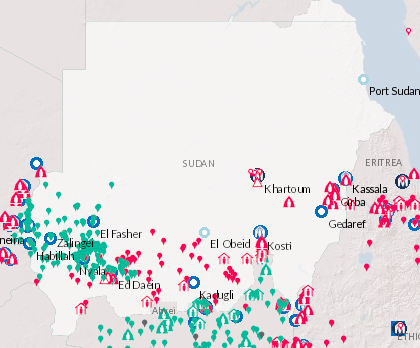
There are currently 1.6 million refugees from South Sudan in neighboring countries. Uganda and Sudan both host over 800,000 refugees.
Uganda has an open-door refugee policy which means that they won’t turn anyone away who is entering Uganda due to fears for their safety. It also guarantees freedom of movement, the right to employment, health, education, and the right to start a business. The government also provides a plot of land so refugees can farm and construct shelters with the end goal of refugees being economically self-reliant. Uganda is currently the largest refugee-hosting country in Africa and many applaud its refugee policy as one of the most generous in the world.
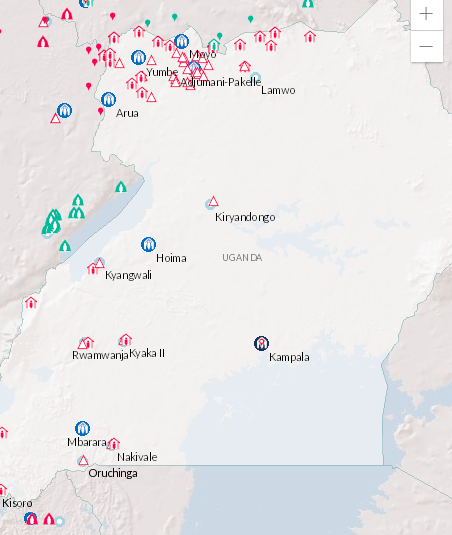
There are different refugee resettlements all over Uganda one of which being inside the Adjumani district in Uganda’s West Nile region. This district has 18 refugee settlements which host a total of 200,000 refugees from South Sudan.
Such high numbers of refugee resentment do take its toll on the host community as it hinders the countries ability to provide basic social services to everyone, services such as secondary education and health services. Usually, residents and refugees have to walk long distances to access facilities that are overcrowded.
After completing primary education most kids do not continue their education due to secondary school fees, and the long-distance (the nearest secondary school from Nyumanzi, a refugee settlement, was 16km or around 10 miles away). For girls, it is especially difficult to continue due to being pressured to be married so young, and the danger associated with walking such long distances.

The Nyumanzi community recognized the need for a secondary school in 2017 due to the number of kids finishing primary school. Despite the lack of funding a community secondary school was started. While this was an amazing step there were still challenges. The majority of children still had to walk an average of 3km daily to attend school. Halid Aluma who lives in Nyumanzi walks 4km there and back, waking up at 5 am to walk to school. It’s still dangerous for girls to make this trip twice a day and as a result, they drop out at a rate far higher than boys.
Sudan also has an open border policy for refugees who are fleeing conflict and persecution, but there are limits on freedom of movement and basic public services. Refugees also routinely experience problems with access to registration and documentation, asset and land ownership, and labor markets. This problem is not uncommon for refugees to experience, it is usually classified as “undermining the liberty, safety, and dignity of refugees.” Syrian refugees in Turkey experience a similar problem where they are kept in a system of limbo by not being given the official name of refugees but instead ‘guest workers’ which inhibits the social services they can have access to as deemed by the state.
Refugees in Sudan live in three different settings: some live in camps, others live in rural settlements outside of camps, and others reside in urban areas. 70% live outside of camps in more than 100 settlements all across the country. Sudan is struggling with substantial funding gaps for its refugee response and is compounded by Sudan’s current economic situation. In 2019 the UN estimated that out of 2,962,701 total population 65% of children are enrolled in primary education. It however does not tell me how many kids make up that population so I’m not sure how many kids are actually enrolled in school.
There were no places in South Sudan that were not affected by their civil war. Unfortunately, if people didn’t make it to a POC camp or into a neighboring country children, boys and girls were often forced to join both sides of the rebel forces. South Sudan in 2018 had one of the largest numbers of child soldiers in the world. In 2018 the UN reported that South Sudan had over 19,000 children in armed forces, even though that number is contested by the army itself. This left no room for an education of any kind, and now many children (contingent on if they have been released from the army) now have new problems that they are forced to face.
![Former child soldiers during the release ceremony, outside Yambio in South Sudan. One hundred twenty-eight children (90 boys and 38 girls) were officially released at this ceremony by two armed groups, bringing the total number released this year to over 900. [Andreea Campeanu/Al Jazeera]](https://www.aljazeera.com/wp-content/uploads/2018/10/5e598688af4e4d38a06cc4487a7fc6e2_8.jpeg?resize=1170%2C780)
“We see depression, anxiety. They have intrusive thoughts that come back. That can be triggered by something happening, but of which they have no control. That can affect their functionality,” says Rayan Fattouch, mental health specialist working in Yambio with Doctors Without Borders
South Sudan has a long way to go in terms of education. Like many things, this is a multi-faceted issue with many different levels. Now that a hopefully lasting peace deal has been signed there will be more room for development instead of destruction. Decades of multiple civil wars have deprived many generations of education which can be seen in the fact that the literacy rates in South Sudan are among the lowest in the world. Only 35% of people 15 and over can read. While I know that education is one out of a long list of things that South Sudan needs to improve on, I hope that rebuilding the education sector becomes a priority. Also due to the fact that South Sudanese kids will have had different levels of education from being spread out across Africa will result in an additional layer of difficulties that the government will have to account for in the future.
Sources
Briggs, Caelin, and Lisa Monaghan. 2017, Norwegian Refugee Council (NRC) , peaceoperationsreview.org/wp-content/uploads/2017/06/rel_docs_POC-sites_Lessons-from-South-Sudan.pdf.
Baban, Feyzi et al. “Syrian Refugees in Turkey: pathways to precarity, differential inclusion, and negotiated citizenship rights,” Journal of Ethnic and Migration Studies 2017 43 (1): 41-57
Campeanu, Andreea, and Patricia Huon. “Child Soldiers of South Sudan.” South Sudan | Al Jazeera, Al Jazeera, 30 Oct. 2018, www.aljazeera.com/gallery/2018/10/30/child-soldiers-of-south-sudan/.
Kamoga, Jonathan. “Education Still Elusive Goal for Refugees Even with Uganda’s Open Door Policy – Uganda.” ReliefWeb, 2020, reliefweb.int/report/uganda/education-still-elusive-goal-refugees-even-uganda-s-open-door-policy.
Momodu, Sulaiman. “Uganda Stands out in Refugees Hospitality | Africa Renewal.” United Nations, United Nations, 2019, www.un.org/africarenewal/magazine/december-2018-march-2019/uganda-stands-out-refugees-hospitality.
“South Sudan: UN Strongly Condemns Attack against Mission Compound in Bentiu | | UN News.” United Nations, United Nations, 2016, news.un.org/en/story/2016/04/528012-south-sudan-un-strongly-condemns-attack-against-mission-compound-bentiu.
Writer , Staff. 2020, Education in South Sudan Briefing Note, www.unicef.org/southsudan/media/6166/file/Education_Briefing_Note_2020%20Q3%20FINAL.pdf.
Writer , Staff. “Stolen Childhoods.” UNICEF South Sudan, 2020, www.unicef.org/southsudan/stolen-childhoods.
Writer , Staff. “Sudan Country Refugee Response Plan (January 2020 – December 2020) – Sudan.” ReliefWeb, 2020, reliefweb.int/report/sudan/sudan-country-refugee-response-plan-january-2020-december-2020.
Writer , Staff. “Sudan.” Sudan | Global Focus, UNHCR , 2019, reporting.unhcr.org/sudan.
Writer, Staff. “South Sudan Refugee Crisis: Aid, Statistics and News: USA for UNHCR.” South Sudan Refugee Crisis: Aid, Statistics and News | USA for UNHCR, 2020, www.unrefugees.org/emergencies/south-sudan/.
Writer, Staff. “Uganda. One Year on from the Outbreak of Violence in South Sudan and Nyumanzi Refugee Settlement in Northern Uganda Has Become a Dense and Dynamic Community. With the Settlement Now More Established the Needs Have Changed from Life-Saving Concerns like Wat – UNHCR China.” UNHCR 中国, 2014, www.unhcr.org/cn/325-donation-faq.html/uganda-one-year-on-from-the-outbreak-of-violence-in-south-sudan-and-nyumanzi-refugee-settlement-in-northern-uganda-has-become-a-dense-and-dynamic-community-with-the-settlement-now-more-established-t.
Writer, Staff. UNHCR, 2019, IOM UNHCR Malakal PoC Intention Perception Survey Report May 2019 , data2.unhcr.org/en/documents/download/69389.
You are making use of an excellent range of sources. You clarify that it makes a difference where one takes refuge: internally, vs in Kenya, vs. in Sudan.
Hey Cat, this was a really interesting blog post. Your provided statistics and calculations demonstrate a larger reality behind what we may perceive as progress in refugee camps and education. This amount of children not receiving an education is rather startling. You mentioned the large number of child soldiers within South Sudan, do you think that the sector of uneducated children in refugee camps may serve as a recruitment point for militias in the region or are these camps secure enough to prevent such recruitment tactics? Would these children turn to militia involvement in the future in lieu of traditional working roles and employment if pursuing education is still out of reach?
Hi Cat, this post is really interesting. I especially appreciated the use of maps, it definitely illustrated the spread of settlements for asylum seekers and refugees well. When I think of refugees, it’s very easy to only think about the immediate needs of the people and what they need to survive. Highlighting the difficulty in educating children, especially girls, in this situation in South Sudan is definitely important. What are the ramifications for these communities if their children continue to fail to receive an adequate education? Do you have any other examples where similar education problems have occurred among refugees and how that has impacted those peoples’ future?