The Soviet Era often brings talk of the multi-ethnic nature of the Union. Certainly, its vast territorial expanse would encompass the homelands of many indigenous Eurasians. One group that often sits at the periphery of discussions of both the Soviet Union and Eurasia is the Koreans. In 1937, 170,000 of them – nearly the entire population of ethnic Koreans in the Russian Far East (RFE) – were forcibly moved nearly 4,000 miles into Central Asia. This represented the first of Stalin’s mass deportations.
The photos below show just a few of the many faces of the Koryo saram, past and present. Interestingly, the photo on the left shows these ethnic Koreans in the Russian Far East, where they are recently-arrived migrants. The photo on the right shows Koryo saram several generations later, back as visitors in the South Korean city of Kwangju at the “Koryo Saram Village”.
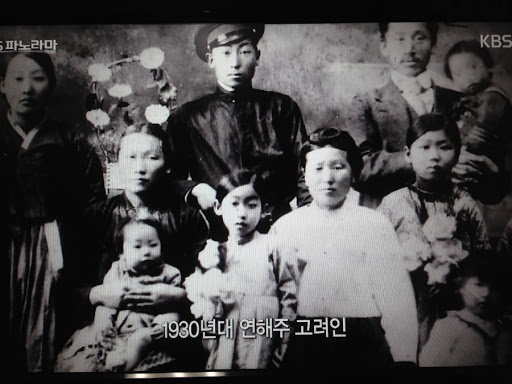
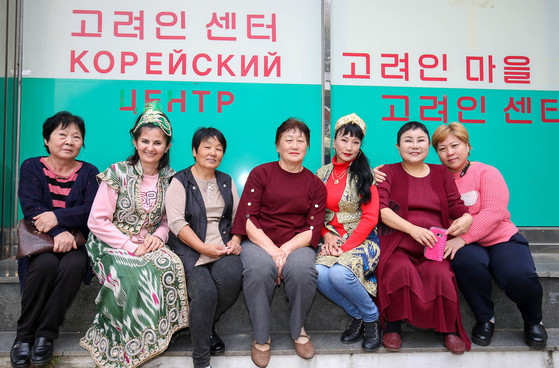
Right: “Koryo saram Center”, Kwangju, ROK
Source L: KBS; Source R: Jungang Ilbo
This blog post is the first of three that I will write regarding the story of these Koreans, the Koryo saram. The present post will cover the history of the Koreans in the RFE up until their forced removal in 1937. My next two blog posts will cover more about the Koryo saram through this forced deportation and their lives under Soviet (and later, Central Asian) rule 1.
I am orienting these posts so that they help me set up my term paper, in which I will be discussing language maintenance within Koryo saram communities. This post in particular will be light on any kinds of argumentation or claims about the migration. Instead, I hope to construct a solid picture of what the first phases of migration looked like for the Koryo saram.
Koryo saram 고려사람
Koryo saram is the name of the Koreans who participated in late 19th century/early 20th century migration from Korea to territories within the Russian Empire. They represent one of the many Korean diaspora communities. Their name is composed of two Korean elements: koryo, referring to a name of Korea, and saram meaning ‘people’. In Russian, they are referred to as Корё сарам or Корейский, and in South Korea, they are called koryŏ-in 고려인.
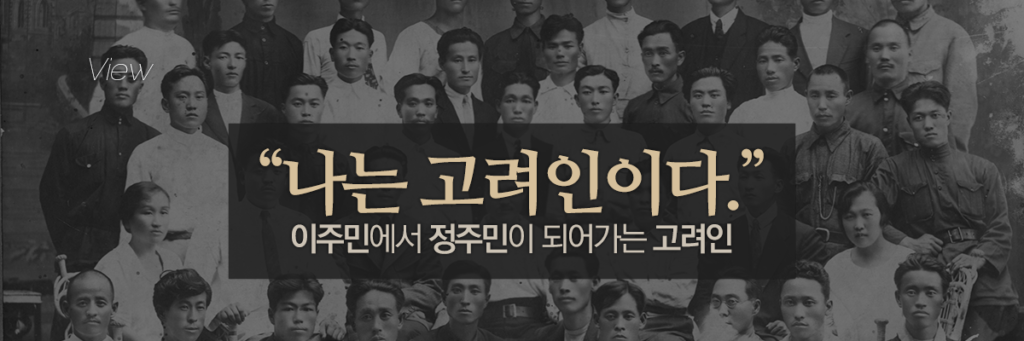
Promotional poster for a Korean diaspora event held in Kwangju, South Korea
Source: https://webzine.acc.go.kr/blog/month/0/371/
Koryo saram have been called Soviet Koreans, Central Asian Koreans, and even Russian Koreans. None of these names accurately account for the identities of all Koryo saram. These names do, however, give a clear indication of the different styles of governance the Koryo saram underwent, as rapidly changing systems of government moved them through at least three different regimes.
Northern Korea in Korean History
Many among the first wave of migrants into the Russian Far East came from Hamgyŏng Province, the north-easternmost province of Chosŏn Korea2. The provinces northern region of Korea included Hamgyŏng, Pyŏng’an, and Hwanghae.
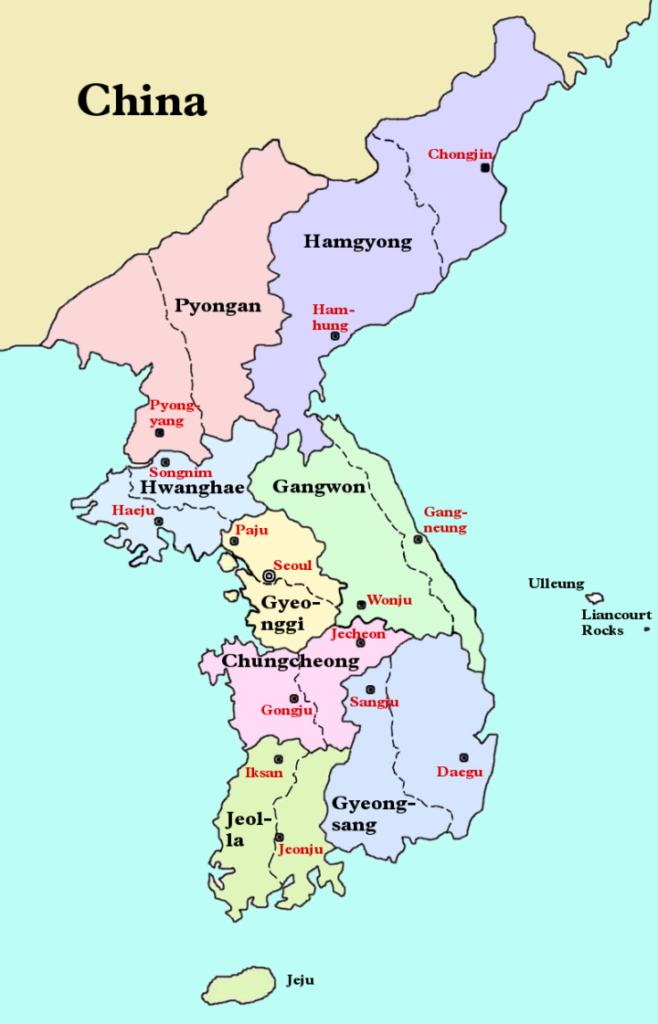
Source: Wikimedia Commons
These three northern provinces, while part of the long-ruling Chosŏn dynasty (1382-1897), were removed from the locus of Korean politics and administrative life by more than just mountains. Chosŏn scholars themselves wrote of the apparent discrimination against northerners within the dynastic system, noting how northerners who managed to pass civil service exams were regularly excluded from receiving government posts.
These northerners were seen in Chosŏn society as more militant and less scholarly. Though I have been unable to find concrete information from the point of view of other Koreans as the the nature of migrants from Hamgyŏng Province, it is safe to say that they were not wealthy people4.
Scholars have claimed the reason for the first wave of migration north of Chosŏn to be the result of famine and natural disaster, displeasure with continuous marginalization from the central Chosŏn government, and the promise of opportunity elsewhere (Kim and King, 2010). I hope to find more on this – even potentially locating records of the natural disasters that led to movement.
Into the River-bounded Borderland
The latter half of the 19th century saw enormous changes for the lands to the north of Korea. Qing China and Imperial Russia vied for territory and access to markets from Central Asia all the way to the Sea of Japan. The 1858 Treaty of Aigun between the two empires ceded a large portion of Chinese territory north of the Amur to Russia. The 1860 Treaty of Peking gave Russia access to the entirety of the north bank of the Amur River, as well as a considerable amount of coastline on the Pacific. The following map summarizes Russian territorial expansion at this time.
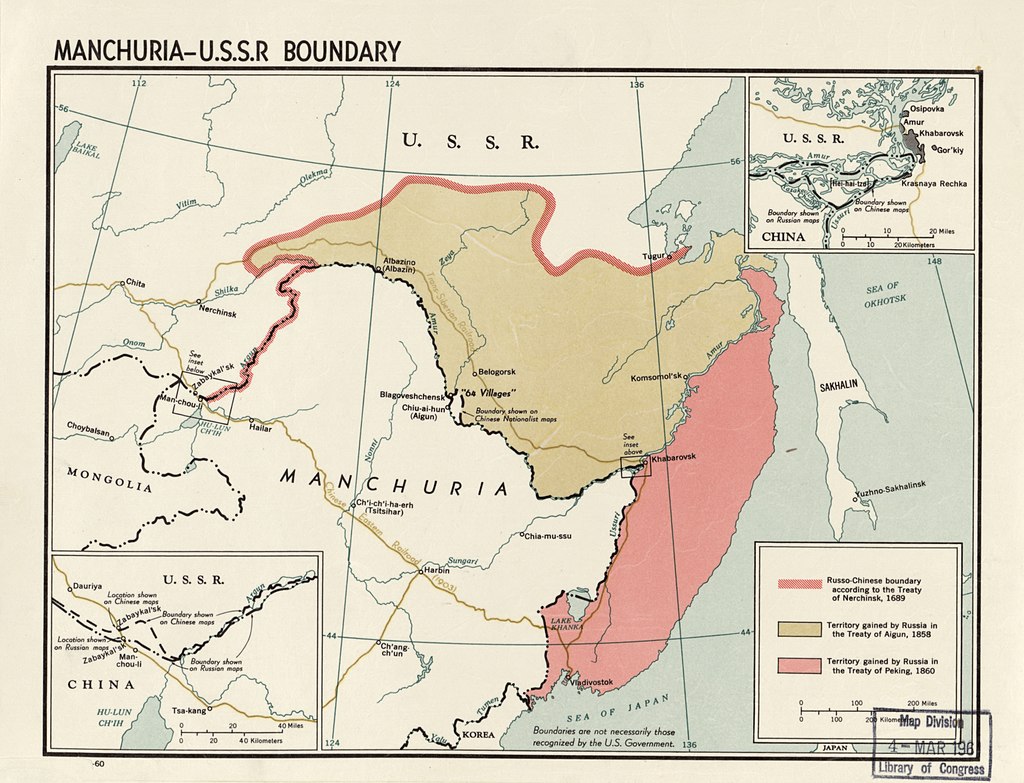
This map is particularly informative, as it magnifies the border area near Khabarovsk. In addition to displaying the different boundary placements in the region, it also shows the limitations of having a river mark the border of two empires: the river changes throughout the year. Furthermore, it is not as if this border region was uninhabited prior to the borders being drawn. Indigenous Nanai (Goldi), Orochen, and other Tungusic tribes lived in the area.
Qing Manchuria was also changing during this time. A previous Manchu ban on Han settlers moving into the Manchu heartland was lifted, and Han migrants (some settlers, many merchants) swept into the area. Trade grew enormously, and interactions between Russian and Chinese speakers became more intense.
The state-level processes of land cession had a very real impact on migrating Koreans. Though migrating Koreans may have moved to Qing lands, those lands were soon handed over to the Russians. Additionally, expanded Russian interest in the area required the recruitment of a labor force, and Koreans were actively welcomed as farmers. It is interesting that these Russian administrators were so quick to welcome “migrants”, given the fact that the Russians had only officially acquired the territory a few years prior, and were in the process of settling European subjects in the Far Eastern region, themselves.
Korean Settlement – In Numbers
From the 1860s through the 1890s, Korean migration was welcomed by the Russians. Saveliev (2010) writes of huge 266-acre parcels of land being given to the migrants by Russian military governors in the 1860s. These parcels were located in the southern part of the Maritime (Primorskaia) Oblast’. More Koreans were settled further north, near Blagoveschensk in the Amur Oblast’. Looking at the map above, we can see that Blagoveschensk is quite removed from the Maritime Oblast’, including the emerging large cities of Khabarovsk and Vladivostok. King (2001) notes that those settled in Blagoveschensk were removed from other Korean settlements, and were in much closer contact with Russians. Nonetheless, the Koreans of Blagoveschensk kept their Korean language 5.
A breakdown of numbers of Koreans can be given as follows:
- Koreans in the territory ceded to Russia by China in 1860
- 5310 total
- Koreans moving to Russia from 1869-1870
- ~15,000
- Koreans in Russian Far East, 1883
- 32,298
(Numbers from Pohl, 1999)
The Second Wave
A second wave of Koreans into Japan can be identified in the early years of the 20th century. Flush from victory in the Russo-Japanese War, the emerging Japanese empire made moves to annex the Korean Peninsula. It successfully did so in 1910, beginning a 35-year period occupation that is still very fresh in Korean cultural memory.
Many fled Korea in the lead up to/early years of Japanese occupation. The number of Koreans in the RFE continued to rapidly increase. Pohl (1999) reports 64,309 Koreans in the RFE as of 1914; this number increases to 106,817 by 1923. Many of these migrants were stateless. In the middle of this second wave of Korean migration, the Russian Empire fell, and the brand new Soviet government was left to handle this massive in-pouring of migrants. Unfortunately for these migrants – themselves fleeing their homeland – to the Soviets, the Koreans looked like the Japanese. Furthermore, many of the migrants had family in Japanese-occupied zones. Russian and Soviet distrust of the Japanese spelled out the fate of these Korean migrants, as their proximity to the Japanese aggressor was seen as a direct threat to Soviet interests in the region.
Korean Institutions
Before their deportation, Koreans in the Russian Far East enjoyed relative success in their new homes. Given only basic provisions, the Koreans were able to make good use of their allotted land, tending it with care and with skill. The intensity of their work was noted by many Russian visitors.
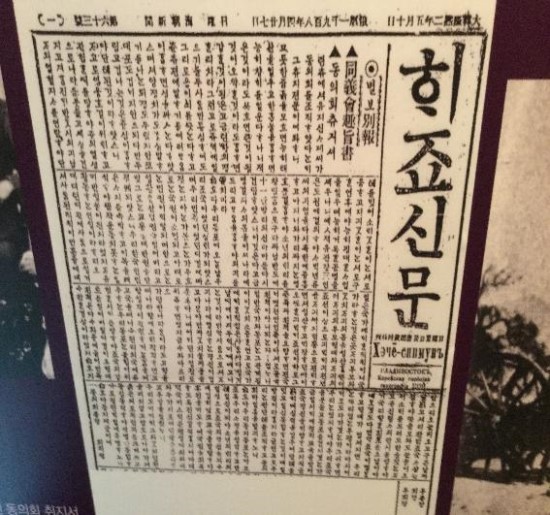
Koreans in the RFE also had access to many institutions which cemented the role of their native language in the public sphere as well as the private one. There was a Korean language newspaper, a Korean theater, and Koreans were well integrated into the local affairs of the Communist Party and its administration. King (2001) reports that in Birobidzhan6 region (to which Blagoveschensk was near) five Korean schools with a total of 520 Korean students (King, 2001). Compare this number to the six Jewish schools with a total of 300 students in the same region!
Though in a land with mixed settlements and many languages, the Koreans of the RFE were able to maintain their language. Most likely, the lack of institutional prohibitions on language use conspired with a surge of pro-Korean nationalism brought with the population fleeing occupied Korea, all in order to ensure that Korean remain spoken across all domains.
Notes
1 Those interested are highly encouraged to watch Koryo Saram – The Unreliable People, a documentary film following the lives of several generations of Koryo saram (whom Stalin had dubbed “unreliable”) in Central Asia. More information about the film is available here.
2This is now split into North and South Hamgyŏng Province in North Korea.
3See Jung (2010) for treatment of primary sources depicting the discrimination against northerners in Korea.
4Saveliev (2010: 485) notes that these Korean migrants were “impoverished”.
5The Korean spoken in Blagoveschensk is very important for understandings of northern Korean dialects at the end of the 19th century. King (2001) presents a list of names of baptized Koreans in the settlements, and these give us valuable insight into the development of Koryo mar, the language of the Koryo saram.
6 The Birobidzhan region would become the administrative center for the Jewish Autonomous Region.
References
- Chung, Y. David. Koryo Saram – The Unreliable People. Documentary, 2006. http://www.koryosaram.net/about_film.html.
- Jung, Min. “The Shadow of Anonymity: The Depiction of Northerners in Eighteenth-Century. Hearsay Accounts (Kimun).” In Northern Region of Korea : History, Identity, and Culture, edited by Kim Sun Joo. University of Washington Press, 2010.
- Kim, German, and Ross King. “The Northern Region of Korea as Portrayed in Russian Sources, 1860s– 1913.” In Northern Region of Korea : History, Identity, and Culture, edited by Kim Sun Joo. University of Washington Press, 2010.
- King, Ross. “Blagoslovennoe: Korean Village on the Amur, 1871-1937.” The Review of Korean Studies 4, no. 2 (2001).
- Pohl, J.O. Ethnic Cleansing in the USSR, 1937-1949. Contributions to the Study of World History. Greenwood Press, 1999.
- Saveliev, Igor. “Mobility Decision-Making and New Diasporic Spaces: Conceptualizing Korean Diasporas in the Post-Soviet Space.” Pacific Affairs 83, no. 3 (2010): 481–504.
- Zatsepine, Victor. Beyond the Amur: Frontier Encounters Between China and Russia, 1850-1930. Canada: UBC Press, 2017.
Corrina, this is really interesting! I had no idea about this topic, and your post is really easy to understand and engaging. I’m looking forward to reading your next installments. Given the success of Koreans in the Russian Far East, I would like to know how they adapt to Soviet rule after forced deportations.
I have little to no knowledge about East Asia, and I certainly had no prior knowledge about Soviet exile of Koreans. I found this post fascinating. I appreciate your use of photos, and especially the Manchuria- USSR Boundary map which certainly helped me to better visualize political boundaries of the time. I like how you included the information about Korean language preservation. It is really a testament to the strength of these individuals and their culture.
Thanks for the interesting and detailed overview! I’ve wanted to learn more about this population since watching that video you linked (maybe in Professor Kamp’s class last year?) Since you study linguistics, I will ask a language question–Has the time the Koryo Saram spent separated from Korean society at large resulted in linguistic differences between the Korean they speak and the Korean spoken in, for example, Seoul?
Hey Corrina, I really enjoyed your article and learned something new and very cool about Russia’s Far East. I had always wondered if there was a significant Korean population in the Far East due to the shared border with (North) Korea and you showed it perfectly. Did the Koryo Saram ever intermarry with the Russian or Central Asian population, or are they a closed off group?
Corrina, I love this research idea! It is so true that not much is said about the Koreans in Eurasia and I apologies for constantly bringing up my personal accounts, I honestly don’t mean it :(. Growing up I was fascinated by the fact that in my K12 school in Dushanbe, we always had ONE Korean student per class/year. At fourth grade I remember asking my parents how is that every graduation a Korean student completes school with one of the best grades, so in my youth I definitely ‘hyper-visibilized’ a minority who are my classmates and in the grades before me or after and in my mind, always pointing out to myself that these must be the geniuses of the world.
Good start! You found some of the key works. German Kim is a historian from Central Asia who has written exhaustively on this topic, but most of his work is in Russian. You might look for Valeriy Kim’s publications as well–he’s a sociologist from Uzbekistan, and he has published some of his studies of Central Asian Koreans in English, though mostly in Russian. He probably also has some in Korean; I seem to recall that he taught in South Korea for a while.
David Chang’s film suggests that the language spoken by Koreans in Central Asia is a very different dialect than today’s South Korea standard. I’ll be interested to see what you find on language change and language contact.
Your mention of the Tungisic people in the area brings up this association. Have you seen Kurosawa’s totally brilliant film Dersu Uzala?