I was a high school freshman when Narendra Modi won the election as India’s prime minister in 2014. I had little to no knowledge of Indian politics, having never lived there nor understood the intricacies of the policies each political party pursued. However, my parents, grandparents, and community around me were ecstatic with the election results. “He’ll clean up corruption in India,” they said. “He’ll usher us into a new age.” I had been told over the past year that Modi’s party, the BJP, was the only truly anti-corruption party. Modi’s successful time as governor of the state of Gujurat was shown when we would walk through the clean, organized streets of Gujurati cities, compared to the dusty, trash ridden cities of my family’s Rajasthan. As a young boy, the love and support Modi received from my community pushed me to accept him as the best. I watched his inaugural speech at my local Hindu temple with pride as tears rolled down the faces of elders sitting next to me. I did not know why this man, whom I had never previously heard of, was being treated as a savior, especially by a community who no longer lived in the country he governed. Yet, I accepted his supremacy.

As I grew older I began to be interested in Turkish politics. I followed the results of the 2016 coup attempt and learned more of the present leader, then advocating for a presidential system in Turkey: Recep Tayyip Erdogan. All that I had read of him depicted his leadership as autocratic. The post-coup crackdowns on academics, journalists, and dissidents only confirmed my understanding. Yet, I could not shake how similar he was to the “beloved” Modi: he was religious, nationalistic, and vehemently anti-corruption. His speeches read out like they could have been delivered by the Indian PM and his previous work in Istanbul as a relatively liberal mayor, standing up for religious rights, seemed in line with my understanding of Modi. Each of them catered to an emboldened religious right, unafraid of demonstrating a hatred to those categories of people who fell outside their idealized ethnoreligious community. Both of their politics had rejected the foundations of secularism that defined their nations in favor of greater state religiosity. They had done so, I found, through the support they received from their supporters abroad in the cultivation of diaspora relations. They had ideologically repatriated their largest migrant groups.
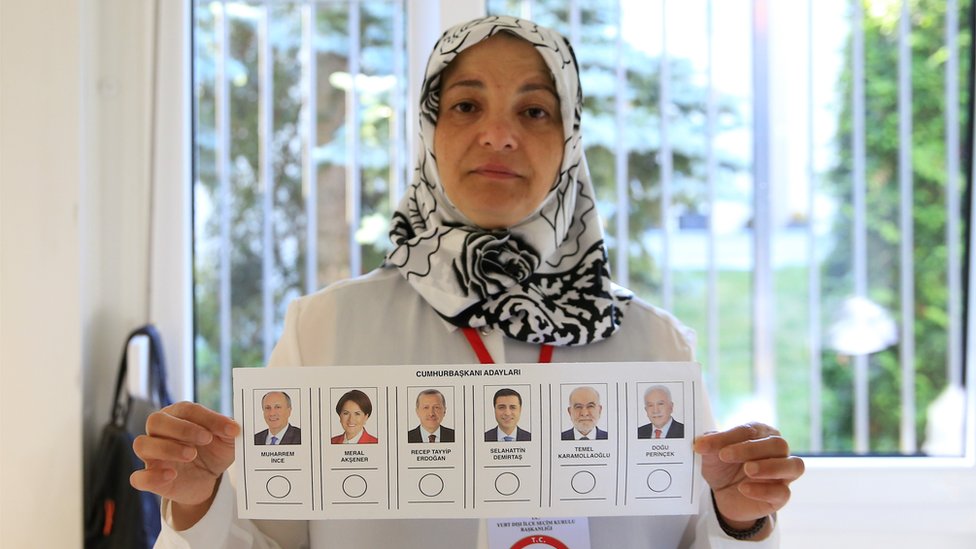
In Germany, over 60% of Turks who voted in the 2017 Turkish referendum voted for Erdogan. This referendum granted the leader with governing powers unlike any other leader before him by winning with 51% of the vote. With 5% of the overall vote guaranteeing him centralized power coming from non-resident Turks, this strong support cannot be ignored. Erdogan was so active in recruiting voters and supporters abroad that the German government passed new laws restricting political campaigning by foreign powers. No other Turkish leader had engaged their diaspora so actively.
In the US, a vast majority of Indians supported the Modi government, even amidst its actions of instituting central control over the region Kashmir, dismantling its democratic government, and preventing a referendum on independence. In fact, 94% of NRIs (non-resident Indians) in the US polled in 2019 expressed support for Modi’s election and government. Modi expanded voting rights to NRIs as well, allowing him access to this highly supportive voting group.
My personal reconnection with the Indian motherland outside of my family came from my religious upbringing and education. Funded in part by Indian organizations with historical ties to Hindu-nationalist political parties, Hindu Sunday schools were increasingly being implemented as a way to attract Indian-American parents who wanted their children to grow up with some Indian cultural familiarity, learn the language, and connect with other Indian families in the community. The organizations that had created these programs were related to the Indian militant religious organization the Rashtriya Swayamsevak Sangh (RSS). Though there are various names for these organizations, each of them is regarded as members of the Sangh Parivar: the umbrella term for organizations that preached the Hindu nationalist ideology of Hindutva.
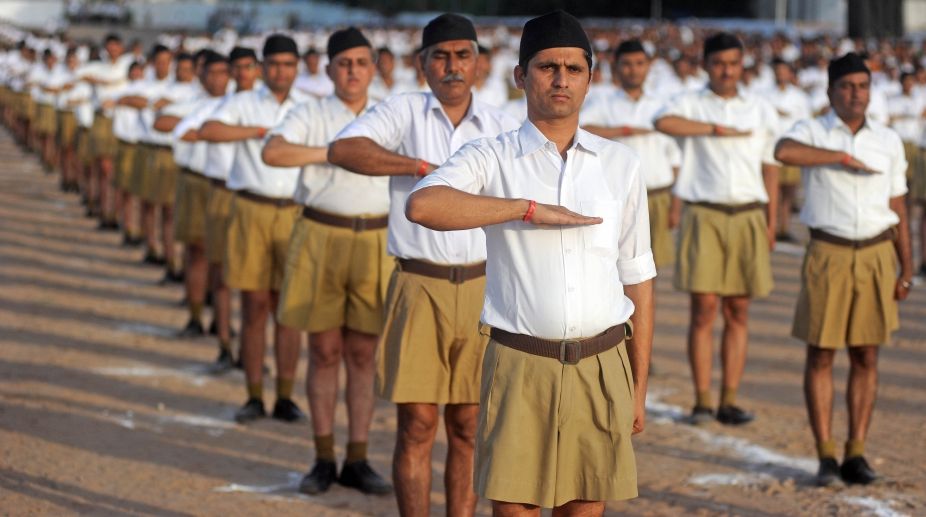
In Germany, a similar campaign to educate Turkish diaspora children is allegedly underway. Though emboldened by Neo-Ottoman and Pan-Turanist beliefs rather than Nazi-inspired national socialism, Sunday school programs and community religious and cultural centers have been established by Turkey’s Directorate of Religious Affairs and have been seen as teaching a hardline, right-wing interpretation of Turkish nationalism and religion under the direction of the Turkish government. Much like my family sought out RSS Sunday schools as a way to find the Indian community, Turks abroad turn to Diyanet centers and programs as a means to reconnect with their national identity. Germany, France, and Austria have all ejected Turkish Diyanet imams for pushing inflammatory rhetoric. Some states and provinces have banned Diyanet operations altogether for failing to demonstrate their separation from the Turkish state.
This action has not curbed Erdogan’s support in Europe, but rather expanded it. These actions are considered by many to be blatantly anti-Islamic or Islamaphobic. Erdogan’s campaign to expand religious outreach is seen by many European Muslims as not a method of garnering political support, but uniting an ummah that has been systematically attacked, vilified, and ridiculed in European media. Now, with a new, expanding rift between Emmanuel Macron and Recep Erdogan, these interpretations grow stronger. The issues of racism and bias that Turkish and Muslim migrants face in Europe now has a world leader standing strongly against it.

Similarly, organizations like the Hindu American Foundation (founded by activists who support the goals and aims of the Sangh Parivar) have criticized actions by western and Indian scholars in denouncing the Indian political influence of religious institutions as Hinduphobic and preventing the acceptance of Hindus and Indians in American society. In an address to the Indians of America in Texas entitled “Howdy Modi,” the Indian Prime Minister stressed this idea, calling those who criticize India’s actions in Kashmir akin to terrorists and “people who put their hatred of India at the center of their political agenda.” The statement was met with thunderous applause from thousands of Indian-Americans who were brought up by a system emboldened by the Indian religious right.
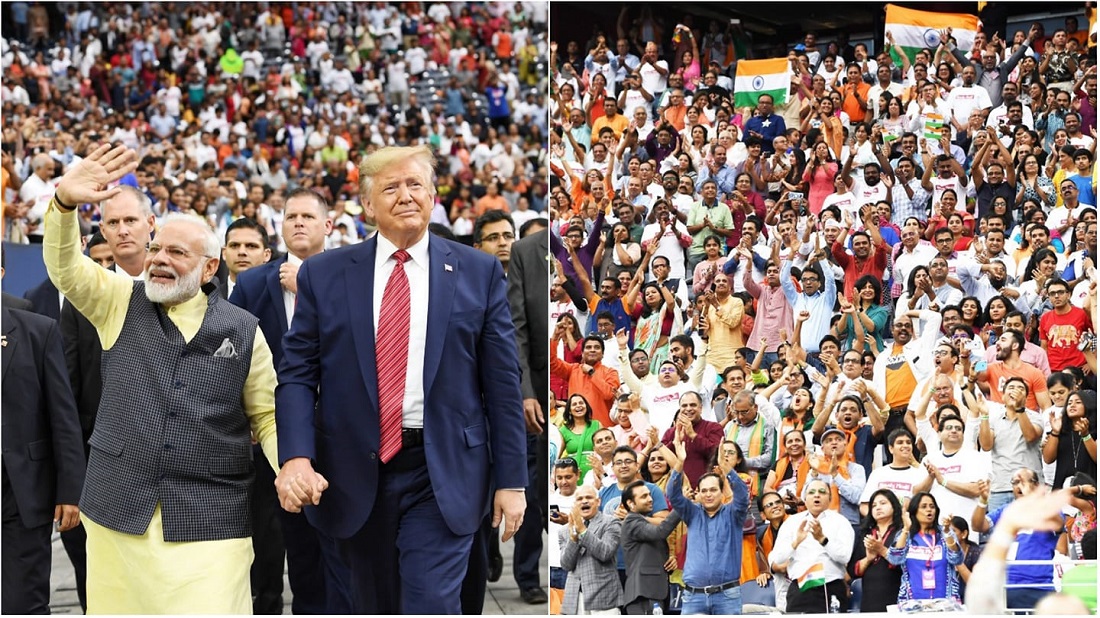
By fostering support from migrant and diaspora groups abroad through the focus on issues of racism, nationality, and identity, both of these leaders capture a significant amount of support critical for both optics and financial backing, regardless of a person’s opinions on their controversial politics. Without the support of these groups, both Modi and Erdogan’s attempts to keep autocratic control over their nations fall short. Their statements would not bring cheers from thousands who look to them as symbols of greatness, community, and nationhood. They would not have the ideological sway they do over thousands more. This is why engagement with a diaspora is critical for these leaders.
In the next blog posts, I will be diving into a deeper look into a comparative analysis of both Indian and Turkish government organizations that handle diaspora affairs and how they use their offices to engage in “public diplomacy.” It is my hope that through these posts, I can shed light on the strengths of diaspora engagement and what that means for the future of nationalist politics.
References:
(www.dw.com), D. (n.d.). Turkish imam spy affair in Germany extends across Europe: DW: 16.02.2017. Retrieved November 01, 2020, from https://www.dw.com/en/turkish-imam-spy-affair-in-germany-extends-across-europe/a-37590672
Admin. (2019, October 24). Hindu American Foundation Hosts Islamophobia-Denying Journalist. Retrieved November 01, 2020, from http://www.ofmi.org/hindu-american-foundation-hosts-islamophobia-denying-journalist/
Admin. (2019, October 24). Hindu American Foundation Hosts Islamophobia-Denying Journalist. Retrieved November 01, 2020, from http://www.ofmi.org/hindu-american-foundation-hosts-islamophobia-denying-journalist/
Hill, J. (2018, June 20). Turkey election: Expats play decisive role in Erdogan vote. Retrieved November 01, 2020, from https://www.bbc.com/news/world-europe-44546035
Mehrotra, V. (2019, May 29). 93.9 per cent NRIs in US support PM Modi’s re-election, 92 per cent feel India is better respected now than before 2014: Survey. Retrieved November 01, 2020, from https://www.indiatvnews.com/news/india-pm-narendra-modi-re-election-survey-nri-us-government-schemes-indians-in-united-states-523229
Remarks by President Trump and Prime Minister Modi of India at “Howdy, Modi: Shared Dreams, Bright Futures” Event. (n.d.). Retrieved November 01, 2020, from https://www.whitehouse.gov/briefings-statements/remarks-president-trump-prime-minister-modi-india-howdy-modi-shared-dreams-bright-futures-event/
Tremblay, P. (2020, May 14). How clipping Turkey’s religious reach has boosted Erdogan in Europe. Retrieved November 01, 2020, from https://www.al-monitor.com/pulse/originals/2020/05/turkey-western-moves-boost-support-to-erdogan-among-diaspora.html
Hey Nik, this is really interesting. I like your ties to your own personal experiences. I recently listened to a podcast from the Economist that talked about how autocratic leaders are also using COIVD to increase their own power bases. Due to the fact that people can’t go out and protest, leaders like Modi have a distinct advantage to do things that they wouldn’t be able to get away with without covid. I’ll link that podcast down below. I will be interested to see what this pandemic does to autocrats hold on their power and also their supporters. Only time will tell though I’m afraid.
https://open.spotify.com/episode/5fvYUvpHaaIk8JUfoGmWw5?si=IrMO8S_zQhuHHte6Ce_KQQ
Hi Nik, I found your post really interesting! It was very helpful for me because I was curious to learn more about the Turkish diaspora in Germany and how Erdogan has used them to his political advantage. What I’m confused about it why these large diasporas in democratic countries are so supportive of populist, authoritarian leaders. I find this very peculiar. Perhaps they were attracted to western countries so that they could freely practice religion with the hopes of being able to practice with a religious majority in their homelands one day? I’m not sure, but I appreciate your comparison of this trend between Turkish and Indian communities.
I think much of this affinity towards populist leaders also comes from their support of traditional, conservative norms. Its difficult for anyone to practice their religion in a new country without being questioned by the majority. These leaders give people a vision of community, unity, and strength amidst adversity and remind them of the familiar communities that they left behind. I will keep your questions in mind as I do more research, they are critical to answer and very thought-provoking!
Hey, I think this was a great topic to have right now, as the politics of France and Turkey are intense. I think it is difficult for many governments to allow national organizations because of the fear they may turn political. I think it is very interesting to compare Erdogan and Modi, as they are respected (by some people) and have different way of leading the country. I think a lot of the chaos in the world makes people want to have a community (religious, or ethnic) and feel connected to something, it is very important.
Hello Nik,
What a fascinating post! I really liked the long-distance ideological/soft power component you added to the idea of a candidate’s coalition building when you wrote, “They [Modi and Erdogan] had ideologically repatriated their largest migrant groups.”
You mentioned how voting rights were extended to NRIs. What “rights” do these individuals have if a different administration decides that residency in India is requisite for voting? Please forgive my complete ignorance concerning how Indian governance works. I just wonder about whether NRIs are more or less vulnerable due to their physical distance from India. Perhaps they are less vulnerable because they are slightly removed from the immediate impacts of new legislation/administration? Maybe they are more vulnerable because they have fewer people “in their corner” on the ground in India? Also, how was the expansion of voting rights to NRIs received among Indian residents? I’m very curious! :)
Hi Corrina,
I should probably clarify what I was saying, kinda got caught up in writing the post haha. A home address in India is required in order for an NRI to vote. You would have to mail in your vote or vote in person on return to the country. The Modi government has pushed for proxy voting for NRIs, however, making it much easier for NRIs to vote without having to return home. Once an NRI acquires citizenship in another nation, however, they lose their voting rights. A new scheme, the Overseas Citizenship of India exists as well. Now, having never lived in the country, I could still apply for citizenship through my family, claiming a family residence as my own. Though it does not allow one to vote in an Indian election, this is a massive step forward in recognizing dual-citizenship in India, formerly a political taboo. Modi’s government has allowed these individuals to financially support his campaign and associate themselves with a national identity in a more official and legal sense. Rather than just being a Person of Indian Origin (the former legal designation), I could be a “citizen” and thus a legitimized member of the nation.
This is a great comparison, Nikhil! You do a parallel examination of the ways that Erdogan and Modi have activated and shaped diasporas, cultivating ideologies (religious, populist, conservative) that help to keep them in power. Good sources, too!
This is a really interesting subject to delve into, and I hadn’t previously known about any similarities between how Turkey and India engage their expatriates in politics. It is interesting that both Erdogan and Modi espouse a degree of religious chauvinism, and how both claim that nations that seek to restrict their political campaigning are acting out of xenophobia rather than in the genuine interest of national security or reducing foreign entanglements among their citizens. I’m looking forward to reading your forthcoming posts.